
Can Dogs See Screens? What a Look at the TV Can Tell You

Expert verifiedSources and qualifications checked
Nora Bennett reviews clarity, structure and the writer’s voice. Adrian Cole reviews source support, qualifications and image attribution.
Reviewed November 13, 2026 for this version of the article.
Meet the Editor Voices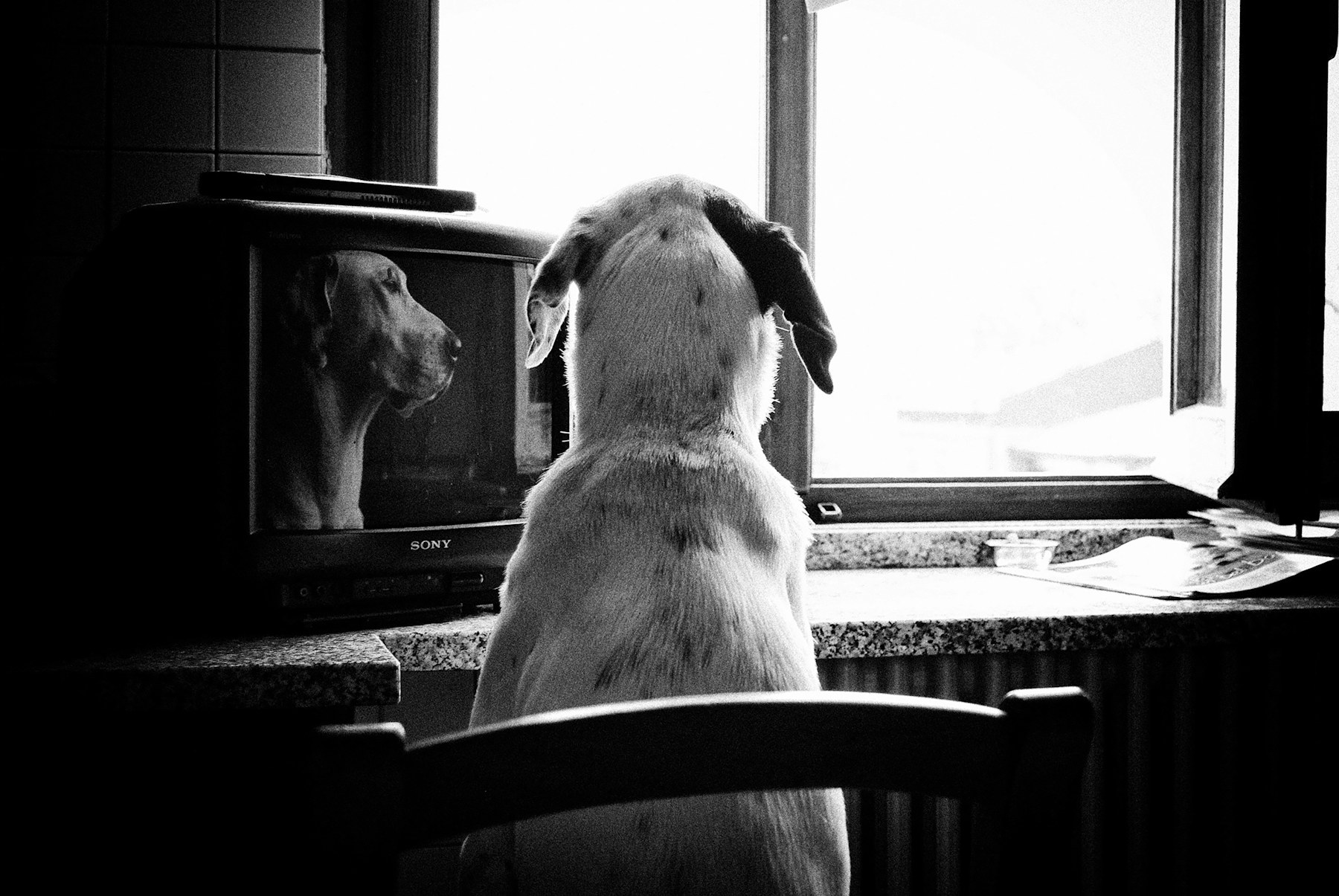
A dog trots past a TV that’s been on for an hour. Then a tennis ball crosses the picture and the dog stops in the doorway. The head turns with the ball. Two seconds later the dog heads for the kitchen. That brief look can tell you more about what caught the dog’s attention than a whole evening spent on the couch beside a running television.
Yes, dogs can see images and follow movement on screens. Researchers have tracked dogs’ eyes as they watched objects move across video. At home, a dog can pick up a bark from the speakers, watch the animal that made it, or lose interest before it even crosses the frame. You can watch for the difference without buying anything or turning the living room into a test lab.
What dogs follow with their eyes
To find out whether dogs could follow motion in a video, researchers Christoph Völter, Sabrina Karl, and Ludwig Huber used eye tracking. That means recording where the eyes are pointed as the picture changes. In one set of experiments, dogs watched a video of two people throwing a flying disc back and forth. The researchers could compare where a dog was looking with where the disc was on the screen at that moment.
The dogs’ eyes followed the disc. With more chances to see the exchange, they sometimes looked toward the person who would catch it before it got there. The order matters. A glance after the catch could be a response to the person moving. A glance ahead of the disc tells you more about how closely the dog was following the exchange. The eye-tracking study gives us a reason to take that little head turn at home seriously, even if we can’t measure it from the couch.
The experiment answers a question about movement in a particular video. Whether the dog understood why the people kept throwing the disc, or wanted to keep watching after the trial, would take a different experiment.
Why one clip holds a dog’s attention
In a 2024 study of dogs and screens, 1,246 owners completed a survey. Of those, 672 also showed their dogs four short clips and rated how much they watched and followed the movement. The clips showed a dog, a hopping bird, a walking panther, and road traffic. The dog clip drew the most watching and tracking in the owners’ ratings.
Each clip started after a brief squeak meant to get the dog to look toward the screen. The clips themselves played without sound. That setup gave the owners a way to watch what happened once the dog was already looking. It leaves open how often a dog would choose to turn toward the same clip by itself.
The owners also signed up for a study about dogs and screens. Someone whose dog regularly interrupts a nature documentary has a reason to notice that invitation. An owner who has never seen their dog glance at the television might scroll past it. The result tells you what drew attention in this group, under these conditions. It can’t tell you how many dogs in your neighborhood would watch any of the four clips.
Check what the speakers are doing
A bark can make a dog look up from the far side of the room before there’s a clear view of the screen. The first head turn tells you something happened. The next few seconds are where you can see whether the picture keeps the dog looking. A dog that turns at the bark, then returns to chewing, has given you a different clue from one that follows an animal across the picture.
A 2025 study of TV viewing in companion dogs asked owners how their dogs responded to sights and sounds on television. The analysis covered 453 reports after the researchers left out dogs whose owners said they didn’t watch TV. Among the dogs included, owners described a range of responses. Some dogs followed figures as they moved. Others responded to sounds. A bark back at the TV is a reaction you can hear from the kitchen. A quiet look can be easy to miss even when you’re sitting beside the dog.
That difference makes “my dog watches TV” a loose description. On one evening it could mean the dog lay beside you and glanced up twice. On another it could mean the dog jumped down when an on-screen dog barked. Those two evenings give you more information if you describe what the dog did.

What to look for at home
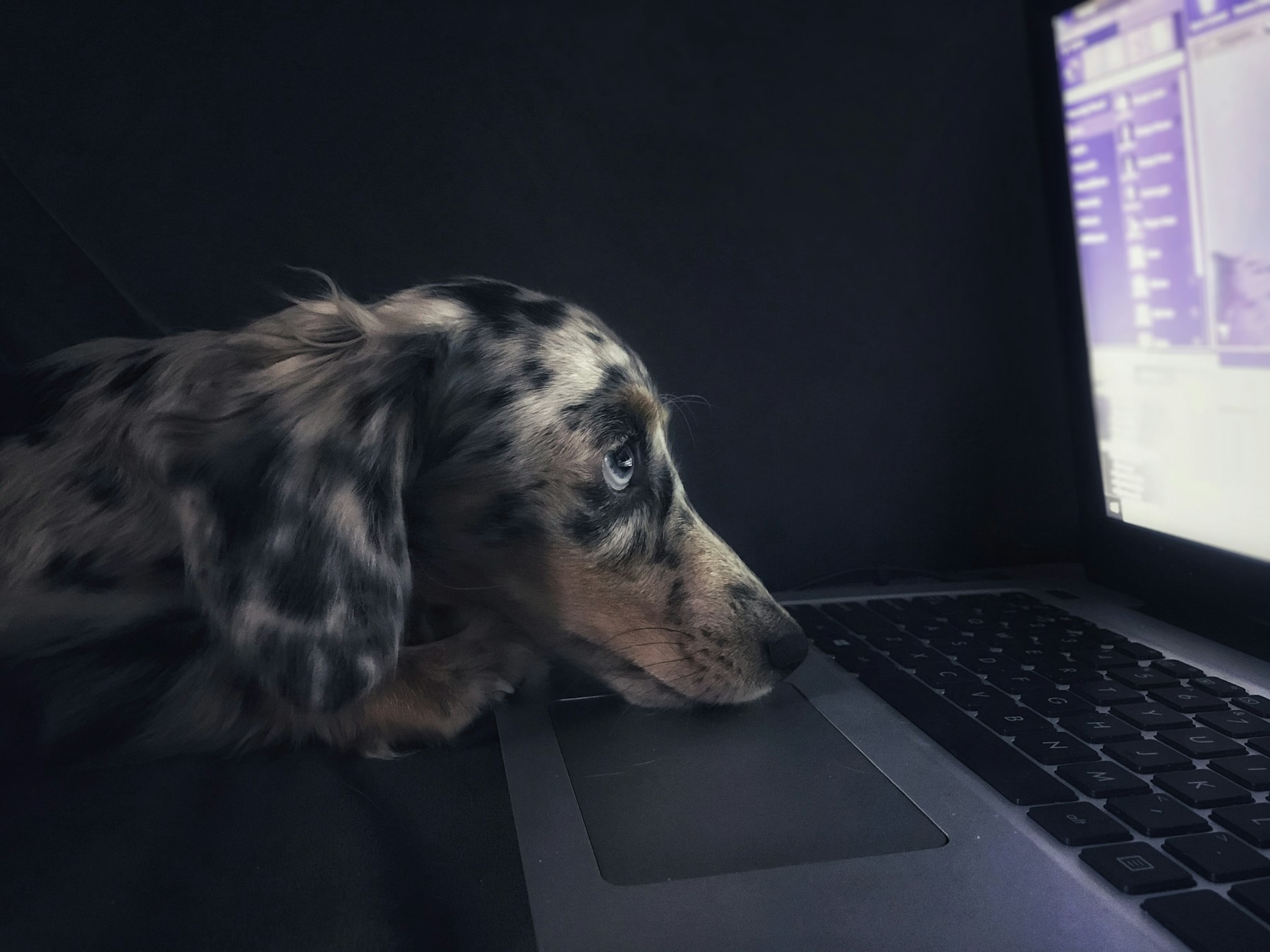
Start with the setup you already have. If your dog is settled nearby and free to leave, play a short clip with one easy-to-follow subject and start with the sound off. Watch your dog while the subject crosses the picture. A single look up could be a response to the picture changing. A look that moves with the subject gives you a clearer clue about what held the dog’s attention. Watch what the dog does after the picture changes, too. A dog that looks briefly and goes back to resting has shown you how long the clip held its interest. Following the picture alone tells you little about whether it was enjoyable.
You can leave it there. If the dog is still settled and you’re curious about sound, try a short clip at low volume another time. A look that starts at a sound and ends before the subject moves tells you something different from a look that travels across a silent picture. Treat it as an observation about that moment. The clips, the room, and what your dog was doing a minute earlier all affect what you can see.
If your dog walks away, leave the screen where it is. You don’t need to move it closer, turn it up, or keep calling the dog back to see what happens. Switch it off if the dog starts barking repeatedly, lunges toward the screen, or struggles to settle. A quiet room is the simpler choice when the program keeps interrupting the dog.
There’s little reason to shop for a different screen based on one clip. Try watching what your dog does with the one you already own. A glance, a few seconds following a moving shape, and a nap beside the couch are three ordinary ways for a dog to spend the time you’re watching TV.
Related stories


Theo Grant
Theo covers the electronics entering pet homes: automatic feeders, water fountains, cameras, and connected accessories. His specialty is comparing the whole ownership experience, including setup, cleaning, replacement parts, subscriptions, and what happens when the connection drops. He pays close attention to which advertised features require a paid plan. His household includes his partner, Scout, a rescue dog, and Pixel, a shorthair cat. The question running through his coverage is straightforward: does the technology remove a chore, or give the owner another device to manage?