
How to Pick Your First Cat Puzzle Feeder in 2026

Expert verifiedSources and qualifications checked
Nora Bennett reviews clarity, structure and the writer’s voice. Adrian Cole reviews source support, qualifications and image attribution.
Reviewed November 12, 2026 for this version of the article.
Meet the Editor Voices
Before you buy a cat puzzle feeder, look at where the first piece of food goes. Can your cat reach it without sticking a paw down a tube, lifting a lid or putting both feet on a new surface? The answer matters more on the first night than the number of games on the box.
The TRIXIE Fun Board is the easier first try if you have room for it. Start on the open part of the board, then use the other sections when your cat starts looking for more. The TRIXIE Tunnel Feeder takes up less floor space and makes sense for a cat that already reaches under things with a paw. For wet food, the Northmate Catch gives you a rim you can reach with a sponge. All three are stationary. Set your choice beside the usual bowl and put just a little of your cat’s own food in it.
Top picks at a glance
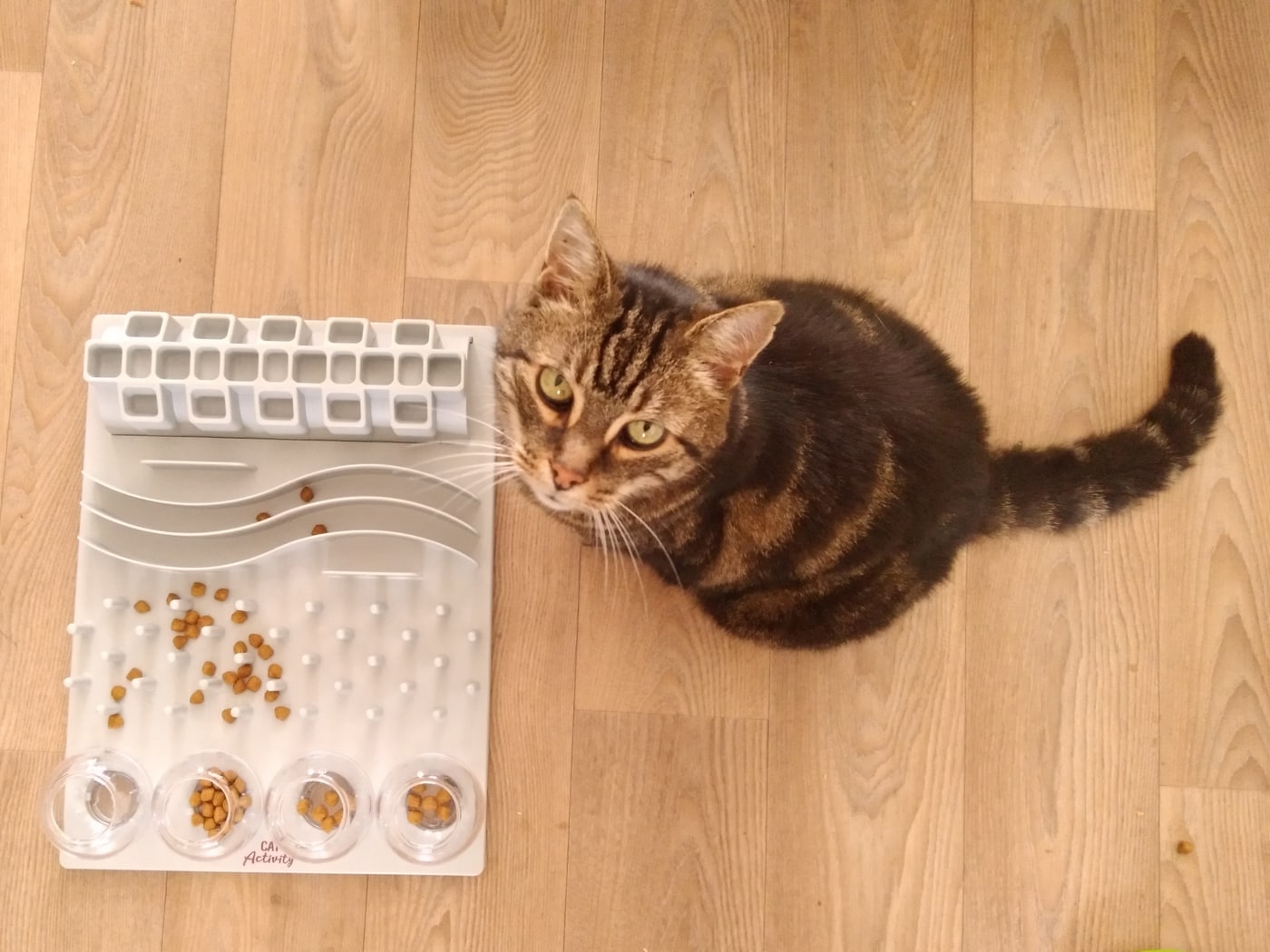
Open lanes for the first few bites
Start at the pegs and leave the cups empty until your cat is ready for a longer reach.
- Model 4590, standard white
- Size 11.8 × 15.7 in.
- Food Dry kibble or treats for this setup
- Price $15.89 at Chewy, Nov. 11, 2026
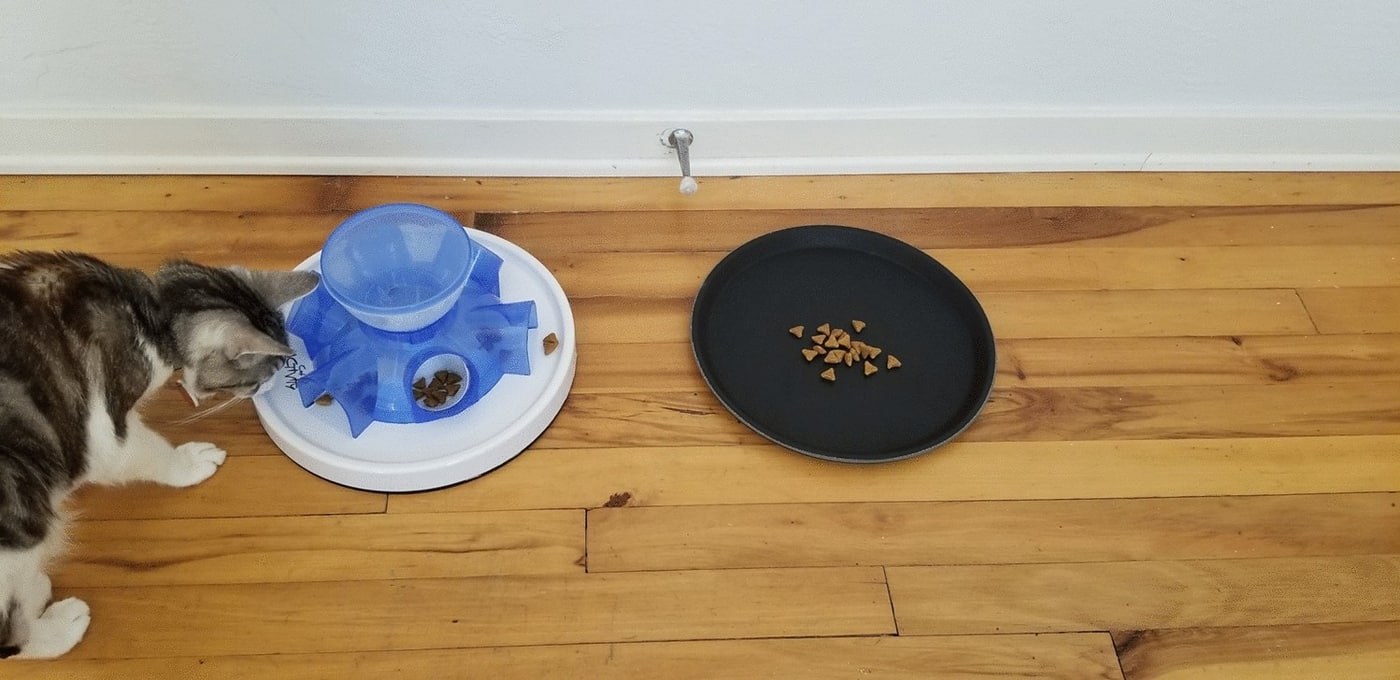
One short reach in a smaller space
Start with food at one tunnel opening and leave the rest of the feeder empty.
- Model 46002, blue and white
- Size 11 in. diameter × 5.5 in. high
- Food Dry kibble or treats
- Price $10.25 at Walmart, Nov. 11, 2026
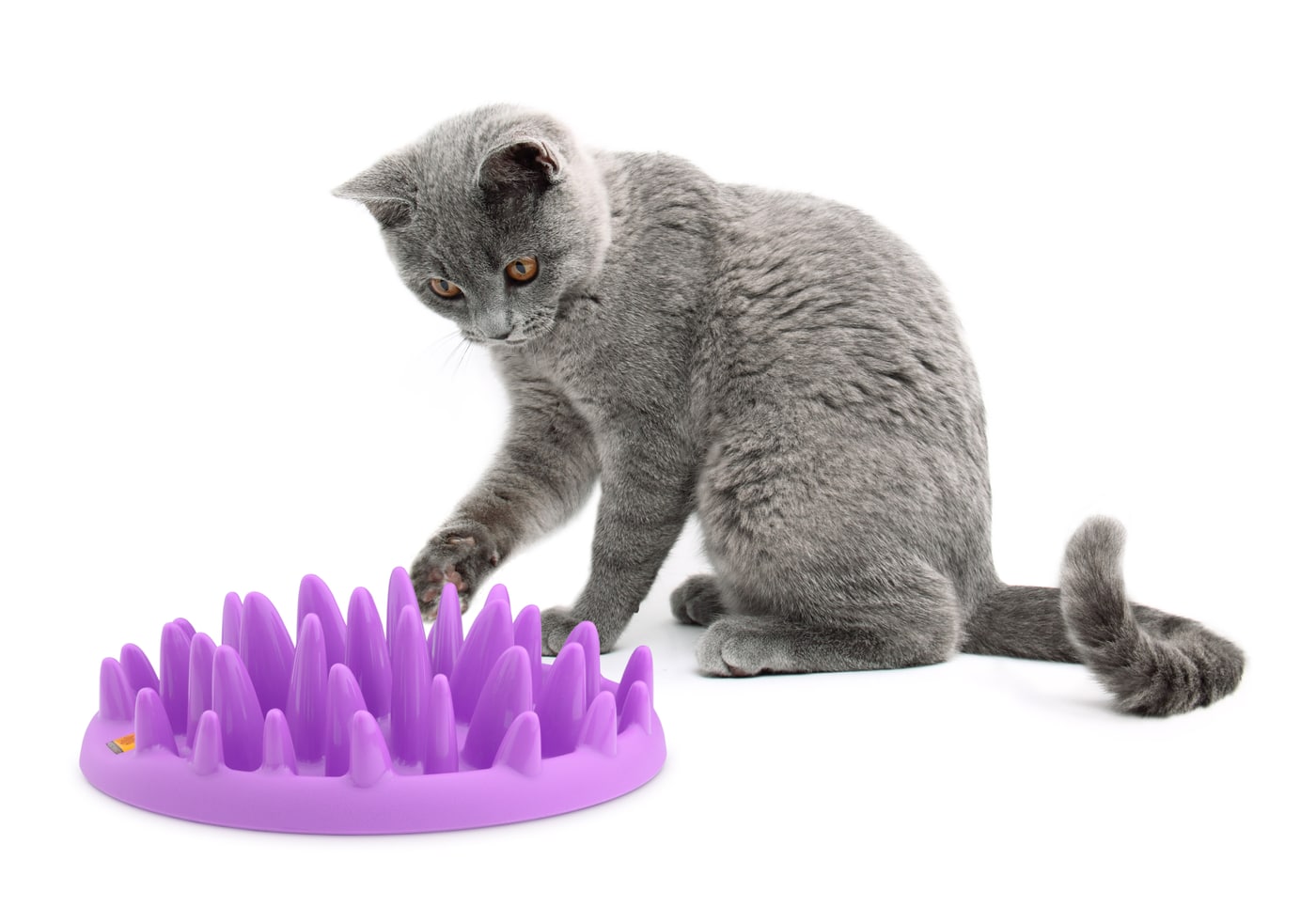
A shallow rim for the first lick
Put pâté by the edge where a cat can reach it and where you can wipe it away.
- Model NGC, purple, one size
- Size 10.6 × 9.1 × 3.1 in.
- Food Wet food or dry kibble
- Price $29.09 at Amazon, Nov. 11, 2026
Compare the beginner cat puzzle feeders
The sizes are the space the feeders take up, before you leave room for a cat to stand beside them. Prices are in U.S. dollars and were checked on November 11, 2026, before tax and shipping.
| Feeder | First move | Food | Size | Care | Price checked Nov. 11, 2026 |
|---|---|---|---|---|---|
| TRIXIE Fun Board 4590 | Take a piece from the open pegs | Dry kibble or treats | 11.8 × 15.7 in. | Dishwasher safe after disassembly | $15.89 at Chewy |
| TRIXIE Tunnel Feeder 46002 | Reach into a side opening | Dry kibble or treats | 11 in. across × 5.5 in. high | Dishwasher safe | $10.25 at Walmart |
| Northmate Catch NGC | Lick food at the rim | Wet food or dry kibble | 10.6 × 9.1 × 3.1 in. | Dishwasher safe | $29.09 at Amazon |
Swipe sideways to see every column.
TRIXIE Cat Activity Fun Board lets you start in the open
Open lanes for the first few bites
Start at the pegs and leave the cups empty until your cat is ready for a longer reach.
- Model 4590, standard white
- Size 11.8 × 15.7 in.
- Food Dry kibble or treats for this setup
- Price $15.89 at Chewy, Nov. 11, 2026
- Material Plastic board, rubber feet
- Care Dishwasher safe after disassembly
The easiest part of the white Fun Board is the space between the pegs. Put a few pieces of kibble along the edge, where a cat can see them from the floor. Once those pieces go quickly, put a couple farther in or in one of the curved channels. The clear cups and the tunnel can sit empty while your cat learns where to look. You can get several sessions out of one section before you need to touch the other four.
At nearly 16 inches long, the board takes a fair bit of floor for a snack. Leave room along a long edge so your cat can walk around to reach another section. If the only spot available is in the path to the kitchen, the smaller tunnel is easier to live with. The Fun Board has rubber feet, and TRIXIE says the pieces can go in the dishwasher. Before you wash it, tip the board over the trash and check for stray crumbs in the channels and inside the clear cups.
TRIXIE Tunnel Feeder fits a smaller feeding spot
One short reach in a smaller space
Start with food at one tunnel opening and leave the rest of the feeder empty.
- Model 46002, blue and white
- Size 11 in. diameter × 5.5 in. high
- Food Dry kibble or treats
- Price $10.25 at Walmart, Nov. 11, 2026
- Material Plastic feeder, rubber base ring
- Care Dishwasher safe
The Tunnel Feeder asks for one basic move. Your cat reaches into a side opening and rakes a piece of food toward the rim. For the first try, leave a few pieces on that rim and put a couple just inside the nearest opening. Let your cat clear those before you fill the hopper. If the rim gets cleaned up while the food inside stays put, bring the next pieces closer to the edge. A small reach is enough for a first session.
The base is about 11 inches across, though your cat still needs space to get to the openings. Set it on a flat surface with at least one clear approach. Use dry food that can pass through the feeder. Wet food is harder to retrieve and leaves residue inside the tunnels. A 2021 study led by Mikel Delgado used this model and found that the cats in the study ate more from the open tray when offered both. Keeping a regular meal available gives your cat the same easy option.
Northmate Catch gives wet food a place near the rim
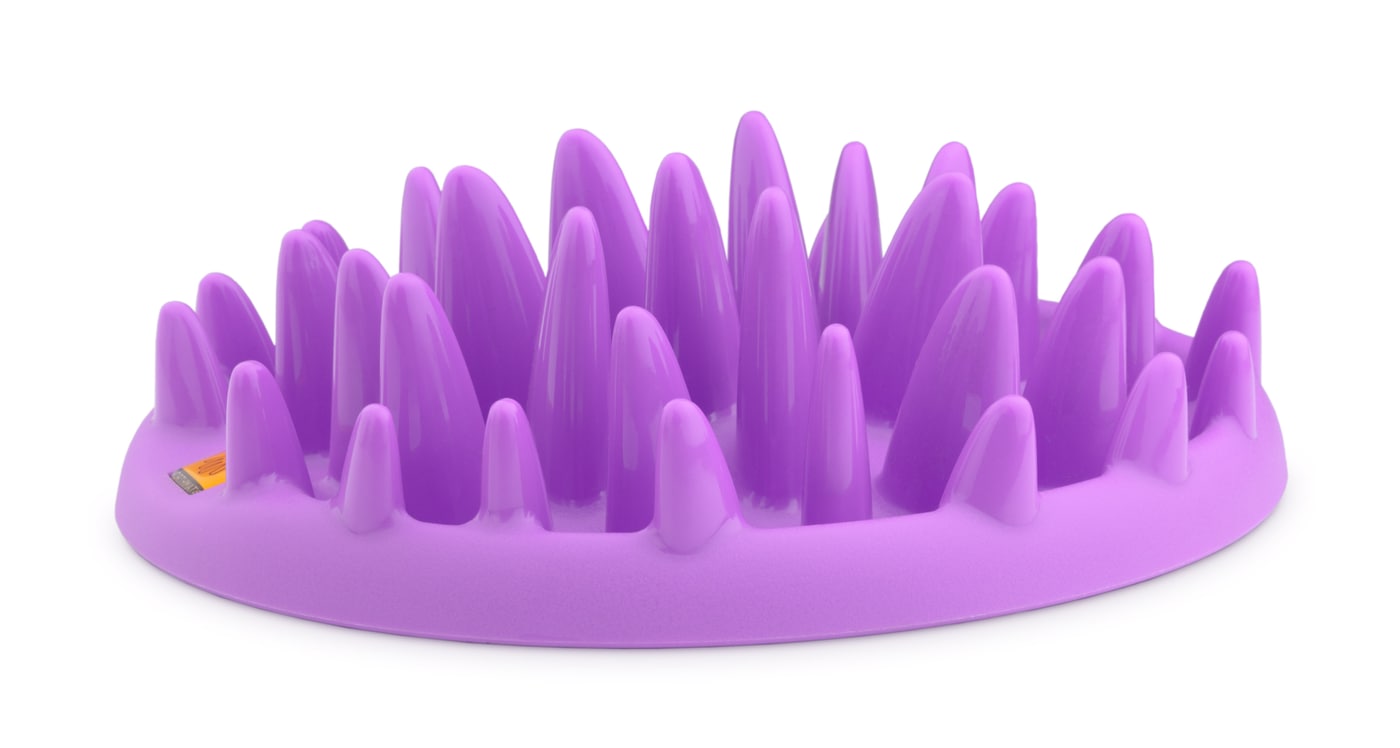
A shallow rim for the first lick
Put pâté by the edge where a cat can reach it and where you can wipe it away.
- Model NGC, purple, one size
- Size 10.6 × 9.1 × 3.1 in.
- Food Wet food or dry kibble
- Price $29.09 at Amazon, Nov. 11, 2026
- Material One-piece hard plastic
- Care Dishwasher safe
The Catch has 37 rounded spikes, but your cat can start with the space at the rim. Set a little pâté at the edge where your cat can lick it off without reaching between the spikes. With dry food, place a few pieces between the spikes nearest the rim. Move a bite farther in once your cat starts following the food around the tray.
There are no lids to lift or tubes to fill. You do have to clean around each spike if you spread wet food across the middle. That is a good reason to keep the first serving small. Northmate makes the purple Catch as one molded piece and says it is dishwasher safe. It takes up less floor than the Fun Board, though the spiked middle still asks a cat to lean over or reach around. If your cat never moves beyond the rim, keep using the rim or go back to a shallow dish.
How to start with a cat food puzzle feeder
Try it while your cat is awake and the room is quiet. Put the empty feeder near the usual bowl and give your cat space to look it over. At the next meal, put a few pieces of their usual kibble in an open section and serve the rest in the bowl. If you feed wet food, use a small dab from that meal on a shallow surface made for wet food. A feeding trial can be as simple as moving a few bites.
Pick a place where your cat can stand beside the feeder and walk away without squeezing past another pet. If your cats tend to check each other’s plates, try the puzzle with one cat at a time in separate rooms. The food should be easy to see and reach, with no need for you to hover. You can sit nearby to watch what happens, then collect the feeder and let your cat finish the meal from the usual dish.
Three difficulty levels you can set yourself
Level one is food at the edge. Leave the first bites right where your cat would sniff. On a board, keep the deep cups empty. On a tunnel feeder, set the first few pieces on the rim. If your cat eats those bites and walks away, that counts as using the puzzle. You can stop there for the day.
Level two is one short reach. Put a few bites behind a peg or inside the mouth of a tunnel. Keep some in the easy spot. Watch for a small, successful paw movement before you move food deeper. You can change the distance a piece has to travel without changing the food, the room or the feeder.
Level three adds a new opening or section. Move a few bites to a deeper cup or the far side of a board once your cat can clear the easy spot without a long pause. Change one thing at a time. If you move the board and make the food harder to reach in the same session, it is hard to tell what made your cat leave.
Can you put wet food in a cat puzzle feeder?
Look for a shallow, stationary feeder the maker says can take wet food. Spread a small amount of your cat’s usual food on the easy-to-reach part. A thin layer of pâté is easier to place near an edge than a spoonful that drops into a narrow well. Keep the rest in the regular dish. The dry-food setup on the Tunnel Feeder is useful for kibble, which can roll through the hopper and out toward a paw.
Pay attention to what your cat has to do to get a bite. A cat that licks food from a dish may do well with a shallow wet-food surface. A cat that already scoops dry food with a paw has a familiar way into a board or tunnel. If your cat eats a special diet, use food from their own meal so you can keep track of what they eat.
Cleaning, storage and when to replace it
After a wet-food session, put the unfinished food in the trash and wash the surfaces that touched it with dish soap and hot water. Refrigerate unused food from an opened can or pouch promptly. For dry food, shake loose crumbs out of cups and tunnels before washing. The FDA’s pet food handling guidance calls for washing food bowls and scoops with soap and hot water after each use. A puzzle has more places for food to catch, so look under removable cups and along the rim before you set it out again.
If you use the dishwasher, follow the exact model’s care instructions. Let the feeder dry completely before putting the pieces back together and storing it. A cracked cup, a rough edge or a base that has started to slide is a good reason to take the feeder out of use. If the maker offers the exact replacement part, check that it fits securely before the next session. Check the seller’s return terms before opening the feeder in case your cat keeps choosing the bowl.
What to do when your cat gives up
Watch for the point where your cat leaves. A sniff at a new feeder can be the whole first visit. If your cat pulls out the food along the edge and stops at the cups, set up the edge again next time. If they keep pawing the same spot and getting nothing, move a piece into reach or finish the meal in the usual dish.
Some cats will take the easy bites and leave the puzzle on the floor for you to wash. The bowl is a perfectly good place to serve their meal. If your cat also starts leaving their normal food or eats less than usual, pause the puzzle and call your veterinarian. A change in appetite deserves attention even if it happens around the time you bring home a new feeder.
Cat puzzle feeder FAQ
Is a puzzle cat feeder different from a slow feeder? The terms overlap. A bowl with raised ridges makes a cat eat around the ridges. A food puzzle asks for a move such as scooping a piece out of a cup. A simple feeder can do both. Start with whichever action your cat already uses around food.
Can I make a DIY cat puzzle feeder? Yes. For a first dry-food trial, put pieces of kibble in a clean, shallow muffin tin and leave a couple on the rim. Skip the balls or covers at first. Set the tin on a nonslip surface and stay nearby. If the tin clatters or moves when your cat touches it, try a heavier dish with shallow wells.
Can I serve a whole meal in the puzzle? Start with a few bites from the meal and serve the rest the usual way. Even after your cat learns the puzzle, check how much they actually get out. You can keep the feeder as a small part of mealtime and use the bowl for the rest.
Related stories

Vivian Park
Vivian specializes in products for indoor cats, from litter boxes and scratchers to cat trees, carriers, and play. Her reviews examine usable space, entry height, cleaning access, refill costs, and what a product asks a cat to tolerate. She is particularly interested in the difference between a feature that appeals to an owner and one that gives a cat a useful choice. She shares an apartment with Olive, a reserved tabby, and Fig, a younger longhaired cat. Her editorial instinct is to leave room for both the cautious observer and the enthusiastic climber.