
Cat Trees You’ll Want in the Living Room Too

Expert verifiedSources and qualifications checked
Nora Bennett reviews clarity, structure and the writer’s voice. Adrian Cole reviews source support, qualifications and image attribution.
Reviewed November 8, 2026 for this version of the article.
Meet the Editor Voices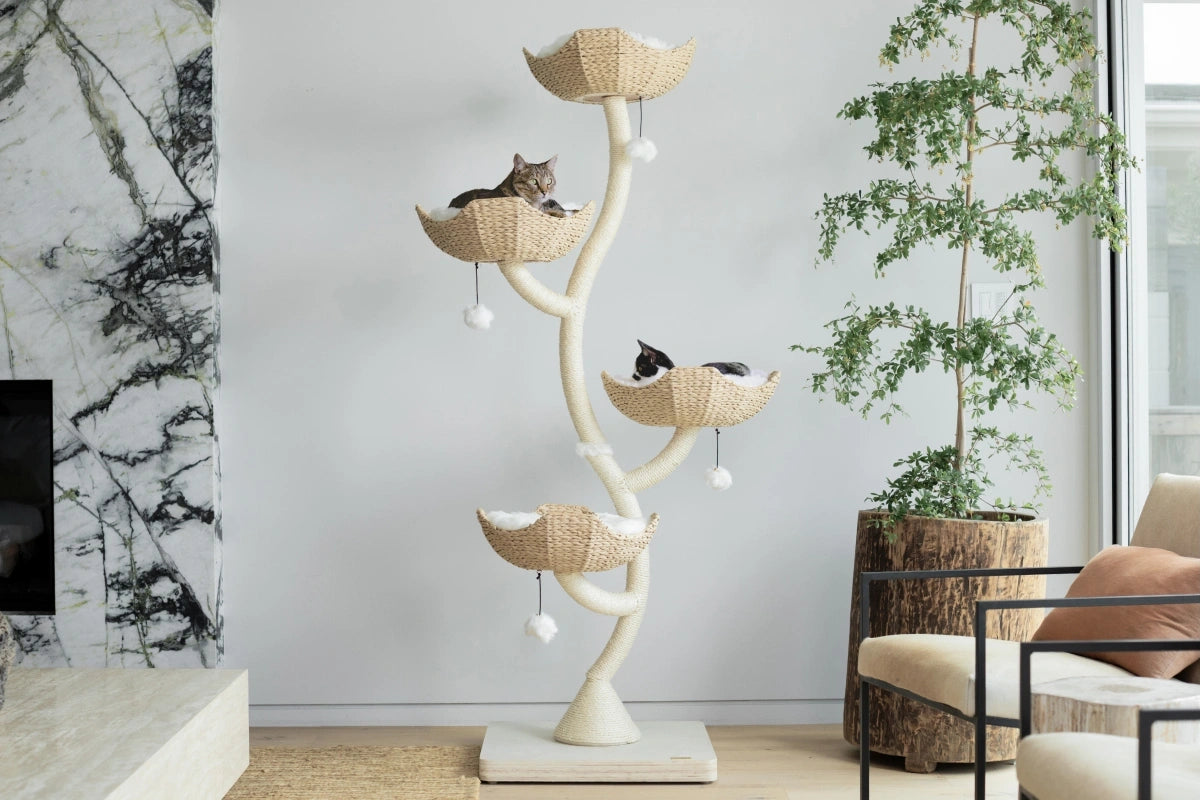
Give the cat a view you can live with
Measure the space where your cat naps, then the corner where you’d put a tree. A tall tower can still have a tiny bed. These three cat trees offer different ways to climb, hide and stretch out, in finishes you might welcome beside the sofa. Start where your cat already likes to watch the room. Check the space they can rest in and how they’ll get there before picking a color. The cat may keep the sofa too. It helps to leave room for both.
Mau Ivy with room to branch out
 For high-up naps
Ivy’s branching shape and woven baskets give a tall cat tree the look of a piece of furniture. Mau lists four basket beds and a height of 73 inches, so measure beside your window and under the ceiling before falling for a color. The maker’s limit is 18 pounds per cat. Check the basket space as well as that weight limit. Removable cushions and listed spare parts help with upkeep. If that much tree would take over the room, Vesper offers a different shape.
Catit Vesper High Base for hiding and watching
 For hiding and perching
Vesper High Base puts a cube to hide in below raised resting spots. Your cat gets a choice of places to settle, while the wood-look surfaces give you an alternative to a carpeted tower. Compare the den and perch sizes with the room your cat needs to turn and stretch. Check that you’re buying High Base, because other Vesper models have different layouts. Catit lists spare parts for the range; check local stock before relying on them. The Frisco below keeps the whole setup lower.
Frisco 28.5-inch Modern Cat Tree & Condo for a smaller corner
 For smaller corners
Frisco’s 28.5-inch Modern Cat Tree & Condo pairs a box to hide in with a perch on top. The low, wood-look shape is easier to fit beside furniture than a tall branching tree. You give up height, so choose it for a smaller corner rather than a high lookout. Check the den and perch measurements before ordering. The height on the label won’t tell you whether your cat can stretch out. A compact tree still needs a bed your cat can use.
The room can do some of the work
Leave space around the tree for your cat to walk up and move away. The rest of the room can offer places to pause, too. Peter Cohen’s home takes that idea much further, with walkways, ramps and resting spots through everyday rooms. Family & Pets’ gallery shows the cats sharing those spaces with people. You can borrow an idea without rebuilding the house.
Measure the nap, then the corner
Choose the resting space first, then the route up to it. Check the entrance, the gaps between levels and the maker’s assembly and stability directions. Ask your vet about access if your cat has a mobility or medical concern. After that, pick the finish you’d like to live with. Ivy gives you height and baskets, Vesper combines a hideaway with raised spots, and Frisco keeps things lower. A tree earns its corner when it makes room for the cat as well as the furniture.
Sources: maupets.com; chewy.com 2; familyandpets.com; chewy.com 4; catit.com.
Related stories




Vivian Park
Vivian specializes in products for indoor cats, from litter boxes and scratchers to cat trees, carriers, and play. Her reviews examine usable space, entry height, cleaning access, refill costs, and what a product asks a cat to tolerate. She is particularly interested in the difference between a feature that appeals to an owner and one that gives a cat a useful choice. She shares an apartment with Olive, a reserved tabby, and Fig, a younger longhaired cat. Her editorial instinct is to leave room for both the cautious observer and the enthusiastic climber.