
A Simpler Cleanup Routine for a Home With Pets

Expert verifiedSources and qualifications checked
Nora Bennett reviews clarity, structure and the writer’s voice. Adrian Cole reviews source support, qualifications and image attribution.
Reviewed November 14, 2026 for this version of the article.
Meet the Editor Voices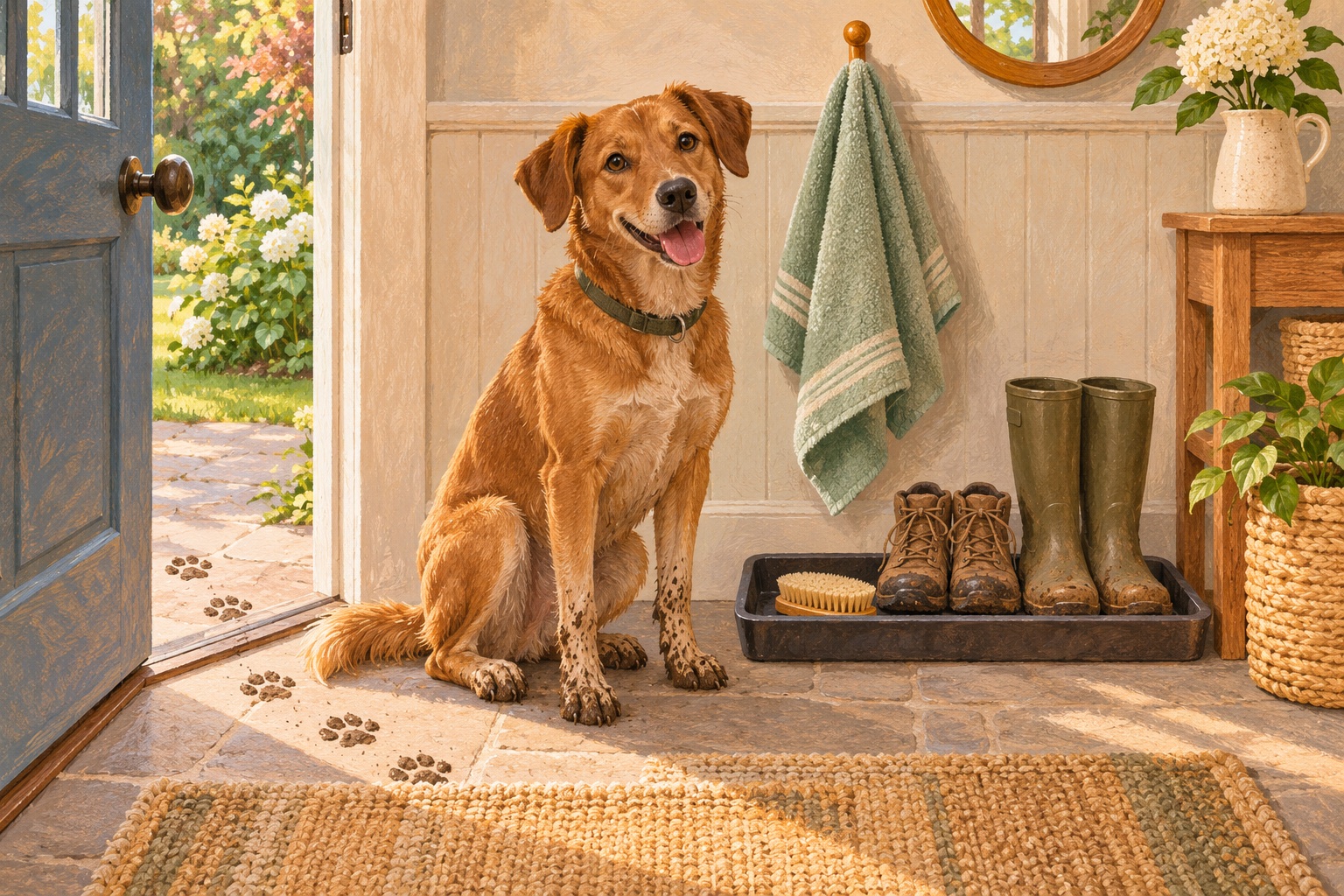
Put the towel where the walk ends
Watch what happens on the next muddy walk. Do the first paw prints land on a mat, on the hall floor or all the way by the couch? Put a towel where you can reach it with the leash still in your hand. A hook or basket at the door works if there's room to stand beside it. If the door opens straight onto the living room, a folded towel you can put down before you leave can give you a spot to pause when you return.
Shake the loose grit off the mat when you're ready to clean it. For the floor, use what the flooring instructions say is suitable. A damp cloth may be enough to pick up a few fresh prints. If you use a cleaner, follow its label and keep pets off the surface until it is dry. Keep the towel for paws separate from the cloths you use around food and water bowls.
The test is whether you can do the job while the dog is still within reach. If you find yourself hunting for the towel across the room, move it closer. If there's usually a puddle next to the mat, give the wet towel a place to hang after the walk so you can put it back within reach once it is dry.
Wash the part the pet sleeps on
Find the bed's care label before the next load. A cover, an inner liner and the cushion inside may each have different instructions. Find the zipper or opening while the bed is dry, and check which pieces the manufacturer says can go in the machine. If you use a loose blanket over the bed, it gives you a smaller load on days when the blanket is all that needs attention. Leave another familiar spot available while the bed or blanket dries.
The CDC guidance uses a weekly wash as an example for beds and blankets, with more frequent cleaning when needed. A regular laundry day gives you something to hang the chore on. If the bed takes longer to dry than the rest of the load, start it earlier or keep using the separate blanket until the bed is ready. Let the care label guide how you wash and dry each piece.
The same idea works on the sofa. Look at the spot the pet actually chooses. A washable throw over one favorite cushion is easier to remove than a cover that spans the whole couch. Pick the corner you already straighten most often. If the throw slides under the pet every time they get up, try folding it smaller or tucking an edge where you can pull it out without moving the furniture.
Give the bowls a trip to the sink
Set aside a spot to put a washed bowl down while it dries. If a drying rack is crowded, clear room before the meal or use a clean towel. Give the food scoop a place to dry too, away from crumbs and drips. A mat under the bowls can help you see where water and food collect. Lift it when you wipe the area so you can check underneath it as well as around the edge.
The FDA's pet food storage guidance calls for washing and drying pet food bowls and scoops after use. Wash the wet food bowl when you pick it up. If there's leftover canned or pouched food, refrigerate or discard it promptly, as the FDA advises. Finish by rinsing any washed items and giving them time to dry. Check the bowl's instructions before using the dishwasher.
Water tends to travel past the bowl. After you refill it, look at the wall or cabinet edge, the underside of the mat and the floor where your pet stands. If the same corner gets wet every time, try shifting the bowl a short distance and see where the next spill lands. Give the bowl its own stable spot where you can pick it up without reaching under a table or moving a chair.
Shorten the job you already do
If hair collects along a single sofa seam, start there. A whole-room sweep makes more sense when grit has already spread down the hall. Use a tool you already own that suits the surface, and try a small area first if you've never used it on that material. Work from the spot with the loose mess toward the edge where you can pick it up, instead of chasing it through the room.
Keep a clear path around the feeding area and favorite beds. If there's a pile of shoes next to the mat, you have to move them before you can pick up the mat. If spare blankets sit on a chair across the room, you have to cross the room to change one. Moving the shoes or keeping a folded spare where the bed is can save you a step every time you clean.
Make a small version for busy days
Start with the next feeding, the next trip through the door and the next load of laundry. Wash the bowls you used, deal with the marks still wet at the threshold and check whether the pet's usual blanket needs a wash. Leave the jobs that need a clear floor or time to dry for a part of the day when the household can give them room. There's no need to clean a room edge to edge for a muddy patch by the door.
Try the setup for a few days. Look for a towel that's always wet, a mat you rarely lift or a pile of covers waiting until the weekend. Those clues tell you where the routine is still awkward. A second existing towel in the laundry rotation might help more than another cleaning tool. If you only change one thing today, put the first towel on its hook. You'll get a chance to see how it works the next time the door opens.
Related stories
Lena Ortiz
Lena covers the gear dogs use every day: harnesses, leashes, beds, bowls, and the supplies that collect by the front door. Her comparisons focus on fit, adjustment, cleaning, and value across different dog sizes. She looks closely at which features make a busy routine easier and which simply add bulk or expense.