
A Litter Box Routine for the Litter You Already Have

Expert verifiedSources and qualifications checked
Nora Bennett reviews clarity, structure and the writer’s voice. Adrian Cole reviews source support, qualifications and image attribution.
Reviewed November 14, 2026 for this version of the article.
Meet the Editor Voices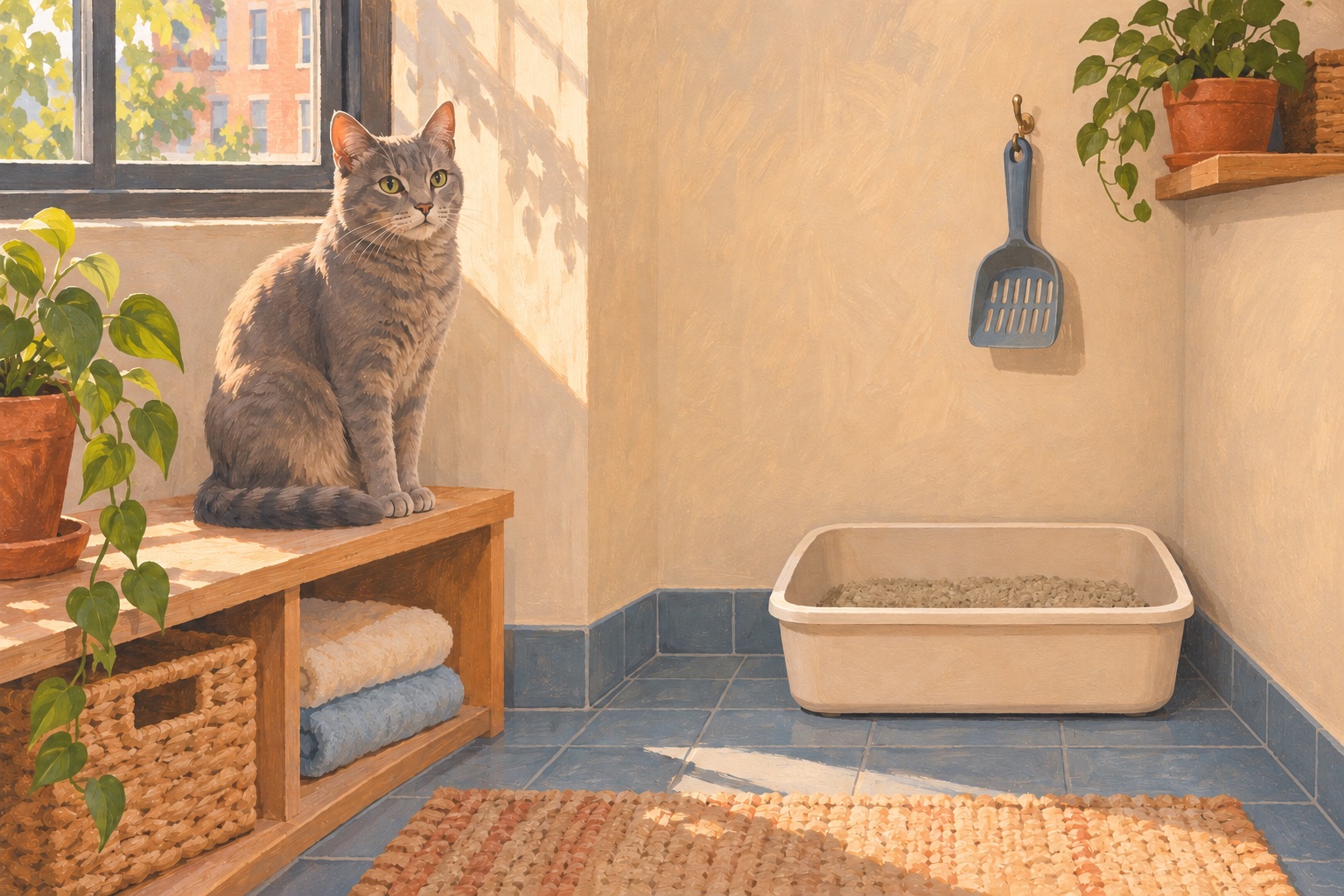
Start with where the box sits
Before you change how you clean, check where the box lives, because a perfect cleanout routine cannot rescue a bad location. The FelineVMA caregiver education guidance describes the goal as a clean, private, convenient place, and each of those three words can be tested against your floor plan. Private means the cat can use the box without a washing machine starting up beside it or a door swinging into it. Convenient means the cat can reach it without a detour through a closed room or past a barrier.
Think about access in physical terms as well. A box tucked behind a laundry basket in a bathroom may look tidy to you, but ask whether the cat can walk in without climbing over anything and whether an older or stiffer cat has a low, easy step in. If the current spot fails one of those tests, move the box a short distance before you touch the routine, and keep the move small enough that the cat can still find it. You are also an occupant of this space, so pick a spot where you can reach in with a scoop and a bag without contorting. A location you dread reaching will not get scooped daily, and daily scooping is the habit that holds everything else up.
Scoop once a day, and know what the scoop removes
The FelineVMA house-soiling guidance says to remove waste at least once daily, and that is the fixed point of the routine. Choose a time that attaches to something you already do, such as the morning coffee or the evening lights-out walk through the apartment. If you miss a day, scoop as soon as you notice and pick the daily rhythm back up.
What the scoop can do depends on the litter. In a clumping tray, urine gathers into firm masses and stool can be lifted out whole, so a scoop removes most of what has been soiled and leaves the surrounding material mostly untouched. That is why a clumping box can usually go longer between full changes if you top up the depth as you remove clumps. Check the bag for the interval that fits that material, because makers differ and the bag is the authority for your product. If you scoop thoroughly, you will see the volume fall over time, and refilling to the depth you started with keeps the cat's footing consistent.
Why non-clumping litter asks for a fuller refresh
Absorbent non-clumping material behaves differently, and the difference changes your chores. Urine soaks into the granules instead of forming a mass, so a scoop can lift out stool and any visibly wet pieces but cannot pull out everything that has been soiled. The wet material spreads through the layer and stays there, which is why this type often calls for a fuller refresh on a schedule.
Again, follow the bag for the interval, since it is specific to the material and no single number fits every product. Between full changes, scoop solids daily, remove any damp spots you can see, and add fresh material to keep the depth steady. A practical way to remember the split is that clumping litter lets you remove the problem, while non-clumping litter makes you replace the medium. If your calendar is crowded, that difference alone may decide how often you can realistically keep up, and it is worth being honest about it.
Wash and dry the tray when you empty it
A full change is the moment to wash the box, and the FelineVMA house-soiling guidance lists washing as part of regular care. Tip out all the old material, rinse the tray, wash it, and let it dry completely before you pour in fresh litter. Litter poured into a wet tray can stick to the bottom, which makes the next scoop harder than it should be. Drying is the step people skip, and a towel and some time in the air get you there.
Keep the routine plain. Wash the tray the way its care instructions allow. If you use a cleaner, follow its label, rinse the tray thoroughly and keep your cat out of the box until it is dry. Do not promise yourself that a clean tray will make the room smell like nothing, because odor depends on the litter, the room, the number of cats and how recently you scooped. What a clean, dry tray does give you is a fair starting surface that you did not have to compromise on.
Add a second box before you change the litter
If you suspect the cat dislikes the litter, resist the urge to swap it in the only box. The FelineVMA house-soiling guidance suggests providing multiple boxes with different litters, and a second box with the alternative lets you learn about a preference without changing the original box. That keeps a familiar option available while you offer a second one.
In practice, put the second box near the first, in a spot that also meets the private and convenient tests, and fill it with the different material. Then watch which box gets used, and let the cat's choice answer the question instead of your guess. Space is the constraint here, and a small apartment may not have a second good spot. In that case, keep the original box exactly as it is, since a poorly placed second box answers nothing. An owner with a tight budget or tight floor space can still run this comparison with a modest second tray, so the point is the separation of the two options.
When the routine is not the problem
If the box is harder to keep clean than you expected, look first at the timing and the tools. A scoop that holds half the clean litter makes a quick job feel wasteful. A bag stored across the room can make it tempting to put the job off. Change one thing at a time so you can see what actually helps. If a cat starts avoiding a box it normally uses, ask your veterinarian rather than assuming the litter is the cause.
So the working routine is short. Put the box somewhere private and easy to reach, scoop at least once a day, follow the bag for your material's full-change interval, wash and dry the tray when you empty it, and test any new litter in a separate box before touching the original. The fit condition is yours to judge: a plan you can keep doing in your own space beats a stricter one you will drop in a month.
Related stories

Vivian Park
Vivian specializes in products for indoor cats, from litter boxes and scratchers to cat trees, carriers, and play. Her reviews examine usable space, entry height, cleaning access, refill costs, and what a product asks a cat to tolerate. She is particularly interested in the difference between a feature that appeals to an owner and one that gives a cat a useful choice. She shares an apartment with Olive, a reserved tabby, and Fig, a younger longhaired cat. Her editorial instinct is to leave room for both the cautious observer and the enthusiastic climber.