
Try the Dog Coat With Your Leash and Harness Before You Commit

Expert verifiedSources and qualifications checked
Nora Bennett reviews clarity, structure and the writer’s voice. Adrian Cole reviews source support, qualifications and image attribution.
Reviewed November 17, 2026 for this version of the article.
Meet the Editor Voices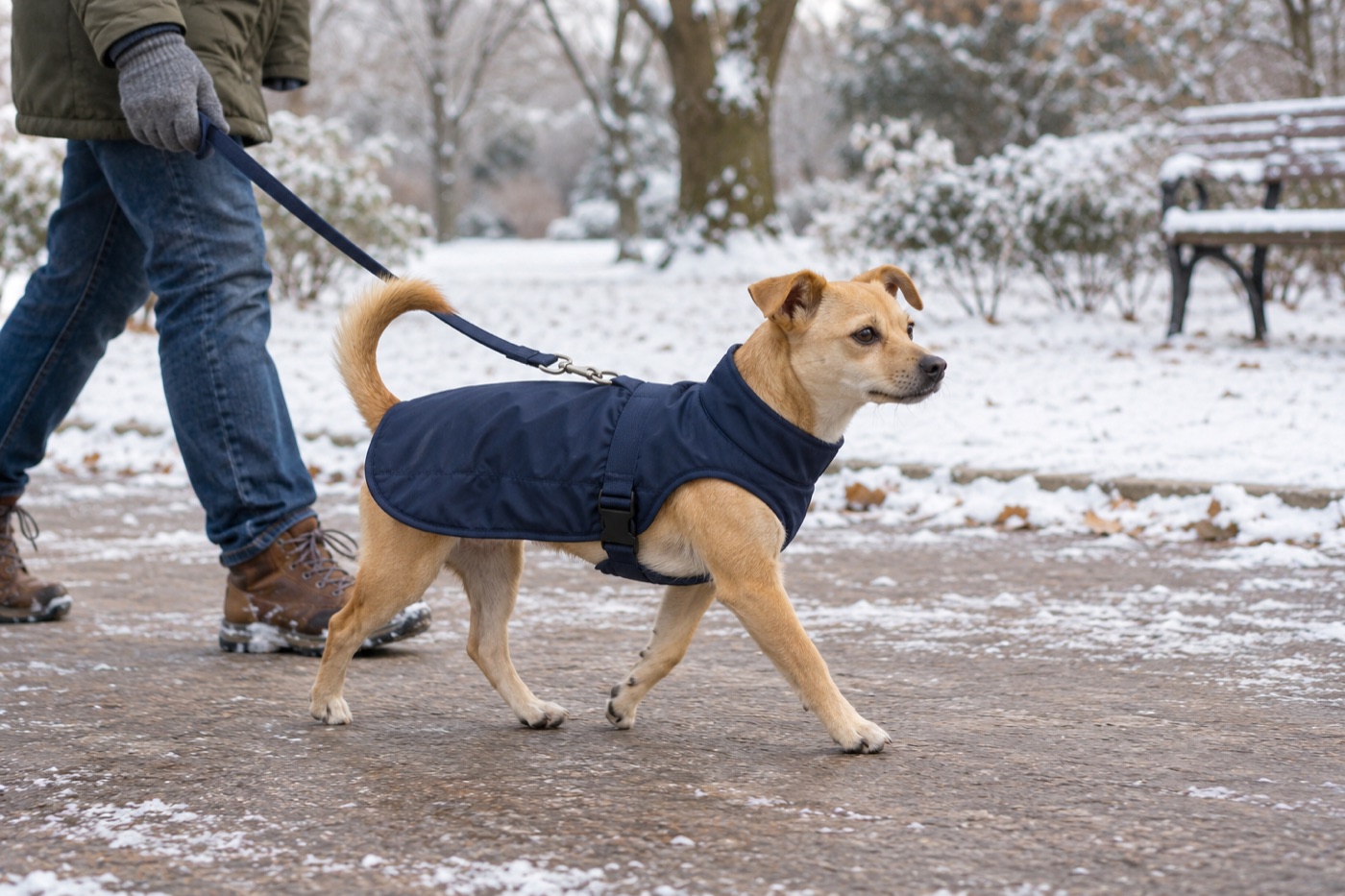
Measure your dog's rib cage before you shop, then match the coat cut to the weather you actually walk in. Fit matters more than the label on the tag. A coat that blocks wind but pinches at the shoulder is the wrong coat for that dog.
A shell, a fleece layer and an insulated coat are three options you'll see. Start with the weather on your usual walk and how your dog moves. A dog with a short coat heading into a windy park has a different outing from a thick-coated dog going around the block on a dry morning.
Deciding whether your dog needs a coat
The AKC suggests considering a sweater or coat for short or coarse haired dogs in cold weather. Think about the layer before you set out. If your dog shivers or wants to turn back during the walk, head indoors.
Cornell veterinarian Brian Collins lists wind chill, precipitation, exercise and time outside among the things to consider. The dog's size and coat also matter. A thick-coated dog may be comfortable on a short, dry outing without a coat. A longer trip in wind and rain calls for another look at the conditions.
Even on the same walk, two dogs can need different layers. Decide for each dog, with its size, coat and usual pace in mind. Family & Pets has a winter walk safety guide for deciding when to shorten the outing.
Skip the temperature chart and judge by your dog and your route. A coat you do not need is just one more thing to clip, wash and dry.
Choosing between shell, fleece and insulated cuts
Cornell's winter safety tip lists fleece, waterproof shells and insulated coats among the options. Read what's said about the fabric on the coat you're looking at. The coat's material and coverage tell you more about how it will handle wind or rain than the name on the tag.
If the walk is likely to be wet, look at a shell with a waterproof outer layer. Check what the maker says about rain and wind protection, and how much of your dog's chest and back the coat covers. Look at the shape of the leg openings as well as the fabric.
Fleece is another option if you want a soft layer. Check the maker's description for weather protection, then feel how the fabric sits around your dog's legs. A coat that bunches at the chest or under the forelegs is a poor fit even if the material feels soft in your hand.
An insulated coat adds a layer of material for warmth. Feel how thick that layer is around the chest and shoulders before you pick a size. At home, you can see whether the padding moves with the dog or folds into the space behind its front legs.
Cut matters as much as fabric. Look at how far the coat reaches along the back, how it sits over the chest and how it wraps the belly. A photo shows layout, not strength or warmth.
Measuring your dog's rib cage
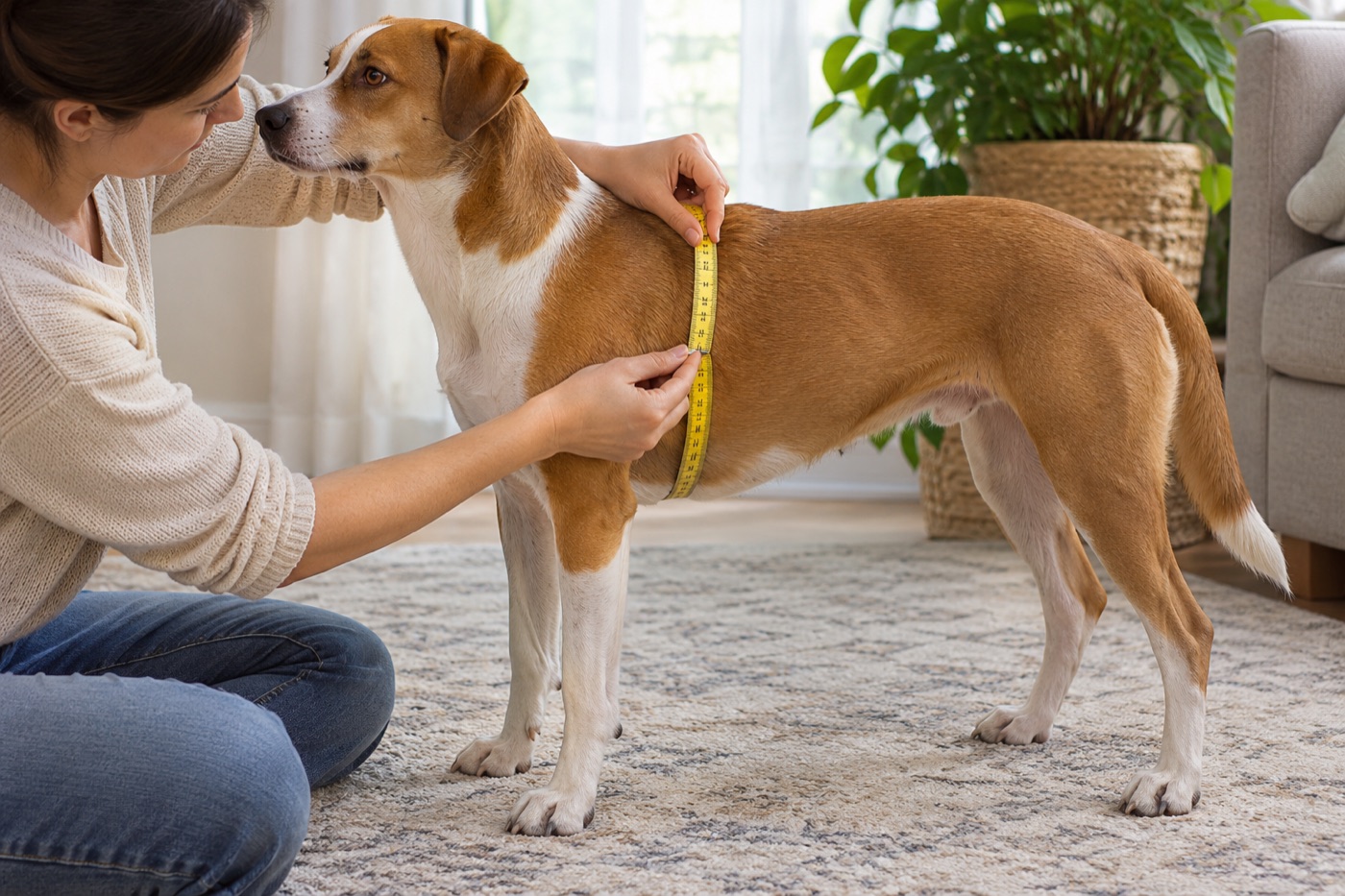
Get a soft tape and measure girth around the widest part of the rib cage. The manufacturer's measuring guide shows where to put the tape and lists girth ranges by size. Take your measurement to the size chart for the coat you are considering.
Have your dog stand on all four feet while you measure, and write the number down before you open a shopping page. Then read the stated chest range for each size, not just the size name. If your dog falls between two sizes, the closer and roomier option will behave differently, so run the movement checks below before you decide.
Girth is one number, not the whole shape. A deep chested dog and a round bodied dog can share a measurement and still sit in a coat differently.
Measure again each winter. The number from last year may no longer be right.
Checking the details that decide fit
Cornell's winter safety tip recommends a coat that lets a dog move freely and take a potty break, stays fastened in motion, and doesn't irritate the skin. Try those checks with your own dog. An easy closure is a small convenience indoors and a welcome one at the door on a cold morning.
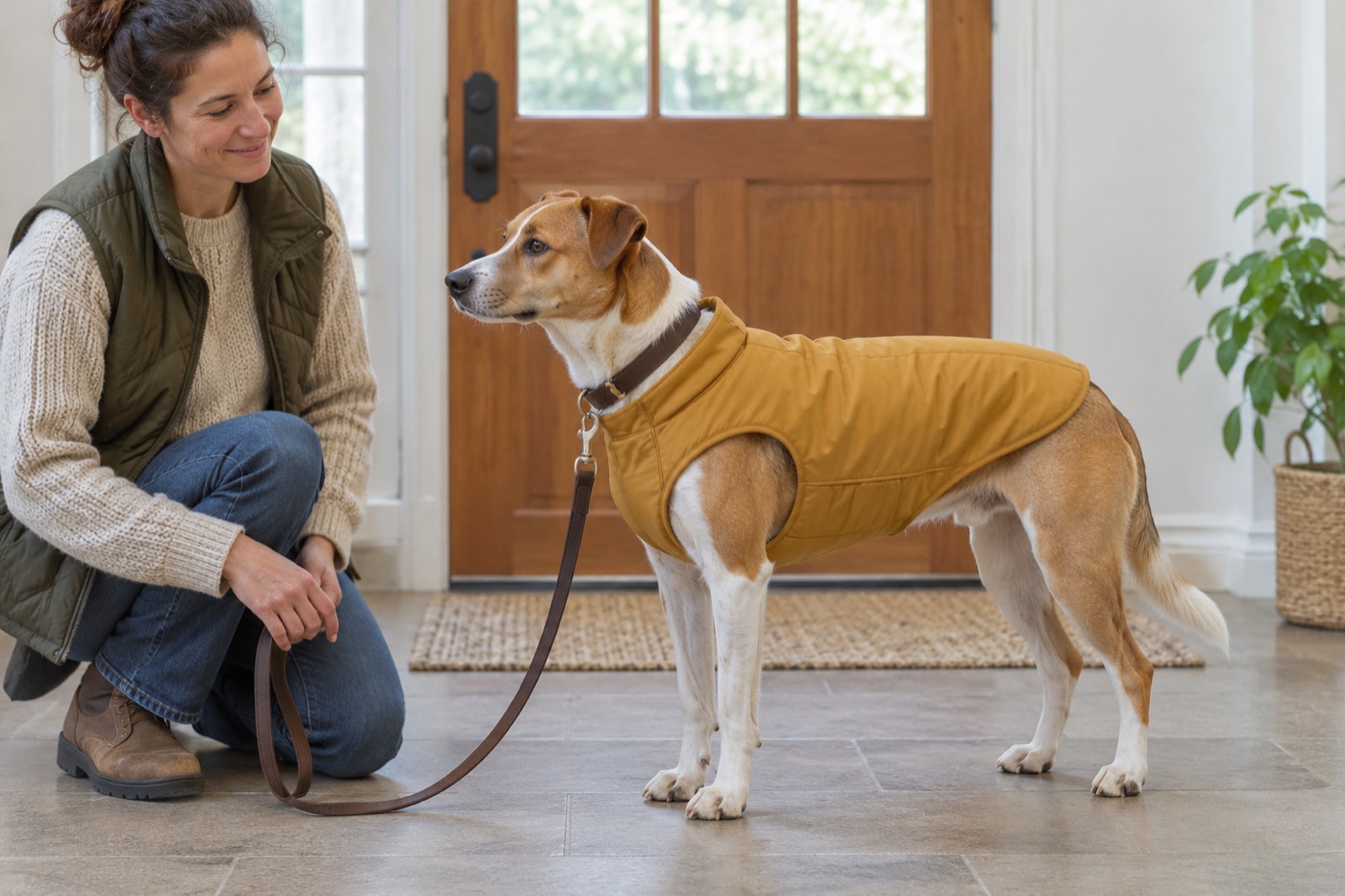
For movement, watch your dog walk, trot and sit while wearing the coat. Look at the front legs first. A coat that rides up, bunches or limits the stride at the shoulder is the wrong cut or the wrong size. Then watch your dog turn and lie down. Both should look the way they normally do.
For the closure, fasten it with your dog standing still, then give the coat a gentle tug. It should stay put and not slide to one side. Walk a few steps and check again, since a closure that held while your dog stood can shift once the dog moves. One that takes a long time to fasten will be a daily annoyance.
Fasteners differ from coat to coat, and no one type is better for every dog. Try the one on your coat while your dog stands and moves, and see whether it stays flat and closed and whether you can work it comfortably.
Check under the front legs and around the chest and belly, where a seam or strap rests against the dog. If you notice rubbed hair or red skin after trying the coat, remove it and check where the fabric touched. A different cut may keep that edge away from the spot.
For potty access, look at where the coat ends. A dog that squats or lifts a leg should have nothing in the way, and you should not have to pull the coat off to clean up.
Trying the coat with your leash or harness
Do the fit test with the gear you use every day. A coat that looks fine alone can get in the way once a harness or collar is on. Follow the jacket and harness instructions for which goes on first, then check that each piece sits where it normally does.
Attach the leash to the harness or collar at the point its maker specifies. Keep that ring reachable when the coat is on. If the coat covers a back-clip ring, look for a jacket with an opening in the right spot. Check that the harness straps lie flat after you clip on.
Then take a short lap around the house or yard on the leash. Watch for the coat shifting when the leash goes taut, and for the harness pushing the coat up toward the neck. Adjust the straps only as the coat and harness directions allow, then try again. A dog with a broad chest and a narrow waist may need a coat that adjusts in more than one place. That extra adjustment can look fussy, but it is worth having for that dog.
After the trial, check the care label and think about where a wet coat will hang. A thick insulated cut has more material to dry than a thin shell, so a small drying space may favor the thinner option.
Choosing the coat that passes your checks
Choose a coat that suits the conditions you walk in and passes the checks with your dog. It should stay closed while your dog moves, sit clear of the legs, and leave the harness or collar attachment point easy to reach. If the straps have to pull the coat out of shape to make it fit, try a different cut.
Related stories
Lena Ortiz
Lena covers the gear dogs use every day: harnesses, leashes, beds, bowls, and the supplies that collect by the front door. Her comparisons focus on fit, adjustment, cleaning, and value across different dog sizes. She looks closely at which features make a busy routine easier and which simply add bulk or expense.