
Boy Cat Names You Can Try Before One Sticks

Expert verifiedSources and qualifications checked
Nora Bennett reviews clarity, structure and the writer’s voice. Adrian Cole reviews source support, qualifications and image attribution.
Reviewed November 16, 2026 for this version of the article.
Meet the Editor Voices
Pick three names, not one, and say each aloud for a few days before you commit. A good male cat name is short, easy to call down a hallway, and still fits him after the first week, when his habits start to show. Start from what he does, where he sleeps, and which sounds your household enjoys saying.
Skip anything that sounds like a command you already use, such as No or Down. Test each candidate by calling it once in a normal voice and once from another room. If it stays clear in both, it stays on your list.
Names from everyday habits
Watch what he does for a day and write down the verbs. A cat who patrols the home at dawn could be Sergeant or Marshal. One who knocks small objects off the counter suits Domino, Tumble, or Bishop.
Food-motivated cats make easy material. Biscuit, Waffle, Nacho, and Pickle suit a cat who treats mealtime as the main event. Each is short with a clear opening sound, which carries well from the kitchen. If he grazes all day instead, try Nibbles or Crumb.
Sleepers and loungers have their own pool. Mellow, Pilot, and Loaf fit a cat who folds himself into a compact shape for hours. A restless night owl might be Moth, Comet, or Nightcap. Choose the one you can say cheerfully while half awake.
Social habits count too. A cat who greets people at the door could be Mayor or Doorman. One who follows you from room to room might be Sidekick or Deputy. A cat who prefers to watch from a distance suits Judge or Critic.
Names from his favorite spots
Where he settles is a good clue to who he is. A cat who claims the windowsill could be Skylark, Sill, or Finch. One who lives in the box, the bag, or the laundry basket might be Parcel, Crate, or Tote. Sunbeam sleepers suit Ember, Toast, or Marmalade, though that last one is a mouthful when you are in a hurry.
High perches deserve a bigger name. Summit, Atlas, and Everest suit a climber who prefers the top of the bookshelf. If he likes low, tucked-away corners, try Nook, Burrow, or Pebble.
Spot names have one weakness. Favorite places shift with the seasons and with furniture. A name tied to a long-term habit holds up better than one tied to this month's chair.
Names from sounds your household likes
Say the name out loud before you decide. Two-syllable names like Mango, Pixel, or Otto are easy to say in a bright, steady tone. Short names with a crisp consonant, like Kip, Zeke, or Tic, are quick to call in a busy kitchen.
Music gives you plenty of material. Miles, Monk, Otis, and Ziggy nod to jazz, soul, and rock. A household that likes brass bands could pick Cornet or Bugle. Whatever you choose, make sure every person in the home is happy to say it many times a day.
Nicknames often arrive on their own, so choose a base name that shortens gracefully. Montgomery becomes Monty, and Sebastian becomes Seb. Check that the short form is still a name you like, because it may become the one you use most.
His own voice is another source. A cat who chirps at birds could be Robin or Chirp. A low, steady purr might suggest Rumble or Bass. A cat who trills when you come home could be Trill or Fife. Listen for a few days and one sound may stand out.
Pairs for two cats
Pairs work best when the two names sound different, so each cat can be called on his own. Avoid matching endings, like Benny and Lenny, which can blur together across a room. Salt and Pepper is the classic, but Miso and Wasabi, Mochi and Boba, and Pancake and Syrup carry the same joke.
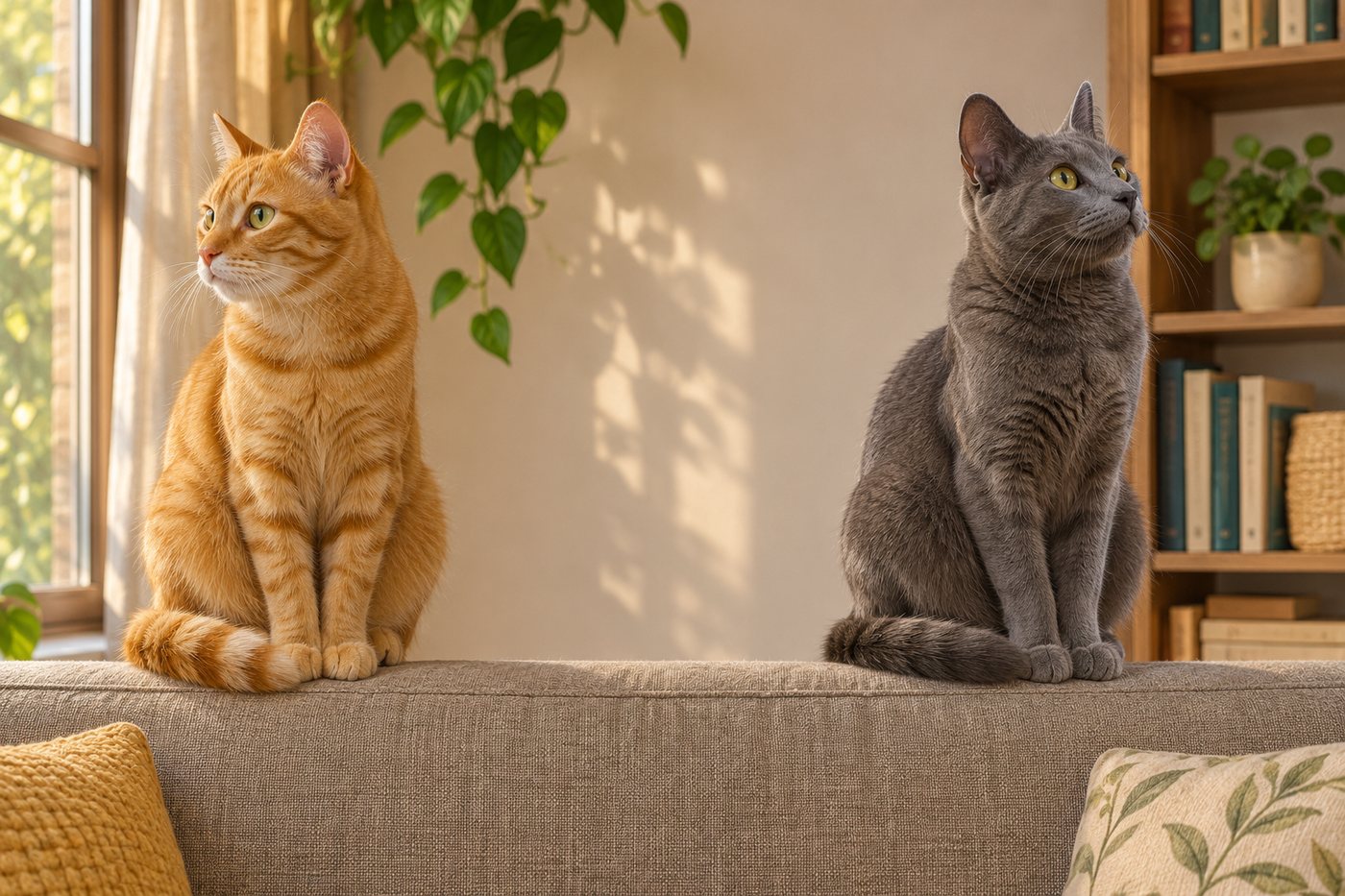
Contrasts also work. Pair a big, slow cat with a small, quick one: Anvil and Sparrow, Moose and Pip, Tank and Jet. Matching themes tidy up a pair that is close in size. Try Ink and Quill, Rye and Wheat, or Orbit and Rocket.
If one cat already has a name, keep it. Choose the second name to sit beside it, then say both together a few times, as you would when calling them for dinner. If the pair trips your tongue, change the newcomer's name.
Trying a name without forcing it
Saito and colleagues reported that cats discriminated their own names from other spoken words under study conditions. The result doesn’t tell you whether your cat will come when called or likes the name.
Give each name one day. Say it in the hallway, from the kitchen and at the spot where your cat usually sleeps. Then jot down how it sounded: easy to say, clear from another room, or too close to another word.
Do not read a turned ear or a twitching tail as a yes. A single reaction can come from tone, timing, or the room, so it tells you little about the name itself. The real test is simpler. Can you say it comfortably, does it stay clear from another room, and does everyone in the home like saying it?
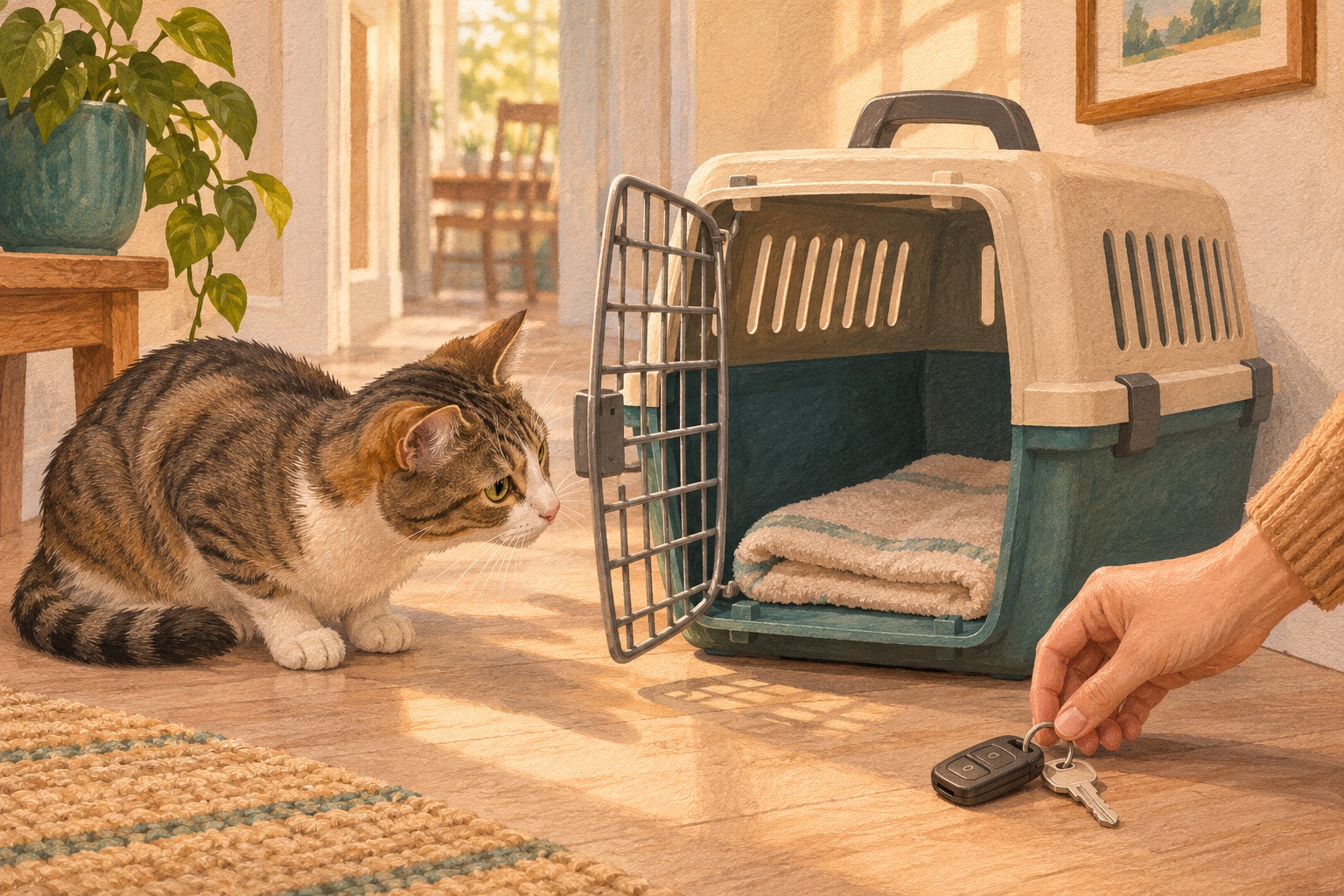
Keep each session short and pleasant. Say the name at a calm moment, then follow with something he already enjoys, like a meal or a gentle brushing. Save the trial name for pleasant moments, and skip it for carrier trips or nail trims.
On day four, compare your notes. Cross off any name that felt awkward to say, got mixed up with another word, or made someone in the house wince. If more than one name remains, choose the one you most enjoy saying. Give that name a week of ordinary use, including one call from the far end of the home. Write the survivor on a note by the door so everyone in the home uses the same pronunciation.
Start with the habit he already has, check it against the sounds you like to say, and run the three-day trial on your top three. Keep the one that stays easy to call and still fits him at the end of the first week. If none of the three does, build a new trio from his habits, favorite spots or sounds you like.
Related stories


Lena Ortiz
Lena covers the gear dogs use every day: harnesses, leashes, beds, bowls, and the supplies that collect by the front door. Her comparisons focus on fit, adjustment, cleaning, and value across different dog sizes. She looks closely at which features make a busy routine easier and which simply add bulk or expense.