
Can Dogs Eat Pecans? Why They’re Better Left Off the Treat List

Expert verifiedSources and qualifications checked
Nora Bennett reviews clarity, structure and the writer’s voice. Adrian Cole reviews source support, qualifications and image attribution.
Reviewed November 16, 2026 for this version of the article.
Meet the Editor Voices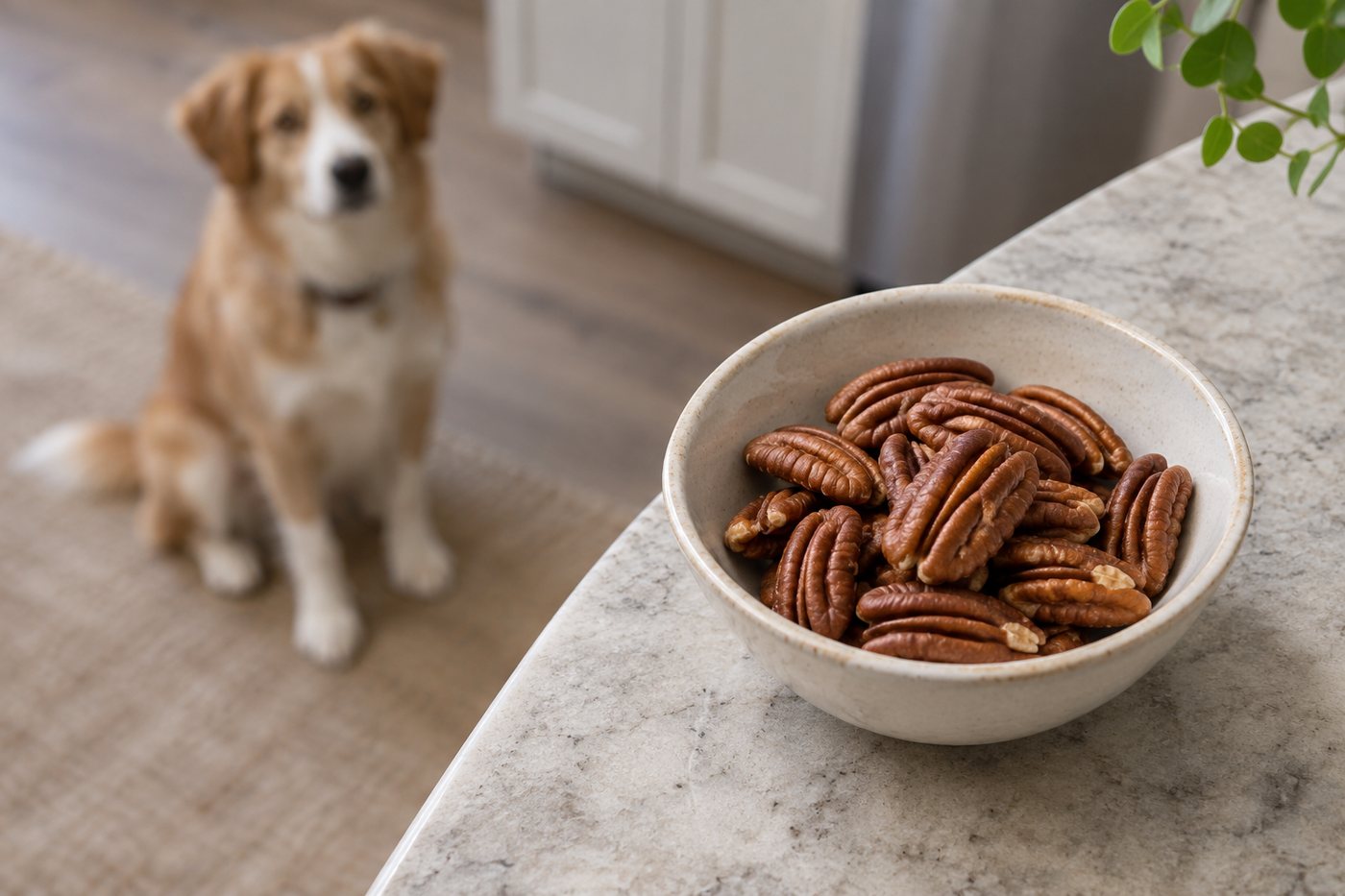
Skip the pecan. If you are deciding whether to share one from the bowl, the baking tray or your hand, the answer is that pecans do not belong on a dog's treat list. That is a different statement from saying a plain pecan is poison.
What matters is the situation around the nut. A plain nut, a seasoned or mixed dish, and moldy food are three separate problems with three separate sets of questions. Sorting out which one you are dealing with is the first useful step, and it also tells you what to say if you need to call someone.
Why a plain pecan is a poor treat
ASPCA Poison Control lists pecans among the nuts that are high in oils and fats. It describes possible digestive effects from foods in that group. That is the case against the pecan as a treat, and it is a practical case rather than an alarming one.
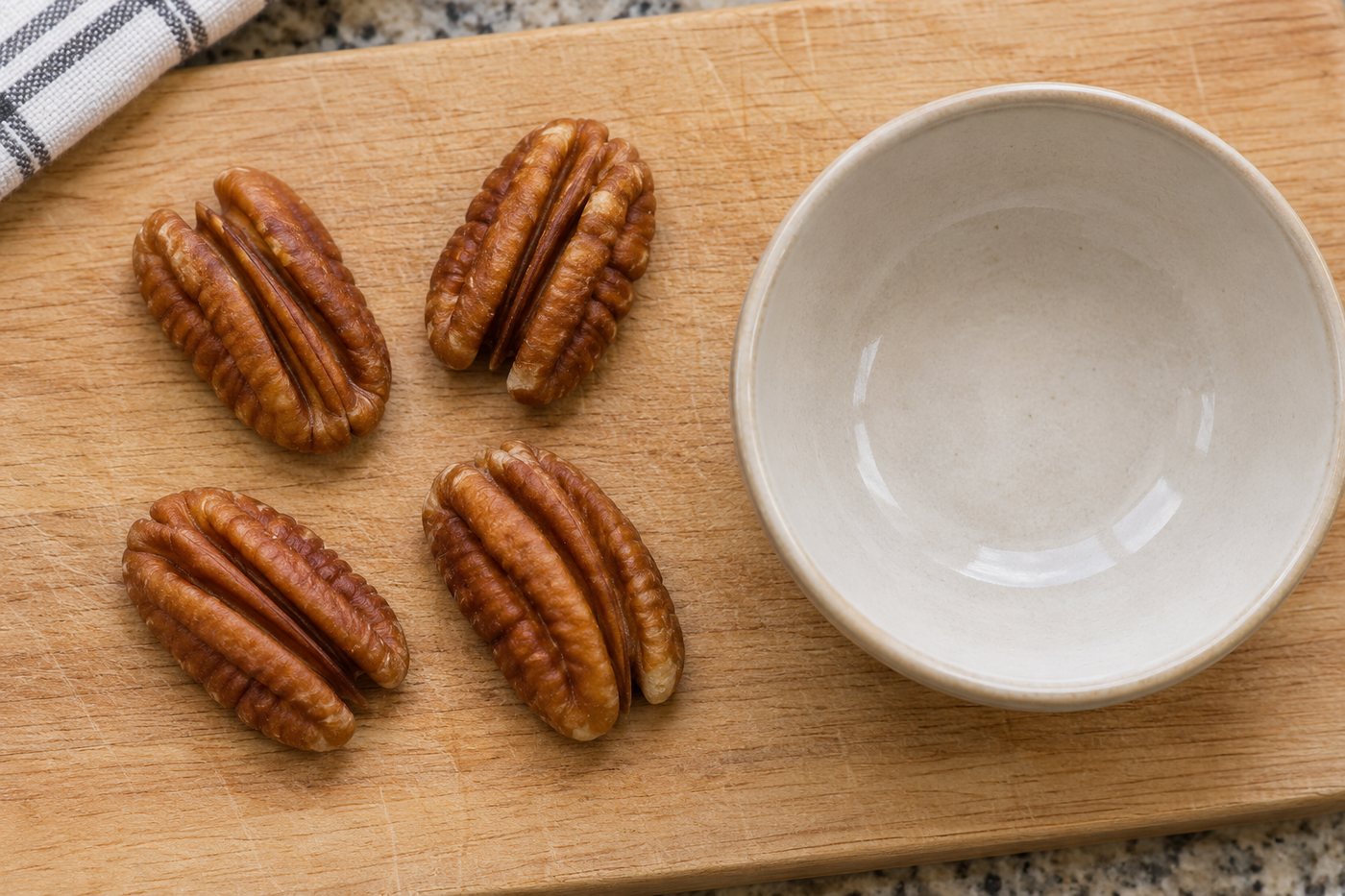
A treat has a simple job. It should be easy to hand over, easy to portion in your head, and easy to forget about afterward. A rich nut does not do that job well, because you take on a digestive question and get nothing a plain dog biscuit would not give you.
The ASPCA gives macadamia nuts their own entry. Keep the two nuts separate when you consult that list. If you are looking at a bowl of mixed nuts, use the package if you have it to identify which kinds were in the bowl.
Nuts are easy to overlook as a rich food. They are small, they sit in bowls and bags, and they hide inside baked goods, so a rich ingredient can pass for a harmless crumb.
So the rule for the treat list is easy. Leave pecans off, and pick something made for dogs.
Telling moldy nuts from a plain one
Mold changes the picture. Pet Poison Helpline says moldy food, nuts included, can contain tremorgenic mycotoxins that are hazardous to pets. Mycotoxins are toxins made by mold.
This is why the condition of the nut matters, not only the kind of nut. A pecan that sat forgotten in a bag, under a counter or at the back of a cupboard is not the same as one from a fresh, sealed package. If you see mold, treat the nuts as moldy food.
Mold can come into the kitchen through an old bag, a container someone forgot, or scraps left where a dog can reach them. Take the bag or the old scraps out of reach as soon as you spot them.
Seasoned and mixed dishes are their own question
Pecans often show up in something else. They turn up in a pie, a coffee cake, a candied mix, a trail mix or a tray of roasted nuts with a coating. Once that happens, the pecan stops being the whole story.
A mixed dish has several ingredients, and any one of them could be the reason to call. Seasoning, sweeteners, other nuts and add-ins can all be in the same bowl. You cannot sort this out by looking at the pecan alone.
The label or recipe is what will help you answer a question about a mixed dish. For a dish you made, note what went into the whole batch, including ingredients that were mixed into the topping. For a bought dish, keep the package where you can read the list during the call.
A serving bowl can make a mixture look simpler than it is. Someone may be able to identify the nuts but have no idea what the cook added. If you put a mixed dish down on a low table, move it out of reach when you get up.
When to call a veterinarian or poison service
Pet Poison Helpline advises calling the service or getting veterinary treatment immediately if your dog may have eaten moldy food, including moldy nuts. If the nuts were part of a mixed dish or you can’t tell what your dog ate, describe what happened to your veterinarian. Say whether you know the nuts were plain or whether you need help sorting out the other ingredients.
Your own veterinary clinic is one option, and an animal poison service is another. Save both numbers in your phone ahead of time, since the middle of a holiday bake is a poor moment to search for them.
If your dog ate a plain pecan, call your veterinarian for advice with your dog's weight, how much you think the dog ate and any stomach upset you've noticed. If you only saw the dog near an open package, describe exactly what you found.
What to tell the veterinarian or poison service
The person on the line will ask what the dog ate. Do not wait for symptoms, and do not let gathering details delay the call. If your dog may have eaten moldy nuts or a mixed dish, call right away and pull these details together as you go. Start with the packaging. Keep the bag, box or wrapper, and be ready to read the label aloud: the product name, the brand, the full ingredient list and any added seasonings or coatings.
If the food was homemade, have the recipe or a list of what went in. If the nuts were loose, note where they came from and how long they had been stored. Mention any visible mold and where you found the nuts.
Add details about your dog. Have the dog's approximate weight, age and breed ready, along with any health conditions or medicines, and the time you last saw the dog with the food.
Photos help. Once the call is under way or finished, take a picture of the label, front and back, and of the nuts or leftovers, before anything goes in the trash. Write down your clinic's name too, in case the poison service wants to loop it in.
If a second adult is home, one person can gather the label and recipe while the other makes the call.
Storing nuts out of reach
The simplest fix is physical. Store nuts in a sealed container on a shelf your dog cannot reach, and move baking trays and snack bowls up high before you leave the room. Pour the bag into the container instead of folding the top over.
Check cupboards and pantry corners for old nuts now and then. Toss anything moldy into a bin with a lid, so the dog cannot dig it out.
Tell guests and family where the nuts are kept and ask them not to share from the table. A dog that gets a bite from several people can end up eating more than any one of them realized.
If you want to share a snack, choose something made for dogs and leave the pecans for the people. That is the whole answer.
Related stories
Lena Ortiz
Lena covers the gear dogs use every day: harnesses, leashes, beds, bowls, and the supplies that collect by the front door. Her comparisons focus on fit, adjustment, cleaning, and value across different dog sizes. She looks closely at which features make a busy routine easier and which simply add bulk or expense.