
What Makes a Black and White Cat Look Like a Tuxedo

Expert verifiedSources and qualifications checked
Nora Bennett reviews clarity, structure and the writer’s voice. Adrian Cole reviews source support, qualifications and image attribution.
Reviewed November 17, 2026 for this version of the article.
Meet the Editor Voices
Look at the chest and paws first. A black-and-white cat with a white bib and white toes can look dressed for dinner, which is where the tuxedo nickname fits naturally. Black-and-white bicolor describes the coat colors. If somebody needs to know what this particular cat looks like, add where the white starts and stops.
Separating the coat from the breed
Coat words and breed names are two different kinds of label. The Cat Fanciers' Association describes feline coats and pattern terms, and those terms are distinct from breed names. Keeping the two apart makes every later description easier to write.
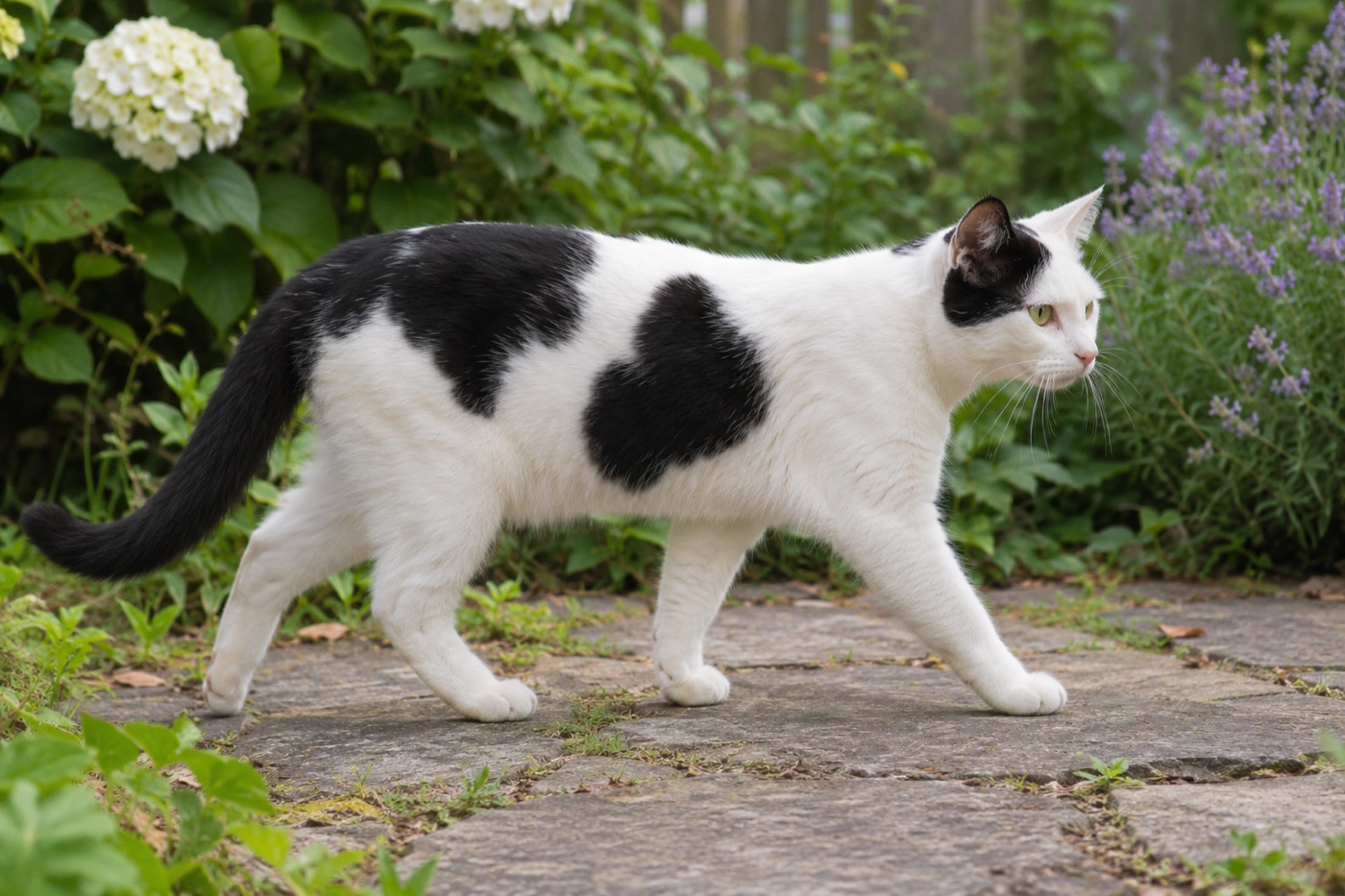
Black-and-white bicolor describes a coat. Tuxedo is the nickname CFA gives that coat in its introductory guide. A breed name belongs on a separate line. If you know the cat's markings but have no information about breed, the color words are the information you can write down.
Say you are filling out a form with one line for coat and another for breed. Tuxedo, if you use it at all, goes on the coat line. Putting it on the breed line mixes two kinds of information.
Naming a black-and-white bicolor
Bicolor means a coat with white and one other color. The CFA breeding chart describes a bicolor by the nonwhite color of the coat. For your cat the nonwhite color is black, so black-and-white bicolor is the plain description.
To describe a bicolor, start with the nonwhite color across the coat, which here is black, and then say that white is present. There is no need to count patches or measure anything at this stage.
A cat with white and a different nonwhite color is described by that color instead. Tuxedo is the common name that goes with the black-and-white version.
A description like black-and-white bicolor covers the main color and the presence of white. Where the white sits can go in a second sentence, such as white on the chest and all four paws. Readers get a clear picture from that without needing a label for every variation.
Deciding if the suit look fits
CFA's guide for kids gives tuxedo as the common name and black-and-white bicolor as the formal coat wording. For a cat in front of you, either name gets the colors across. A few words about where the white shows up will tell the next person much more.
Think of the outfit as a picture you can use to describe the coat. A white patch down the front can look like a shirt front, and white paws stand out against dark legs. Those are examples of what can make the nickname feel right. The CFA guide gives the name without setting out a measurement for the white patches.
That leaves room for honest differences. One person calls a cat with a black coat, a white chest, and four white paws a tuxedo. Another prefers black-and-white bicolor for a cat with white across the face and belly and a black saddle over the back. Both are describing a real coat, and each carries a different picture of the suit. In everyday records, such as an adoption listing or a note to a friend, either label works, because the reader only needs a picture.
If you aren't sure the suit picture fits, black-and-white bicolor is a plain description of the two colors. You can be more specific with a line about the back, face or paws, especially when the white covers most of the cat.
Walking the cat from nose to tail
Look in the same order each time, in good light, with the cat wherever it is comfortable. If it will not hold still, a few photos from the front, side, and top work just as well.

Start with the face. Note whether white sits on the muzzle, chin, or nose, or whether the face is dark. Then check the chest. A bib is a patch of white on the front of the chest. That is the shirt front of the suit look.
Next, the paws. Count how many are white. Note whether the white stops at the toes or climbs the leg. Look at the belly only if you can see it without lifting or handling the cat. Finish with the back and tail, and note whether the dark color covers the top of the body.
Take your time on each white area. Say whether it is one solid patch or several smaller ones, and say which parts of the cat it touches. Plain words such as patch, stripe, or tip are enough. Precise notes now save you from arguing later about what you meant.
Write down what you saw. You could describe one cat as mostly black with a white chest and four white paws. Another might be mostly white with a black spot over one ear and another over the hips. Both descriptions give the reader the two colors and let them picture where the patches are.
Writing it down for a form or a show
Use the nickname in conversation and the coat terms on paper. Tuxedo is friendly and quick. Black-and-white bicolor is the plainer description, and it matches how the CFA frames the coat. A good written line names the main color, says white is present, and lists where the white sits.
The CFA notes that a color name used in the cat fancy can differ by breed. If you're filling out a show entry, use the instructions on that form. For a note to a sitter, you can write the ordinary colors and the markings that help the person recognize your cat.
Here is a sample line to adapt: Coat: black and white bicolor, white chest, four white paws, dark face. If you want the nickname, add tuxedo at the end as a note about the coat.
Checking your description in three questions
A description holds up when you can answer a few things just by looking at the cat. The answers are all visible, and none needs a guess about breed or history.
One is the main nonwhite color, which for a black-and-white bicolor is black. Another is where the white sits: face, chest, paws, legs, belly, or tail, rather than words like a lot or a little. The last is whether the suit look fits. A white bib and white paws on a dark body point toward yes, while white spread across most of the cat leaves room for opinion.
Stay with what you can see. White at the front of the neck is a useful detail because the person reading your notes can look for the same patch. If they want to know how the cat acts around people, describe how the animal actually behaves around someone it knows.
The next time you meet a black-and-white cat, look from nose to tail and write down what you find: black as the main color, white and where it sits, and the word tuxedo if the bib and paws match the suit. That description stands on its own without a breed attached.
Related stories



Lena Ortiz
Lena covers the gear dogs use every day: harnesses, leashes, beds, bowls, and the supplies that collect by the front door. Her comparisons focus on fit, adjustment, cleaning, and value across different dog sizes. She looks closely at which features make a busy routine easier and which simply add bulk or expense.