
How to Describe a Pale Orange Cat Without Guessing the Color Name

Expert verifiedSources and qualifications checked
Nora Bennett reviews clarity, structure and the writer’s voice. Adrian Cole reviews source support, qualifications and image attribution.
Reviewed November 17, 2026 for this version of the article.
Meet the Editor Voices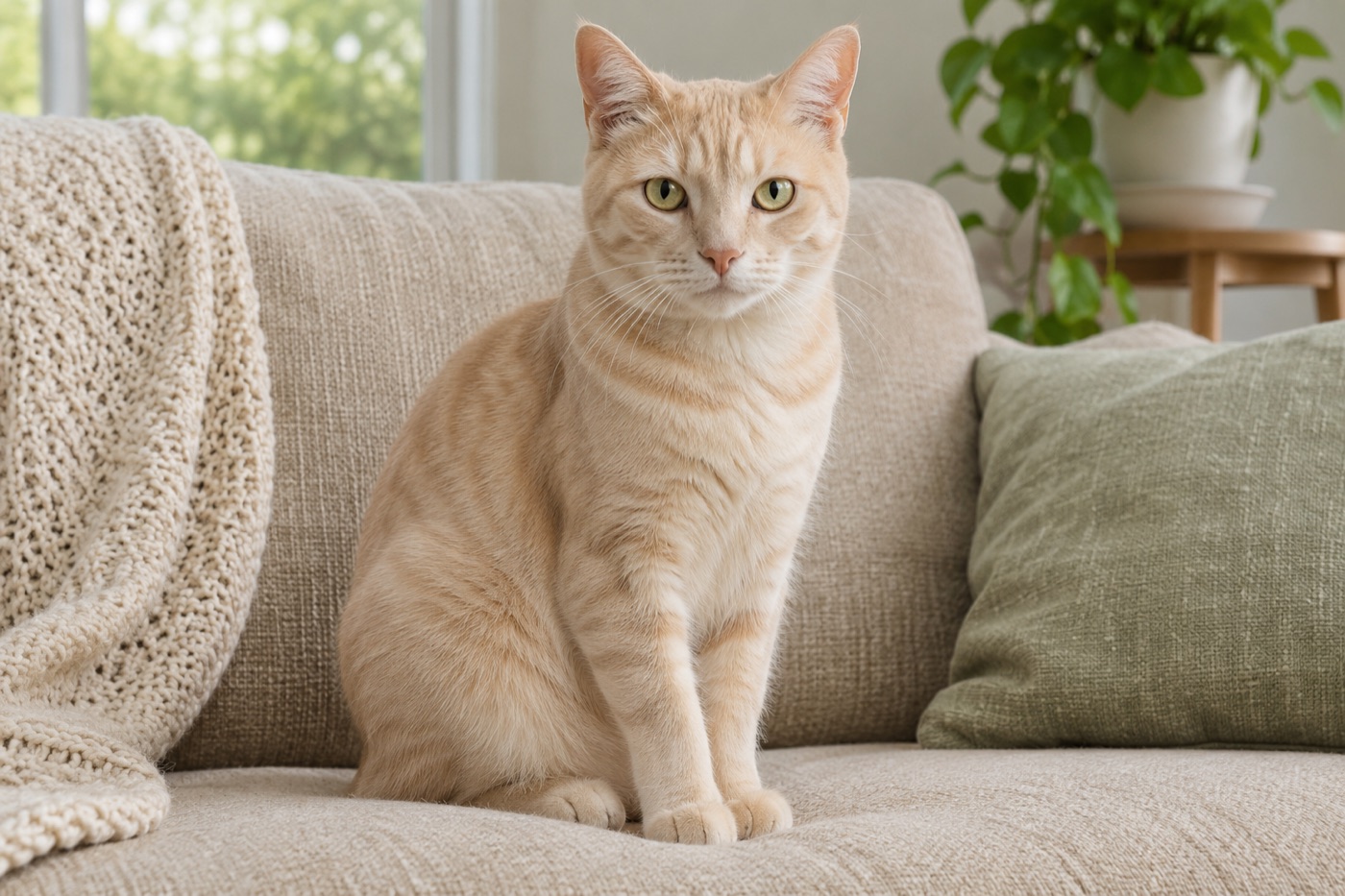
Call a cat buff when you want to describe its pale, warm color to a friend or sitter. Use cream when a form or breed standard lists it and the description fits. Then add the pattern. A pale apricot cat with darker stripes on its tail gives the reader more to go on than either color word by itself.
What owners mean by buff
Buff can bring to mind the color of pale sand, oatmeal or the inside of a peach. On a cat with stripes, the color might be softest between the markings. If you're describing one particular cat, notice the color on the back and the sides before you choose a word for the whole coat.
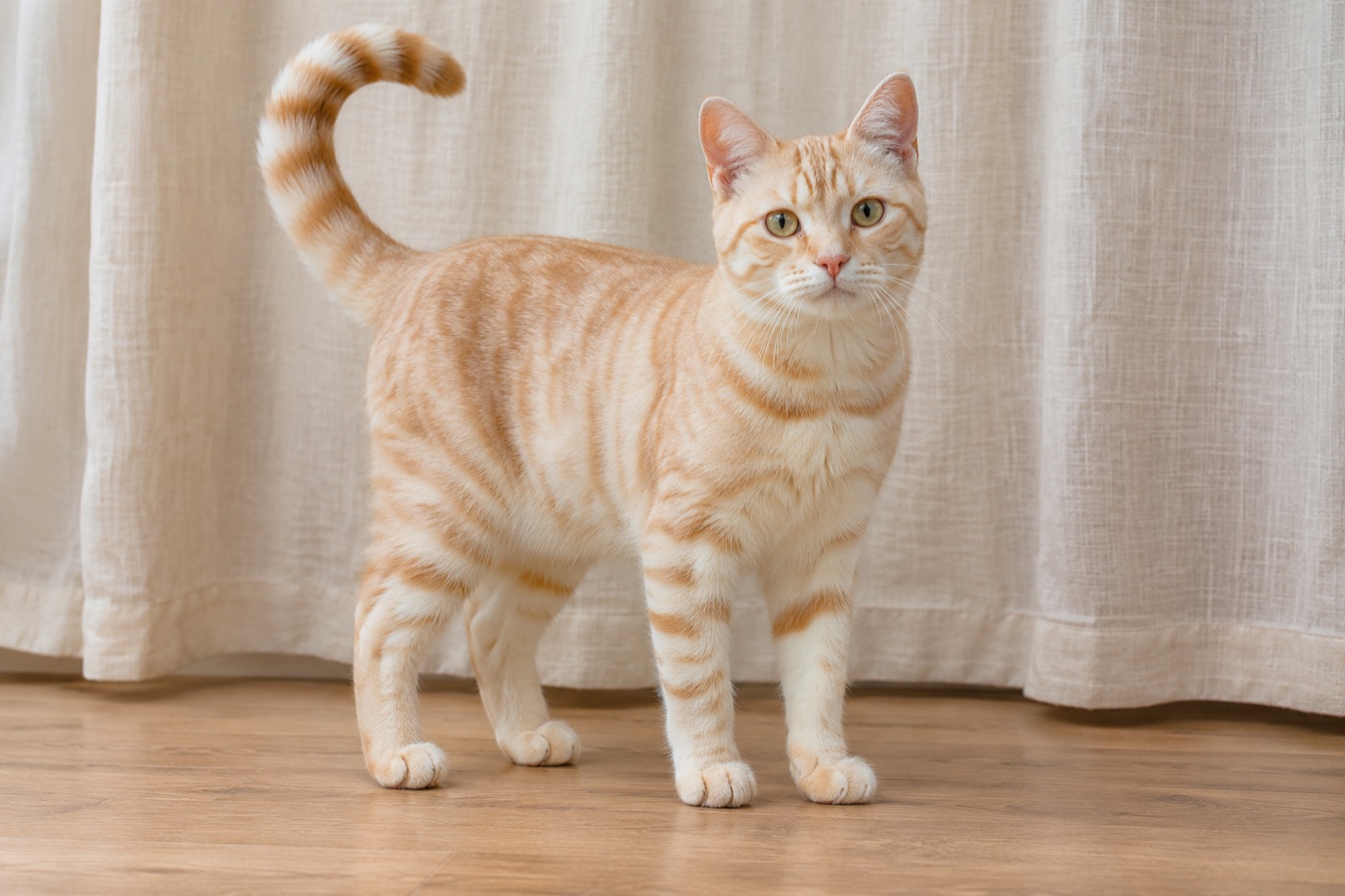
The face may catch your eye first because it can be where stripes show clearly. On a pale cat, try looking at the whole body for a moment. A cat with a warm back and pale legs might be easy to describe as buff, with darker stripes down the face and tail.
How a coat standard uses cream
The Cat Fanciers' Association groups cream with dilute colors in its basic genetics guide. Blue and fawn are also in that group, while the guide lists red and black as nondilute. That is how the CFA describes the colors. The separate Exotic show standard gives examples of how cream appears in coat descriptions.
The CFA Exotic standard lists cream on its own and includes cream tabby and cream-and-white. For a cream tabby, the standard calls for a pale cream base with buff or cream markings dark enough to stand out while staying within the dilute range. In that description, buff is the color of the marks and cream tabby is the class name.
A breed standard gives you a written description to read alongside the color name. When a form supplies its own list, use that list. A shelter or vet may have a field for plain markings as well. That is a good place to put a white front toe or a darker tail tip if you can see one.
When cream is the right word
Use the form's color list when it gives you one. If it asks for shade and pattern separately, choose the shade first. A label such as cream describes the pale color. Adding tabby tells someone to look for markings against it.
In the CFA Exotic standard, cream tabby and cream-and-white describe different coats. In the first, the darker tabby markings sit against a pale cream base. In the second, the coat has areas of cream and areas of white. Comparing the names shows why the words after cream can matter as much as the shade itself.
You can make the same distinction in a note without using show terms. Look at where the lighter color stops. If the fur is a deeper apricot on the back but much paler under the chin, name the chin separately. That's more useful to a sitter than a single word they might picture differently.
A casual description can be a few plain words. A shelter listing might say, "buff with slightly darker stripes on the face and legs." A handoff note to a sitter could say, "pale sandy orange, darker stripes on the tail." Each says where to look and what to look for.
When a pale coat has colored points
CFA's color hints say cream point and flame point can look very close. Some creams in that comparison are stronger in color and some reds are quite light. The guide is comparing two patterns that put color on the ends of the body. For a pointed cat, a description like pale orange ears and tail says what you can see.
What a photo leaves out
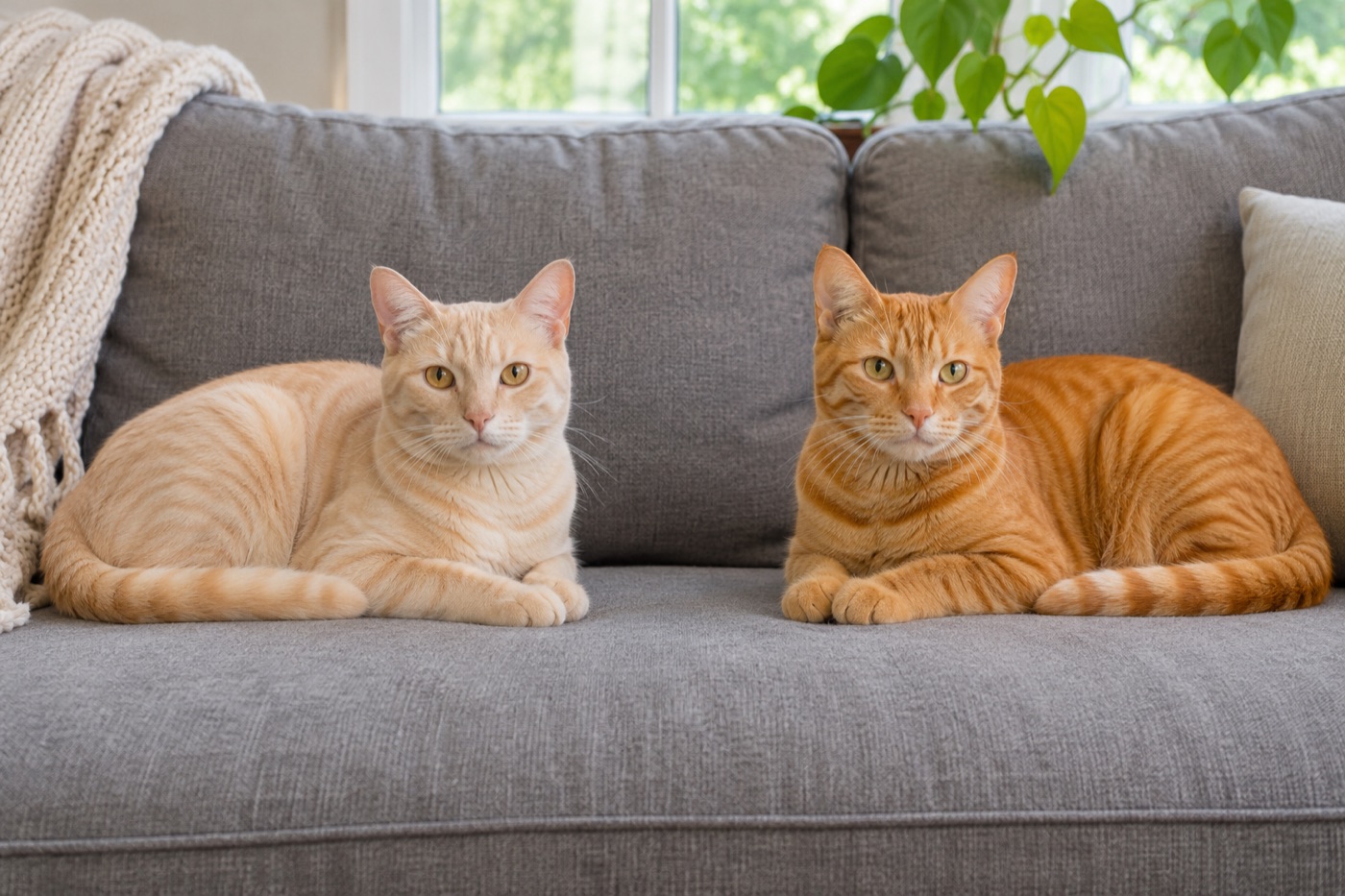
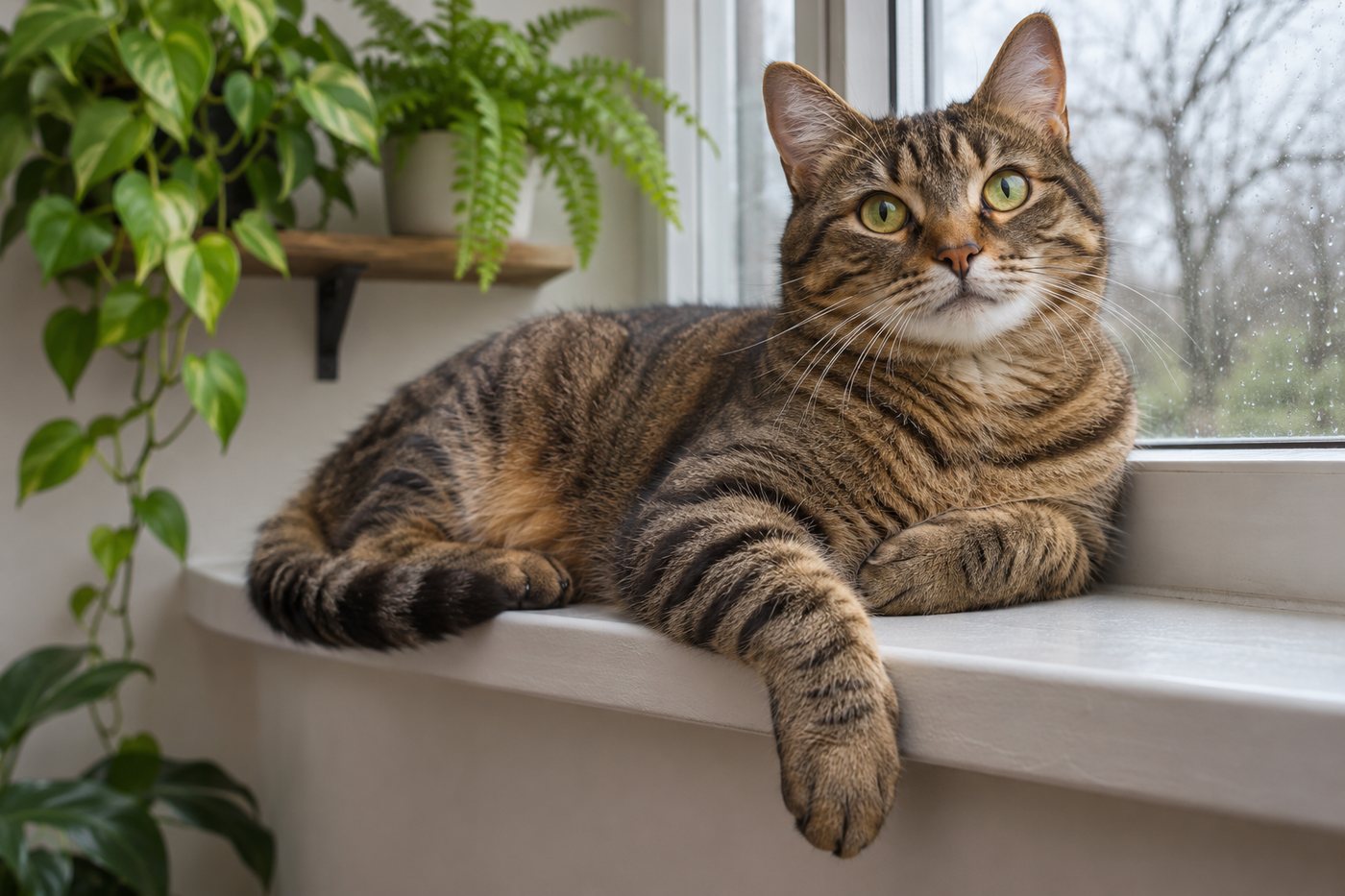
If a cat looks peach near a lamp, look again in daylight if you can. Lighting can change how warm a pale coat seems. A photo lets you describe the shade and marks you see in that picture. A firm match to a formal color and a claim about the individual cat's genes take more information.
If you put your cat's photo next to a picture of another pale cat, check the markings before you compare the shade. One cat may have clear rings on the tail, the other almost none. The photos can help you describe what you notice, even if you would use the same broad color word for both.
Choose a photo that shows which part of the cat your note describes. A front view can help show a lighter chin or the stripes between the ears. A side view is better for the body and can show markings you miss with the cat facing you. If the cat has a white front foot, a picture that shows both front feet lets a sitter tell which one is white.
If you only have a front view, describe the front. You might be able to see pale legs and orange marks over the eyes while the back is hidden. A note about the front legs and face gives the reader something concrete to check later.
Choosing a word for your cat
For a quick note to a sitter, lead with how the cat looks at a glance. A buff cat with a white chest is easier to pick out than a buff cat with no further detail. If the household has two pale cats, use the clues that let the reader tell them apart.
You can write a longer description for a listing. Start with the main color and then name the places where the coat changes. A light apricot cat with darker stripes on the legs and a striped tail gives the reader a path to follow from the body to the feet.
For a registry or show entry, read the instructions on the form. A record may have separate spaces for the coat color and the breed. Put the shade and pattern under color so someone reading the record can find that detail quickly.
For a photo going with a listing, one line can do it. 'Pale buff tabby with orange rings on the tail' tells someone where to look when they meet the cat. You can add an easy-to-spot white mark if there is one.
Related stories

Lena Ortiz
Lena covers the gear dogs use every day: harnesses, leashes, beds, bowls, and the supplies that collect by the front door. Her comparisons focus on fit, adjustment, cleaning, and value across different dog sizes. She looks closely at which features make a busy routine easier and which simply add bulk or expense.