
What the Husky Breed Standard and a 2018 Study Say About Blue Eyes

Expert verifiedSources and qualifications checked
Nora Bennett reviews clarity, structure and the writer’s voice. Adrian Cole reviews source support, qualifications and image attribution.
Reviewed November 16, 2026 for this version of the article.
Meet the Editor Voices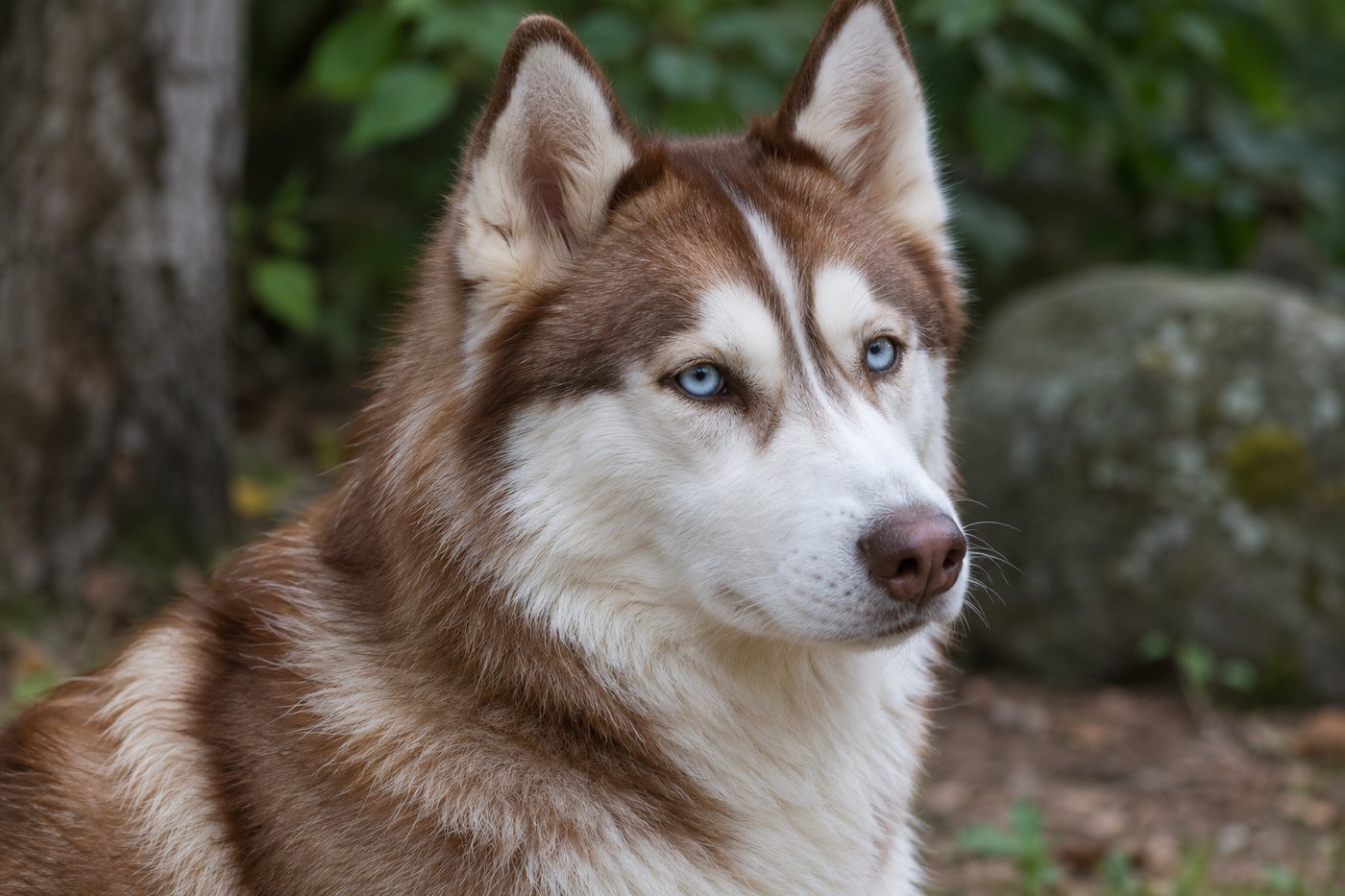
Read the eye-color line in the AKC Siberian Husky breed standard, then hold it next to one genetics paper. They answer different questions. The standard says which eye colors the breed allows. The study asks which stretch of DNA tracks with blue eyes in a group of tested dogs.
Observed color is what you can see in a dog's eyes. A genetic finding is a pattern in data. Both are useful, and each answers only its own question. Mixing them up turns a description into a prediction.
Reading the eye line in the standard
The AKC standard lists the eye colors it allows for Siberian Huskies. Brown is allowed. Blue is allowed. One of each is allowed, and so are parti-colored eyes. That is a short list, and it is a list of outcomes, not causes.
A breed standard describes the breed. Eye color is one item in that description. It cannot tell you the ancestry of any single dog from its eyes.
Telling two eyes from one iris
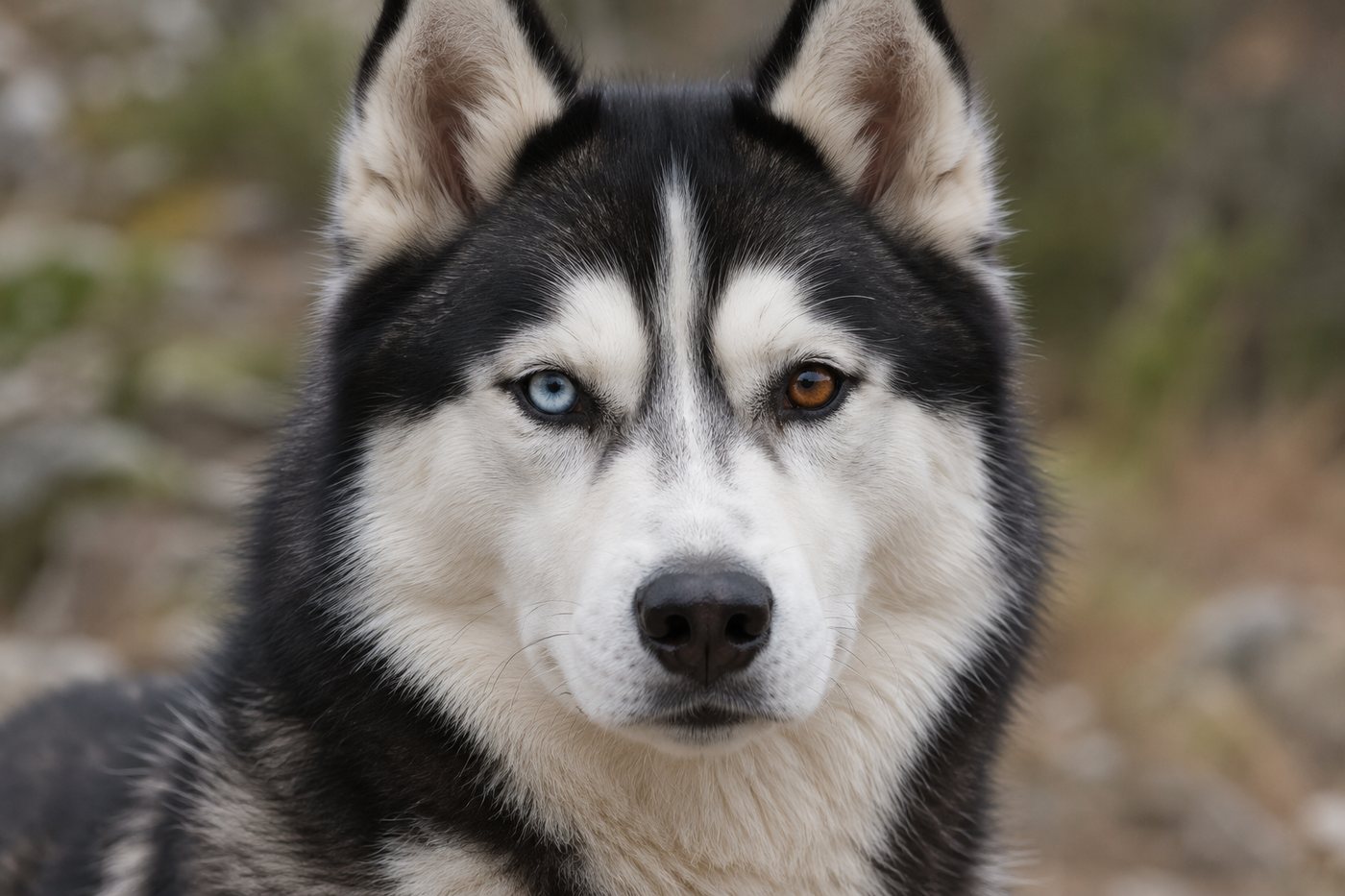
Two different-colored eyes means the left and right eyes do not match. One is brown and the other is blue. The standard calls this one of each. Heterochromia is the broader term for color differences in the eyes, and the 2018 study reports it alongside blue eyes.
Look at one iris on its own. The eye-color study refers to a slice of a different color within one iris as sectoral heterochromia. That gives you something different to describe from complete heterochromia, such as a blue eye on one side and a brown eye on the other. The AKC standard also lists parti-colored eyes among the accepted appearances.
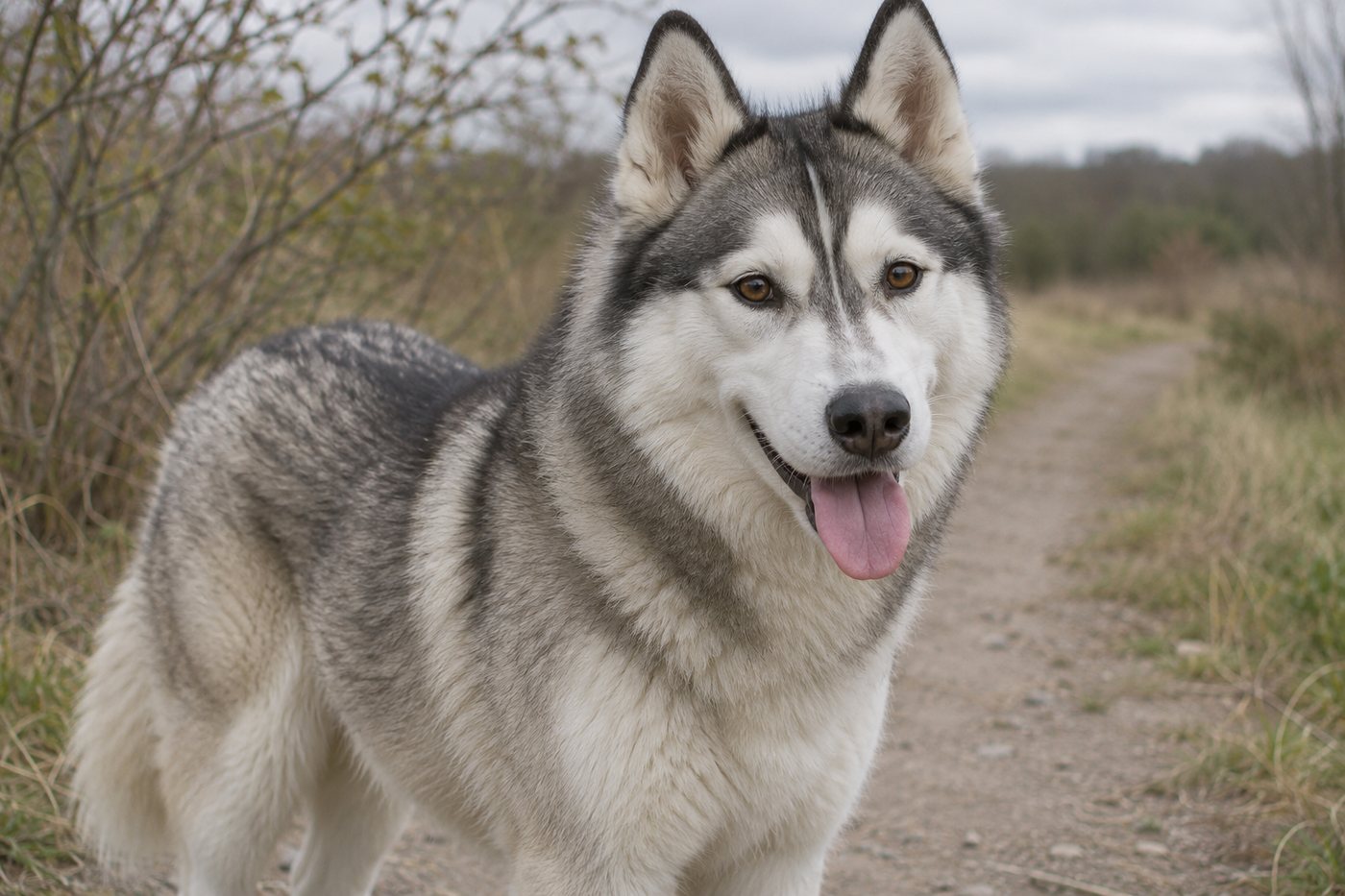
Describe the part of the eye you can see. If you can see just one iris, you can write down whether it has one color or more. A photograph of one eye alone leaves the comparison between eyes open. That makes it handy to keep the notes about each iris on its own line.
This is why the phrase blue eyes can hide a lot. A dog with two blue eyes, a dog with one blue eye and one brown eye, and a dog with a blue patch inside a brown eye all have some blue.
Following the 2018 study
The 2018 association study in PLOS Genetics compares eye-color information across a group of tested dogs. The strongest association is with a DNA duplication near ALX4, particularly in Siberian Huskies.
Association is the key word. It means the duplication and the eye traits turned up together in the study's data.
How do the two connect? The standard names colors a Siberian Husky may have. The study points to a DNA region linked with blue eyes and heterochromia. The standard supplies the vocabulary. The study supplies one lead on a possible genetic contributor.
An association study compares DNA across many dogs and looks for variants that travel with a trait. The 2018 paper applied that approach to eye color in several breeds, with the strongest association in Siberian Huskies. A duplication means a section of DNA appears more than once. Here the extra copy sits near ALX4, which is why the gene's name appears in the paper. Sitting near a gene is a location, and a location is not a full explanation. The paper describes more than 3,000 dogs in the discovery work and nearly 3,000 more in further comparisons. The finding came from checking genetic information across many animals. You could not get the same result by inspecting the eyes of one dog in a photograph.
Checking who was tested
The study included dogs tested by Embark. The researchers invited owners who agreed to take part to report traits such as eye color in a survey. The association came from comparing reported eye colors with the DNA results, in a group that included several breeds.
The discovery sample included purebred and mixed-breed dogs. The authors reported a particularly strong association in Siberian Huskies. That still leaves the question open for a particular dog whose ancestry or genetic test you don't know. A blue eye on its own gives you a description you can use, without deciding on a genetic explanation.
The authors used information owners gave them through web surveys and uploaded photos. The report and the comparison of DNA markers are pieces of different evidence. If you're taking notes about your own dog, keep observations beside their dates or photographs and genetic test results beside their own paperwork.
If you are comparing two photographs, start with what each shows. Write down which eye is pictured and whether you can see the whole iris. You can then see which detail comes from looking at the animal and which has an accompanying record.
Sorting claims by source
Here is a quick way to sort what you read online. Take any sentence about a Siberian Husky's eyes and ask which source could back it up. A sentence about which colors are allowed belongs to the breed standard. A sentence about a DNA duplication near ALX4 belongs to the 2018 study. A sentence about why one particular dog has one blue eye and one brown eye belongs to neither.
The same sorting works for wording. Allowed is the standard's word. Associated is the study's word. When a caption says a dog's eyes prove its ancestry or show its DNA result, ask what test or document the claim rests on.
Photos deserve the same sorting. A photo shows observed color, so it can support a sentence about one eye or two. It cannot support a sentence about genes. If a caption claims more than the picture shows, treat the extra as unverified and look for the source.
If a Siberian Husky looks up at you with one blue eye and one brown, describe that detail before trying to account for it. You can take the description to the breed standard. The genetics paper gives you a way to ask a more specific question about a whole group of dogs.
Start with the part of the eye you can see. If someone goes further and says the color came from a particular DNA variant, look for a test or a study that addresses that version of the claim.
Related stories

Lena Ortiz
Lena covers the gear dogs use every day: harnesses, leashes, beds, bowls, and the supplies that collect by the front door. Her comparisons focus on fit, adjustment, cleaning, and value across different dog sizes. She looks closely at which features make a busy routine easier and which simply add bulk or expense.