
Follow the Holiday Mess from Gift Wrap to Trash Can Before Guests Arrive

Expert verifiedSources and qualifications checked
Nora Bennett reviews clarity, structure and the writer’s voice. Adrian Cole reviews source support, qualifications and image attribution.
Reviewed November 19, 2026 for this version of the article.
Meet the Editor Voices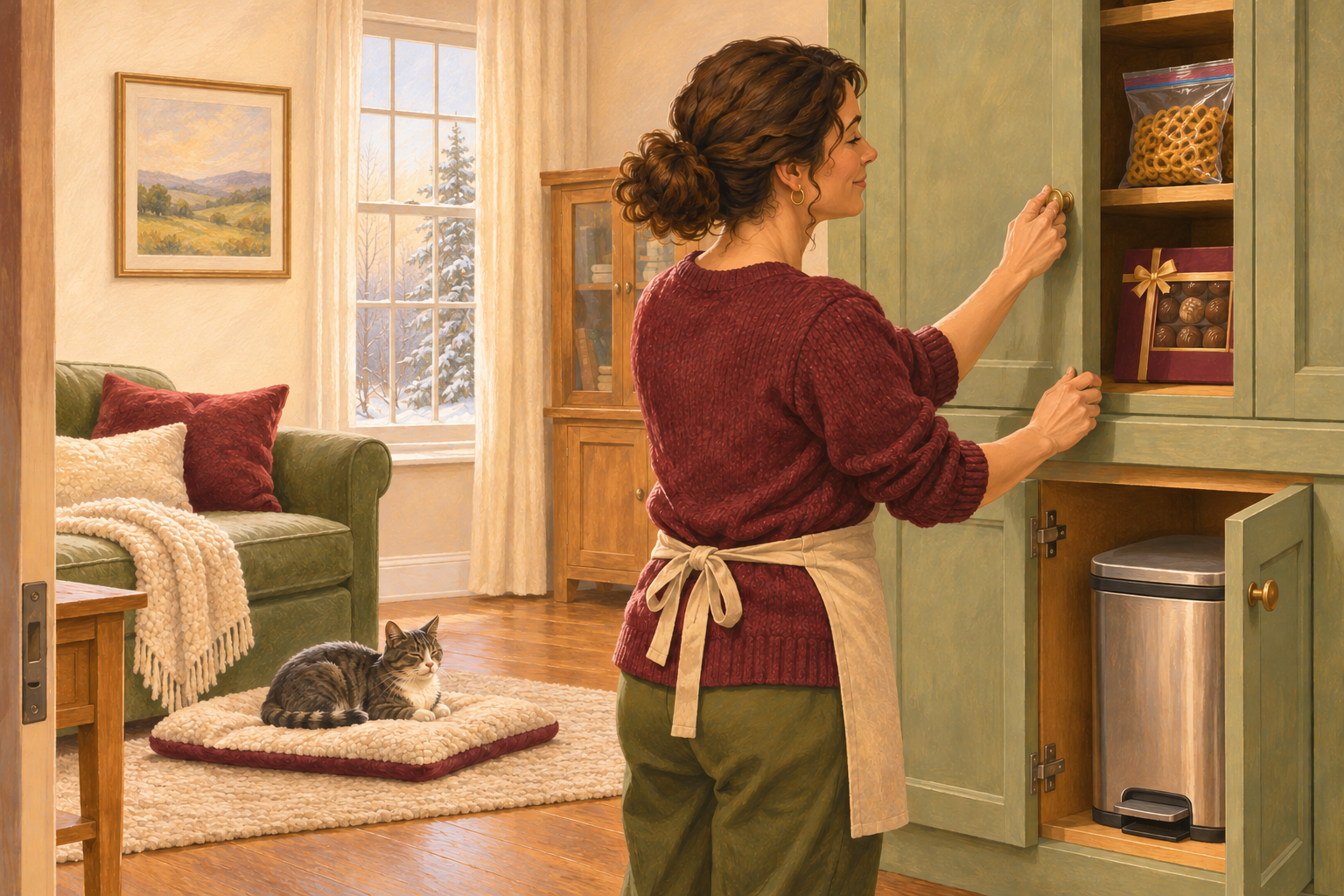
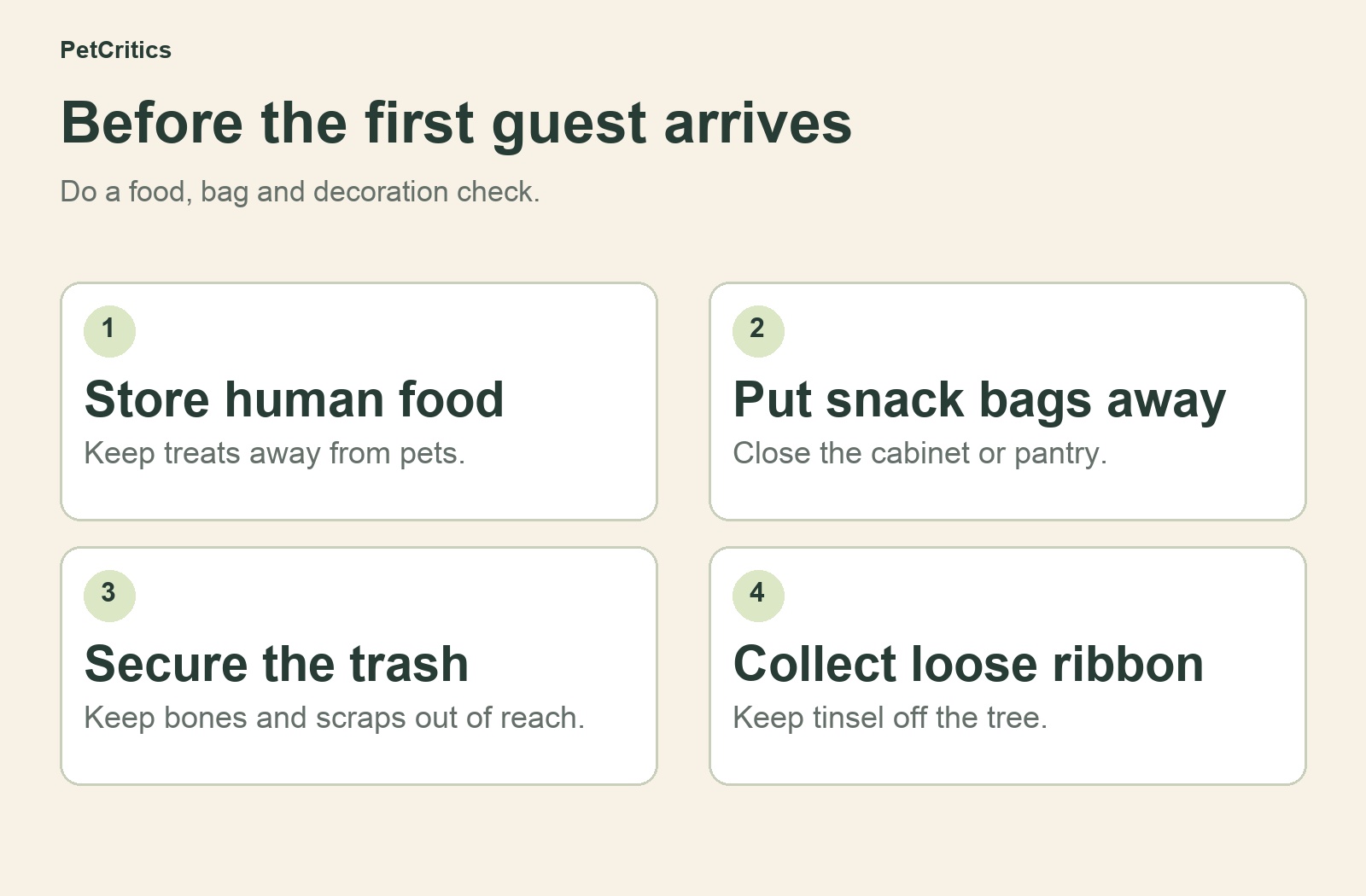
Before guests arrive, decide where the food, gift wrapping and trash will go when people finish with them. FDA's holiday advice covers the hazards at each of those stages. A bowl of sweets moves to the coffee table; an opened present leaves string on the floor; a cleared plate carries bones into the kitchen. Plan for where each object ends up.
Give guests a short explanation before food is offered or presents are opened. Ask them to keep human foods away from pets and show them where to put leftovers, wrappers and drinks. Choose places you can keep pets from reaching. A high shelf or closed door is useful only if it prevents access in your particular home.
If you think a pet has swallowed something hazardous, contact your veterinarian promptly. Do not wait for the gathering to end. FDA treats suspected chocolate ingestion and xylitol exposure in dogs as emergencies requiring an immediate call. A veterinarian should assess a suspected exposure and advise you on what to do next.
Put wrapping, decorations and plants out of reach
Keep tinsel off the tree. FDA warns that tinsel, ribbon and string can appeal to dogs and cats because they look like prey, yet can cause serious damage to the stomach and intestines. Collect these materials as gifts are opened instead of leaving the ribbons in a pile for later. Put them where pets cannot retrieve them.
Make cleanup part of handing over the next present. One person can collect the loose string while another helps with the gift. If reaching the floor is difficult, ask someone to gather the pieces as they fall. The aim is to remove the material during unwrapping, without leaving the whole job until everyone has finished.
Keep salt-dough ornaments and homemade play dough away from pets, both during craft time and afterward. FDA warns that their high salt content can be fatal if eaten. Tell children these objects are not treats for an animal. Move the finished decorations and leftover dough out of reach when the craft materials are put away.
Plan where holiday plants will stand and where they will go when discarded. FDA advises care with poinsettias, mistletoe and holly and keeping pets from eating them. Poinsettias can irritate the mouth and stomach, and may cause drooling, vomiting and diarrhea. Keep fallen leaves and discarded plants away from pets as well as the display itself. Ask a veterinarian about a suspected exposure.
Move scraps from the table to secured trash
Ask guests to leave fatty scraps on their plates for collection. FDA warns against giving pets fat trimmings or the skin from roasted turkey or chicken. Rich scraps can cause an upset stomach and pancreatitis, a painful disease that can be life-threatening. The cat waiting near a plate needs the same separation from fatty leftovers as the dog.
Remove bones and carcass pieces when the plates leave the table. FDA explains that bones swallowed by dogs can become stuck in the esophagus, stomach or windpipe, and sharp pieces can injure the mouth and digestive tract. Keep the scraps under control during the trip to the kitchen, rather than setting the loaded plate down where a pet can reach it.
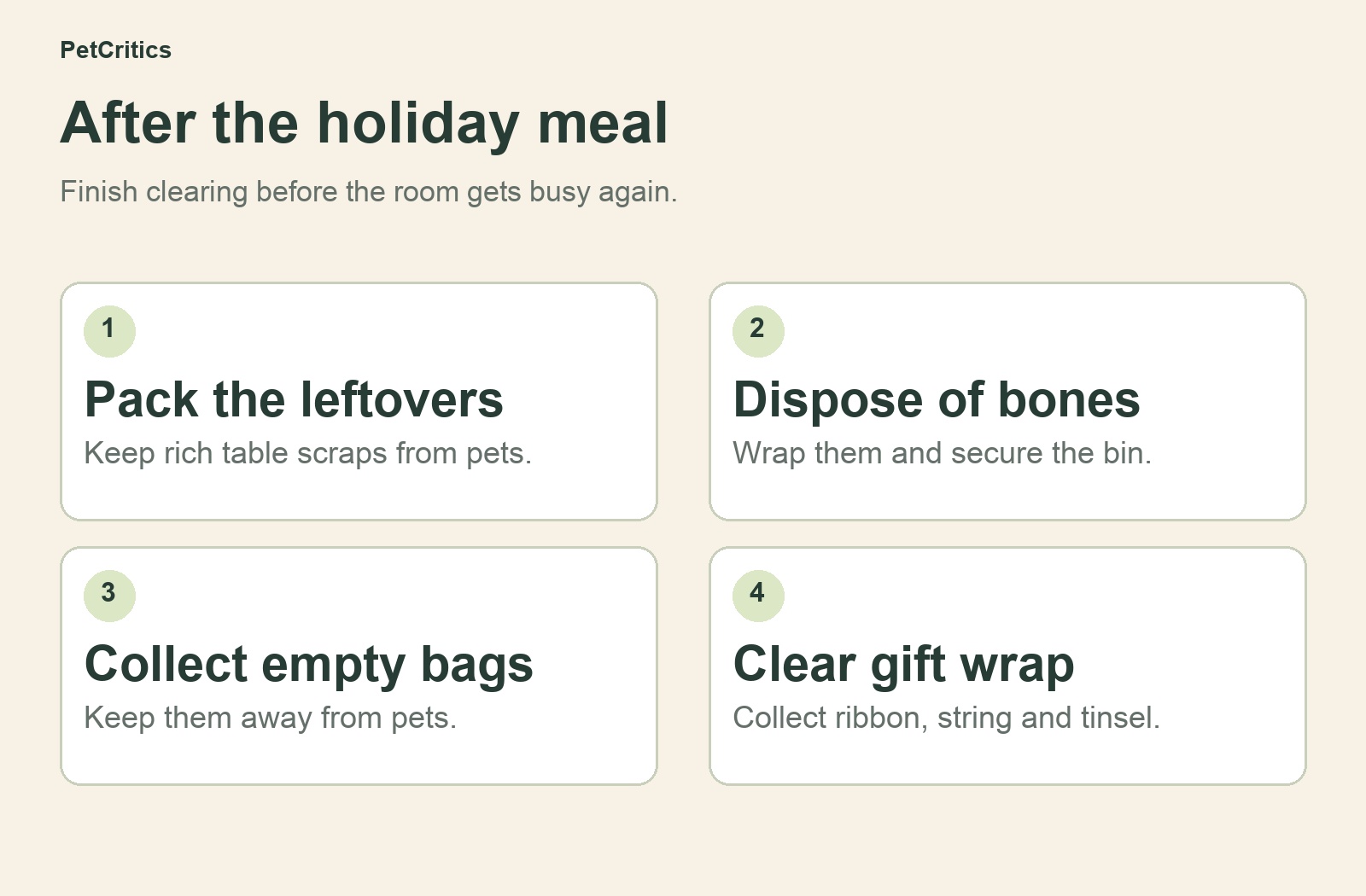
After the meal, FDA recommends securely wrapping scraps and bones and putting them in a trash bin pets cannot get into. Show whoever is clearing the table which bin to use. Close it after each trip. If the trash has to move while dishes are being washed, choose another inaccessible place rather than leaving the contents available.
Keep sweets, drinks and their packages out of reach
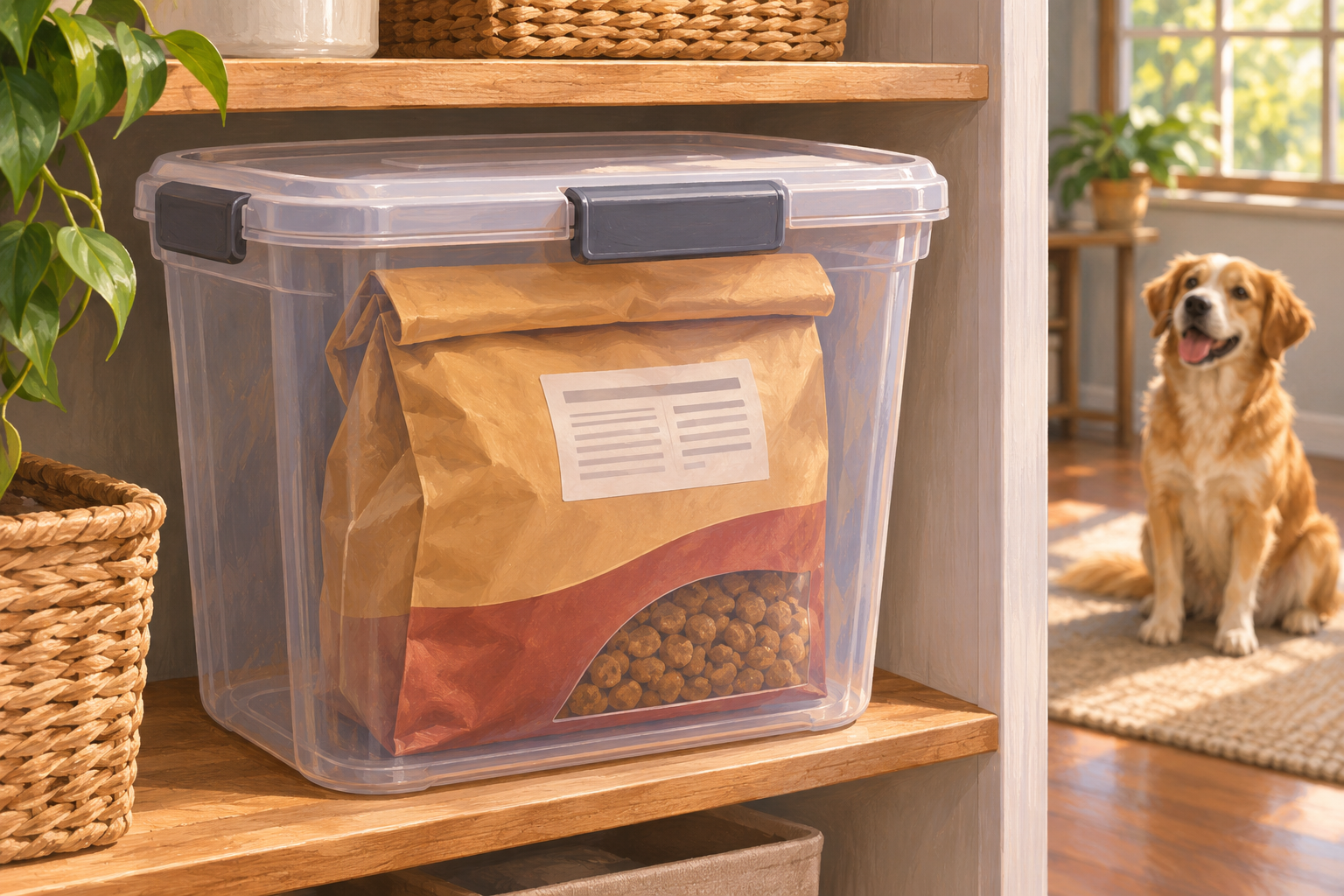
Check ingredient labels on sweets and other items brought into the house. FDA says xylitol may be found in mints, candy, chewing gum, some peanut butters and baked goods, as well as toothpaste and mouthwash. It may also be called birch sugar or wood sugar. Keep these products away from dogs, including supplies guests leave near their belongings.
If a dog eats an item and its label lists xylitol, call your veterinarian immediately. FDA says symptoms can develop quickly, usually beginning with vomiting, followed by signs of low blood sugar such as weakness, incoordination, collapse and seizures. Keep the package available to identify the ingredients. Finding the label is no reason to postpone the call.
Put chocolate away before leaving the room. FDA warns that chocolate can cause severe complications in pets, including death; unsweetened and baking chocolate are especially dangerous. If you suspect your dog ate it, consider it an emergency and call a veterinarian immediately. Keep alcoholic drinks away from pets, too. FDA lists vomiting, weakness, difficulty breathing and other serious effects from alcohol.
Follow snack bags through serving and disposal. The holiday guidance warns that mylar-type snack bags can wrap around a dog's nose and mouth when it breathes in, causing suffocation. Close partly filled bags and store them in a cabinet. Put empty ones into trash the pet cannot access. Tell a guest where to put the bag before handing over the snack.
Supervise treats and pass the plan to the next caregiver
Set aside the stocking full of pet treats rather than offering it all at once. FDA warns that a dog can gulp treats without chewing, and unchewed pieces can get stuck in the windpipe or digestive tract. If a dog is in obvious distress after eating too much too fast, call the veterinarian immediately. Drooling, choking and vomiting are among the signs FDA names.
A veterinarian may need to investigate a suspected blockage rather than identify it from the first symptom alone. FDA describes possible X-rays, examination with an endoscope, or abdominal surgery to locate and remove lodged pieces. Those are veterinary decisions and procedures. When you call, describe what the pet may have swallowed and when, and follow the veterinarian's instructions about the next step.
A blockage may not show itself immediately. FDA says symptoms from a lodged bone or chew toy can appear hours to days later, including vomiting, diarrhea, reduced activity, appetite loss and stomach pain. Call your veterinarian when in doubt. Before another adult takes over pet care, explain any suspected incident and what the veterinarian has advised, along with where the food and discarded materials are stored.
Related stories

Caleb Morgan
Caleb covers products that help pets move through the day, including carriers, ramps, steps, travel beds, and grooming tools. His comparisons focus on dimensions, access, storage, cleaning, and the effort required from the person using the product. He is especially interested in how those needs change with an older pet. His household includes his daughter, Jasper, a senior mixed-breed dog, and Nell, a rescue cat. He looks for the details a product page can leave until last: whether a carrier fits the space, a ramp stores sensibly, or a bed cover comes off without a struggle.