
Keep What You Saw, What Your Vet Recorded and Why You Suspect the Food Separate
Expert verifiedSources and qualifications checked
Nora Bennett reviews clarity, structure and the writer’s voice. Adrian Cole reviews source support, qualifications and image attribution.
Reviewed November 19, 2026 for this version of the article.
Meet the Editor Voices
The name on a food bag, an owner's account of vomiting and a veterinarian's diagnosis are different records. All may belong in the same complaint, but they should remain identifiable. FDA's instructions to report a pet food complaint ask for the product details first, then additional information when a pet may have become sick or injured.
Attend to an ill or injured pet before working through paperwork. Veterinary care and an FDA report serve different purposes. Gathering the details FDA lists is a way to organize a complaint, not a way to decide what caused the illness.
You can also report a problem with the food when no pet is ill. FDA asks for as much of its listed information as possible. Start with what you have rather than adding a diagnosis or a precise figure you cannot support.
Save the packaging that identifies the food
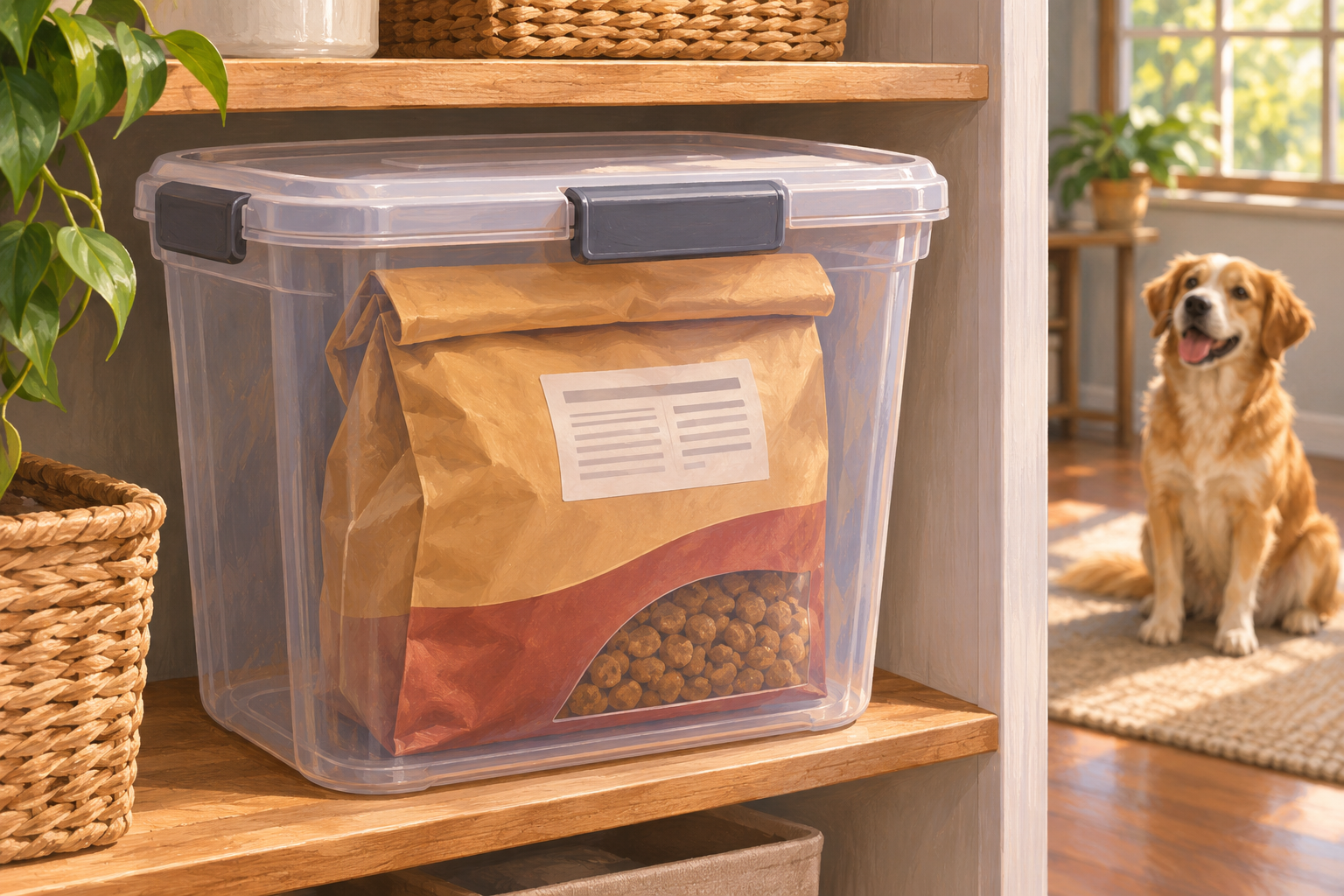
First, find the original package. FDA recommends keeping it until the food has been consumed, if possible, because it carries information often needed to identify the variety, manufacturing plant and production date. This matters when dry food has been emptied into another container: the container holding the food may have none of those details.
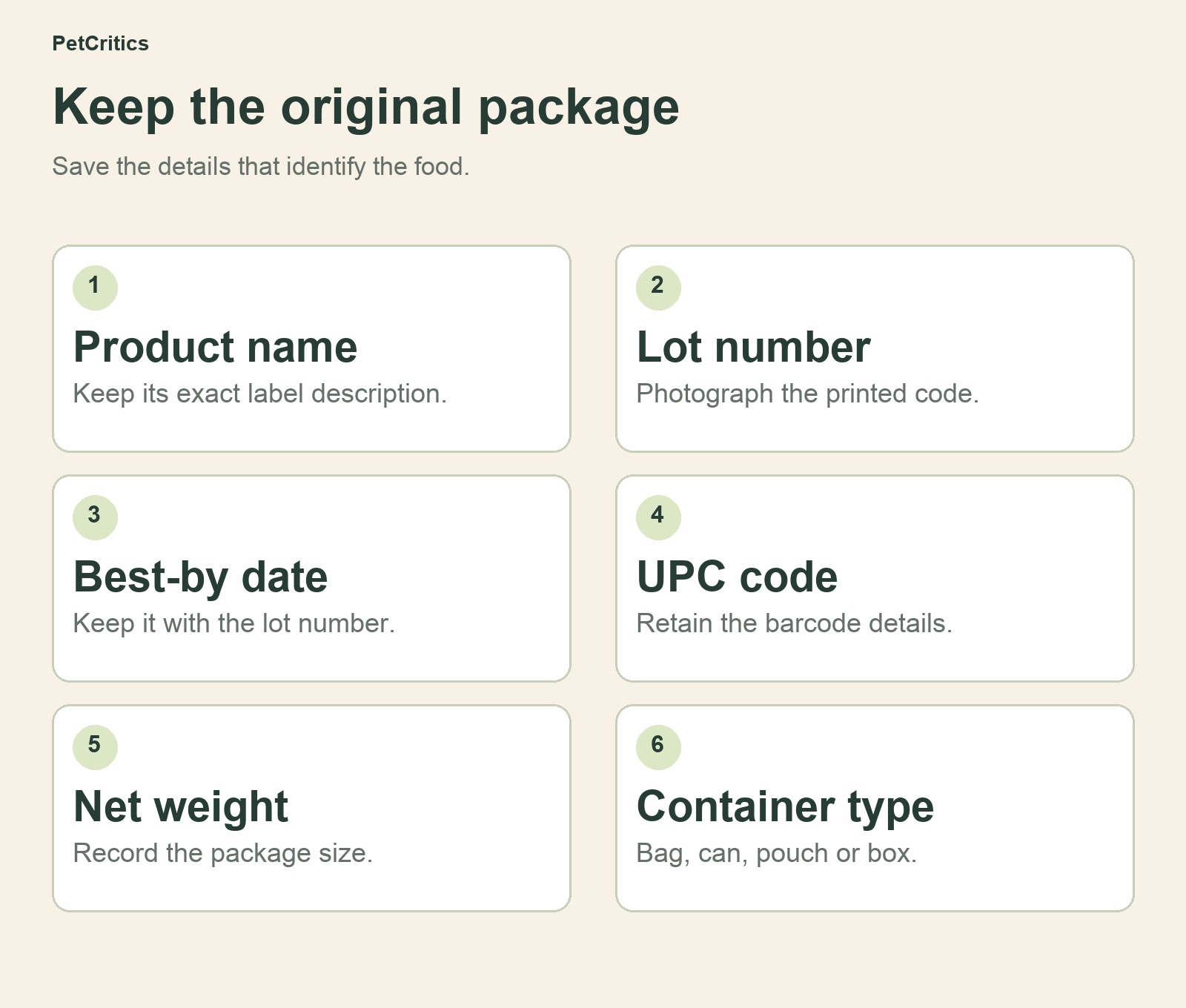
Write the name and product description exactly as the label gives them. Then collect these other identifiers from the package:
- Container type: box, bag, can, pouch or another type
- Intended storage: refrigerated, frozen or room temperature
- Best-by, best-before or expiration date
- UPC, the barcode
- Net weight
Look separately for the lot number. FDA says the stamped code typically mixes letters and numbers and is often hard to find or read. If the product carries a best-by or expiration date, the code is close to it. The agency calls this number very important for determining the plant and production date.
Keep the lot code, date and UPC in separate fields. Copying a barcode alone leaves the other identification questions unanswered. Check the letters as well as the digits when you transcribe the stamped code.
A photograph can help you compare a typed entry with the printing later. You might photograph the label and the area around the date while you have the package handy. This is an optional organizing suggestion; FDA's list asks for the information itself.
Record the purchase and what happened to the food
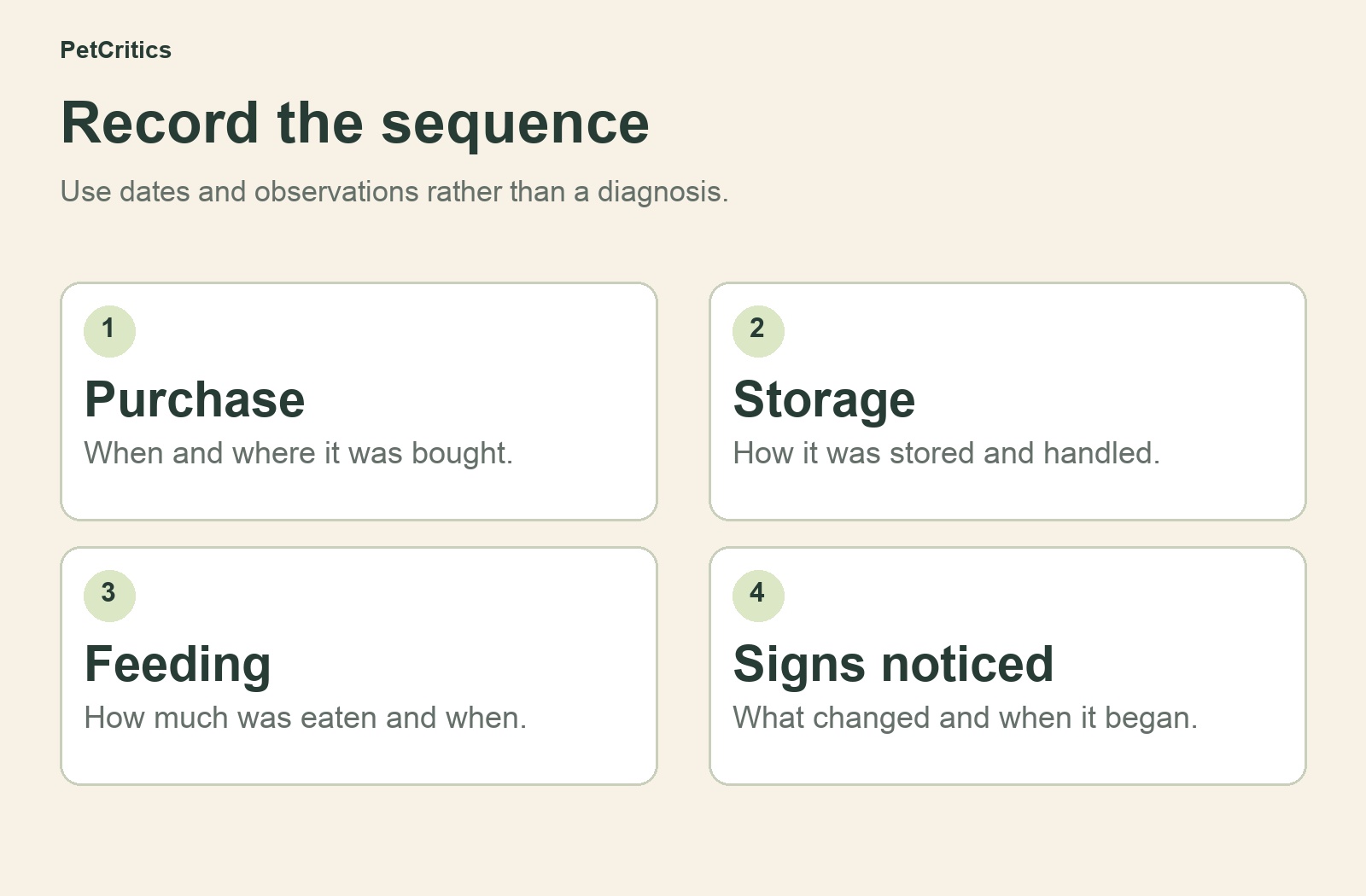
When and where did you buy this package? FDA asks for the purchase date and exact location. Include the store's address rather than only its chain name. A receipt may help you recover the details if you kept one, although a receipt is not on FDA's list.
Next comes the food's history after purchase. FDA asks how it was stored, prepared and handled. Describe the actual steps, including a transfer to another container, if that happened. A plain account such as "poured the bag into the pantry bin" is clearer than an unexplained claim of proper storage.
The product's intended storage belongs with its label details; actual storage belongs with your account. Record both. For instance, writing that a food was meant for refrigeration does not tell FDA where you kept it.
If a laboratory has tested the pet food, include the results in this part of the record. FDA asks for any testing performed on the product. Those results are distinct from diagnostic tests performed on your pet.
Describe the product problem; add quantities if a pet may be affected
Describe the trouble you noticed with the food or container. FDA's examples include a foul odor, an off color, a swollen can or pouch, a leak, or a foreign object in the food. Use the description you can support. An observation and an explanation for it are not interchangeable.
If you think the food made a pet sick or injured, FDA also asks about quantities. Give the usual amount fed, how much was eaten from this package and how much remains. Label each answer with the question it addresses. Mark an approximate amount as an estimate.
For a suspected illness or injury, keep the remaining amount with the other quantity answers. Providing it does not guarantee collection or testing. FDA decides whether follow-up is possible or needed after reviewing the report.
Build a factual picture of each affected pet
If you suspect illness or injury from the food, give each affected pet its own record. FDA asks for species, age, weight and breed, pregnancy and spay or neuter status, previous health and pre-existing conditions. Its species examples include dogs and cats as well as rabbits, fish, birds and others.
Include the rest of the pet's intake: other foods, treats, supplements and drugs. FDA also asks whether the pet spends time outdoors unsupervised. Keep those details even when your concern centers on one particular food.
Add the signs and their timing. What did you observe, and how soon after eating did it begin? FDA gives vomiting, diarrhea and lethargy as examples of clinical signs. Record the sequence without treating "after eating" as proof that eating caused it.
Account for the other animals that ate the product. FDA wants to know how many developed signs and whether any stayed unaffected. Those are separate answers; one ill animal's history should not stand in for every animal that shared the food.
Then explain why you suspect the food. FDA specifically asks for that reasoning. Keep it labelled as your account, apart from the product observations and any finding a veterinarian has documented.
Keep veterinary records separate from your observations
The veterinary material should show who made a finding. A symptom you noticed at home belongs in your observations. If a veterinarian made a diagnosis, preserve that diagnosis as recorded rather than replacing it with your own interpretation of the food's role.
Gather these veterinary details for the report:
- Your veterinarian's contact information
- The diagnosis, if one has been made
- Your pet's medical records
- Results of diagnostic laboratory tests performed on the pet
Leave a clear note where something is unavailable. "No diagnosis yet" and a recorded diagnosis give the report reviewer different information. FDA asks for as much information as possible, so keep an unknown field distinct from one you can answer.
Submit the report and understand possible follow-up
FDA says complaints can be submitted electronically through the Safety Reporting Portal. It reviews the information to decide whether further investigation is possible or needed. Follow-up could include collecting food or treats or seeking a diagnostic sample from the pet. The report does not guarantee any of those steps.
Even without testing, FDA says a report contributes to surveillance of adverse events and product problems. That continuing work helps the agency prevent future problems. A report can contribute information without establishing what caused this pet's illness.
Private laboratory testing may be costly. FDA says it cannot cover those charges or reimburse veterinary costs associated with the animal's illness. Include existing results without expecting the report to arrange payment.
Before submitting, check that the package identifiers, quantities and pet histories are clearly assigned. Keep your observations, the veterinary records and your reason for suspecting the food distinct. Filing a complaint records a concern; it does not prove causation or guarantee an investigation or recall.
Related stories

Samira Reed
Samira specializes in dog and cat supplements, food labels, and feeding products. Her focus is ingredient transparency, administration, and questions owners should take to their veterinarian. Her comparisons examine active ingredients and amounts per labeled serving, product formats, quality-testing claims, and ongoing costs. She distinguishes marketing promises from evidence for a specific formulation. Samira’s household includes her husband, their son, Maple, a beagle mix, and Cleo, a shorthair cat. She wants readers to understand what’s in the jar before adding it to the bowl.