
Pet Food Bag Details to Save Before You Pour the Kibble Into a Bin

Expert verifiedSources and qualifications checked
Nora Bennett reviews clarity, structure and the writer’s voice. Adrian Cole reviews source support, qualifications and image attribution.
Reviewed November 19, 2026 for this version of the article.
Meet the Editor Voices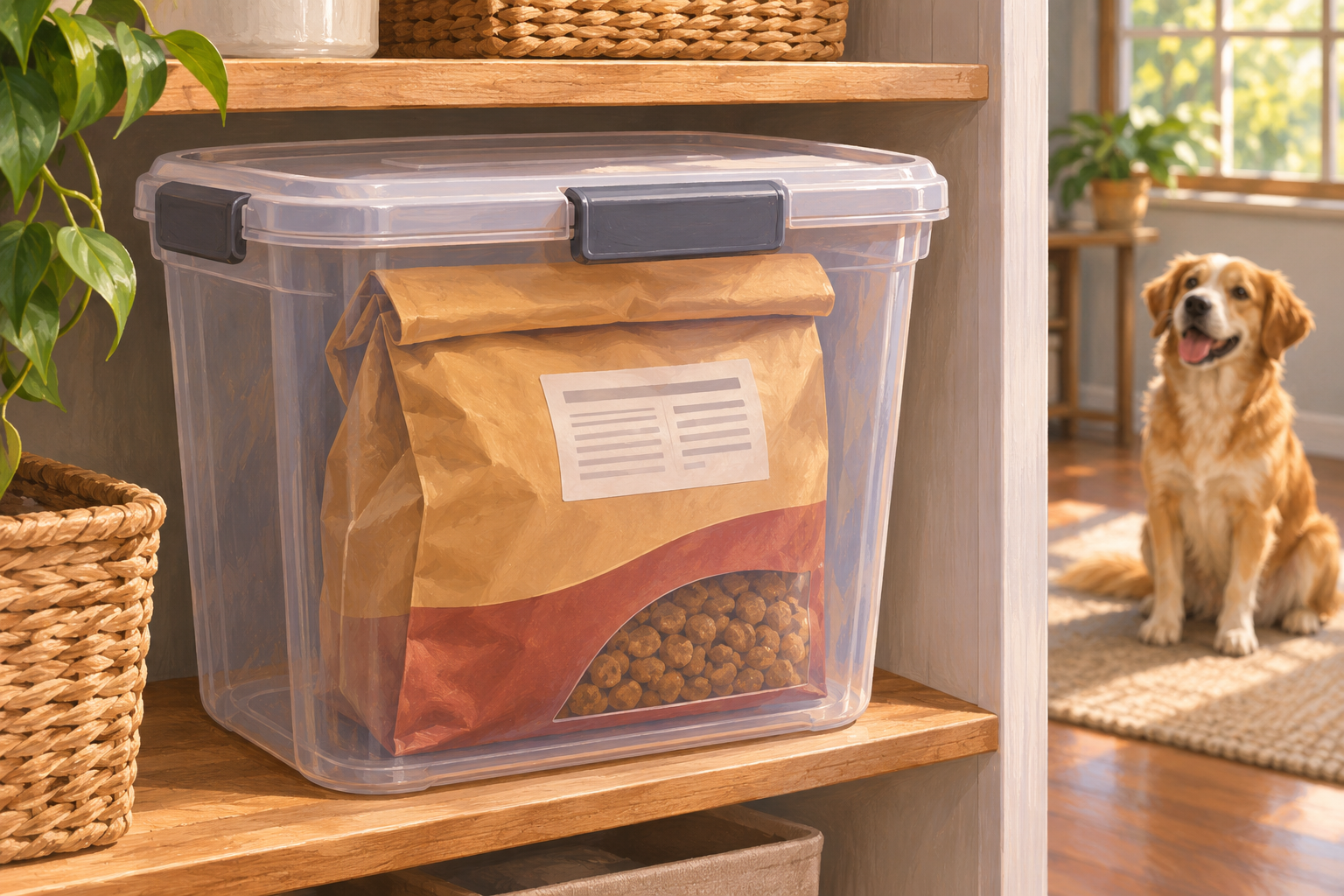
The lot number on a pet food bag helps FDA identify when and where the food was made. That record can be lost when the bag goes out and the kibble stays in a bin. Keeping the food and its identifying information together makes the details available if there is a defect or a recall.
Fewer than half of the pet food complaints FDA receives include a lot number, according to its storage guidance. The agency uses the number to look into a problem with a specific product faster. A pantry container can hold the food, but the printed bag carries the record FDA is asking owners to keep.
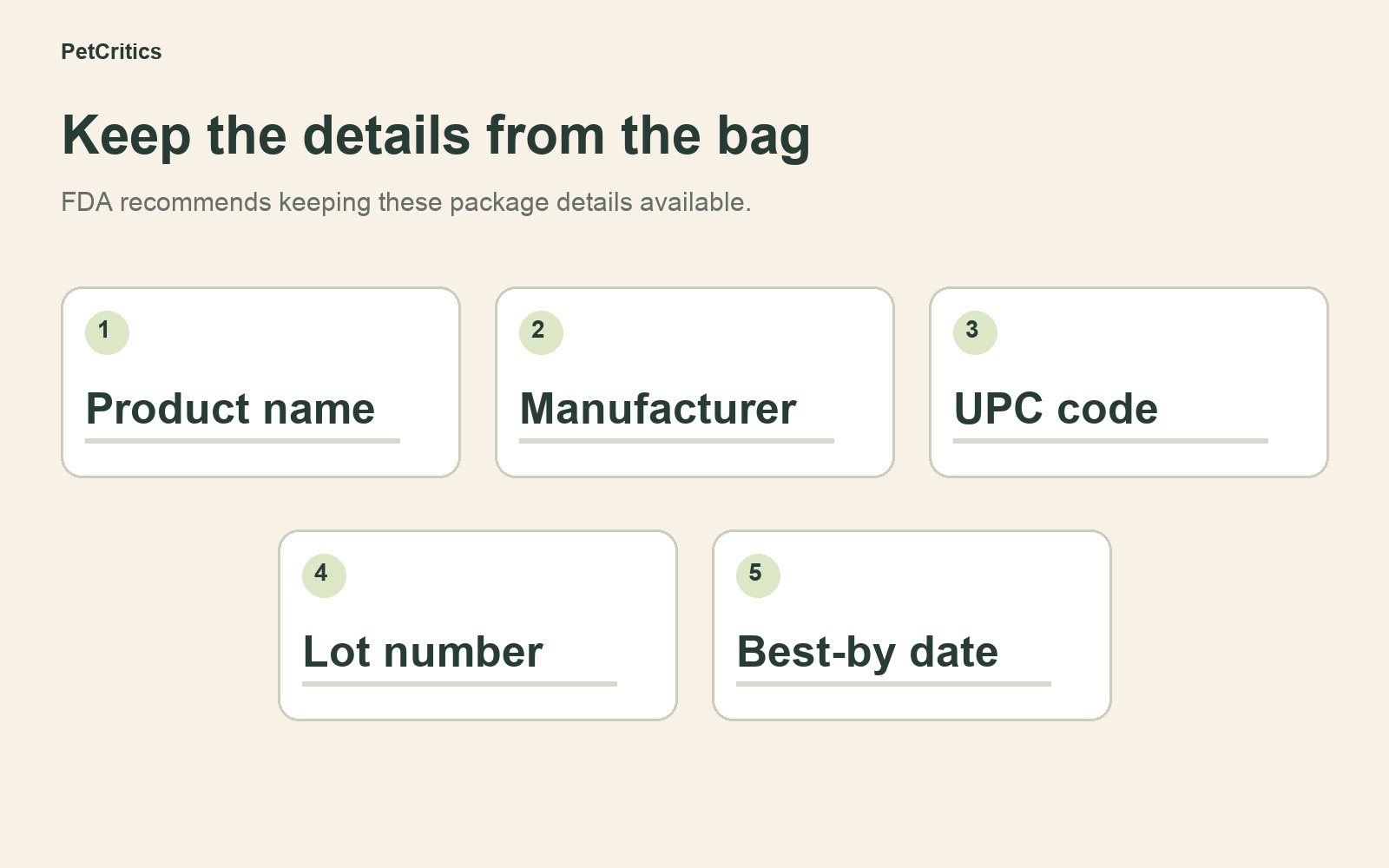
Keep these package details available:
- UPC code
- Lot number
- Full product name
- Manufacturer
- Best-by date
If you need a bin, keep the bag with it
For dry pet food, FDA recommends putting the entire bag inside the storage container instead of pouring the kibble straight into it. The original printing stays with the food. This is the simpler of the two arrangements because there is no separate record to copy onto the outside of the bin.
Check the condition of the package when buying the food, too. FDA advises choosing cans, pouches and bags in good condition. Its examples of visible damage include dents, tears and discolorations, and it says not to buy a product with those signs. An attractive storage container does not change the condition of the package that goes inside it.
FDA's handling advice also says to keep the top of a dry-food bag tightly folded down. Keeping the original bag therefore involves more than saving an empty label elsewhere. The bag remains the food's packaging, with its printed information available when it is needed.
If the food must be poured into another container, FDA says that container should be clean and dry, with a lid that fits snugly. Save the identifying details and tape them to the outside so they are handy. Change that information when a new bag is opened. The record then belongs to the food currently in the bin.
Choose the storage conditions for that food
Dry food, unopened cans and an opened pouch do not all belong in the same place. FDA distinguishes storage before opening from the handling of unused canned or pouched food. Excess heat or moisture may cause nutrients to break down, which is why the storage conditions matter alongside retaining the label.
- Keep dry pet food and unopened canned food in a cool, dry place with a temperature below 80 F.
- Promptly refrigerate or throw out unused or leftover canned and pouched food. Tightly cover refrigerated food and set the refrigerator to 40 F or below.
Access matters as well. If a pet is overly persistent or clever at getting into food, FDA says to keep it in a secure location the pet cannot reach. The agency warns that overeating, or eating food meant for another pet, can lead to vomiting, diarrhea or more serious health problems.
Keep treats in a secure location, too. FDA gives a specific reason for that instruction: preventing a pet from eating the whole supply at once. A bag of treats needs that protection even if it is not kept beside the main supply of food.
Clean hands, bowls and containers
FDA warns that pet food and treats can contain harmful bacteria that cause foodborne illness in people, including salmonellosis and listeriosis. Its safe-handling advice starts and ends with clean hands. Wash them with soap and hot water for at least 20 seconds before and after handling pet food or treats.
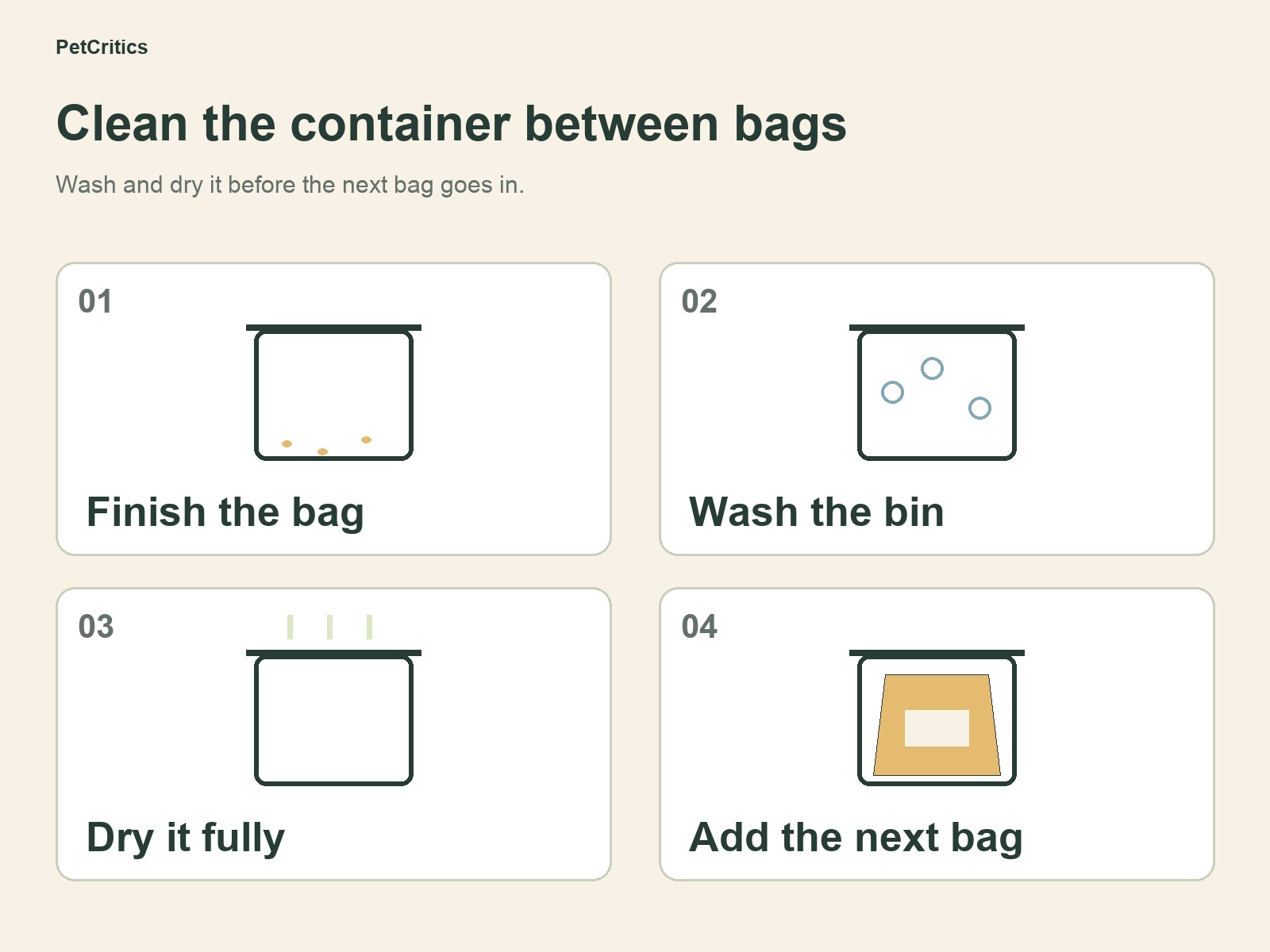
When a bag is finished, wash and dry the storage container before filling it with the next one. FDA says this removes residual fat and crumbs from the surfaces. This is the container's cleaning point between supplies of food, rather than a reason to top up an unwashed bin indefinitely.
Old or spoiled food also needs a safe disposal route. FDA gives the example of a securely tied plastic bag placed in a covered trash can. That instruction concerns discarding food, separate from washing the empty storage container and preparing it for the next bag.
- Wash and dry food bowls after each use. FDA's handling guidance specifies soap and hot water for washing.
- Wash and dry scooping and measuring utensils after each use, also with soap and hot water. Use them only for pet food.
- Wash water bowls daily.
The number of washes depends on use. For example, assume one pet eats twice a day from one food bowl, with one scoop used once at each meal and one water bowl. Following those intervals means two food-bowl washes, two scoop washes and one water-bowl wash that day. These are the stated example's counts, rather than a separate FDA schedule.
FDA also says not to use the pet's food bowl as a scooping or measuring utensil. Use a clean scoop, spoon or cup instead, reserved for pet food. Keeping that utensil separate is a different instruction from cleaning it after use, and both apply when portions are measured out.
If there is a problem with the food
FDA says problems with pet food or treats include a foul odor, a swollen or leaking can or pouch, a foreign object in the product, or a pet becoming sick after eating it. These are examples, rather than an exhaustive list. They explain another reason to retain the package information even when a container is used for everyday storage.
Lauren Carey, a veterinarian and pet food expert at FDA, identifies the full product name, lot number and best-by date as important details when filing a complaint. The other information saved from the package can help identify the product as well. Check the original printing or the current note on the container when gathering those details.
- If a pet has a health problem related to the food or treat, FDA says to stop feeding the product and call a veterinarian.
- Find the saved identifying details for that product.
- Report the problem to FDA and to the manufacturer, as the agency encourages. Include the product details when filing the complaint.
The bag or its saved details should be available for that last step. A storage bin is useful for holding food; the product record is what lets a complaint identify which food was involved.
Related stories

Samira Reed
Samira specializes in dog and cat supplements, food labels, and feeding products. Her focus is ingredient transparency, administration, and questions owners should take to their veterinarian. Her comparisons examine active ingredients and amounts per labeled serving, product formats, quality-testing claims, and ongoing costs. She distinguishes marketing promises from evidence for a specific formulation. Samira’s household includes her husband, their son, Maple, a beagle mix, and Cleo, a shorthair cat. She wants readers to understand what’s in the jar before adding it to the bowl.