
Cut Open the Empty Snack Bag Before It Reaches the Trash

Expert verifiedSources and qualifications checked
Nora Bennett reviews clarity, structure and the writer’s voice. Adrian Cole reviews source support, qualifications and image attribution.
Reviewed November 19, 2026 for this version of the article.
Meet the Editor Voices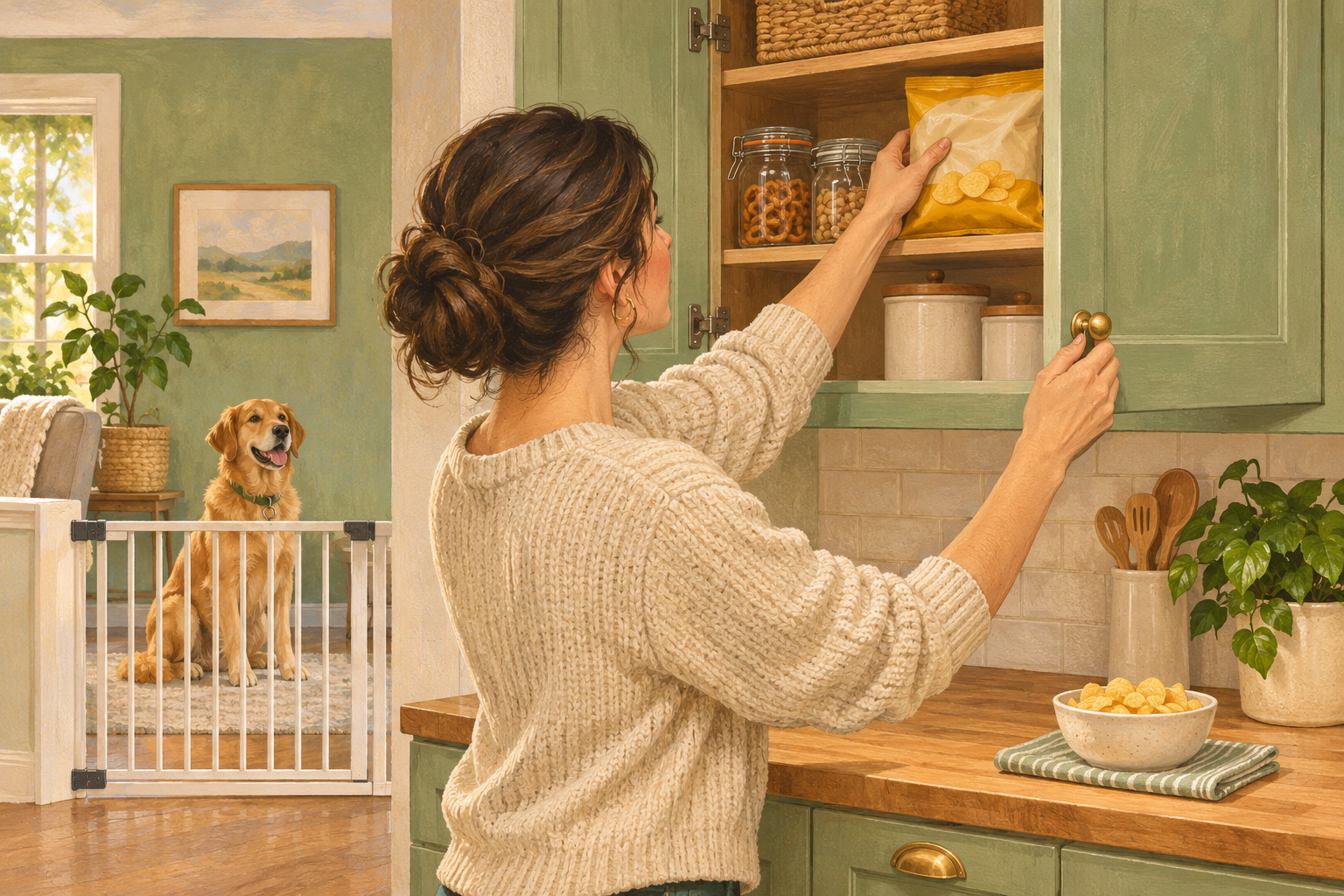
Put the snack in a bowl. Close the bag and store it in a cabinet or pantry your pet cannot open. FDA's advice includes that serving step. Put the package away before you settle down to eat.
Keep the empty package out of reach, too. FDA warns that pets can smell food in bags that once held it. Its warning covers snack bags, cereal packaging, food-storage bags and other plastic bags. The agency names the counter, coffee table, floor and trash as places pets find them. There is more to check than the kitchen countertop.
If you find your pet with its head stuck in a bag, carefully remove the bag and contact your veterinarian or an emergency veterinary clinic immediately. Follow the veterinarian's medical advice. FDA says suffocation can happen in less than five minutes. Act right away. That figure gives you no safe time to wait and watch.
Understand why the bag can hold tight
FDA describes the bags as light and flexible, useful qualities for storing food that create a danger when a pet puts its head inside. Some bags have several layers. FDA lists Mylar, also called PET, aluminum-laminated polypropylene, HDPE and LLDPE among the materials used. Its warning includes food-storage bags, as well as snack packaging.
Follow the bag's movement in FDA's explanation. The pet cannot work its head free and may panic. It breathes faster. As it draws air in, the bag collapses against the nose and mouth. Suction holds the material tightly enough that the pet cannot paw the bag off. More breathing and pawing can pull it tighter. FDA compares this with taking air out of a balloon. With the air removed, the flexible material collapses together instead of holding its expanded shape. The agency uses that comparison to explain the suction around a pet's head.
The animal in that situation needs help immediately. A video of a pet pawing at a bag may be presented as a joke, but FDA warns that the animals in those social-media clips are frightened and in danger. The movement is no reason to assume the pet can remove the bag by itself.
Use the bag's location to decide what to change at home. An open package on a coffee table needs putting away. An empty one beside the bin still needs cutting and disposal. Work through those objects wherever people have been eating, including the floor, rather than stopping when the serving counter looks clear.
Follow the bag from serving to the trash
Start at the place where you open the snack. Set out a bowl, pour in a portion and put the remaining food away in its bag. FDA specifies a closed cabinet or pantry the pet cannot open. A closed door only does the job if the pet cannot get through it. Check the actual storage spot you plan to use.
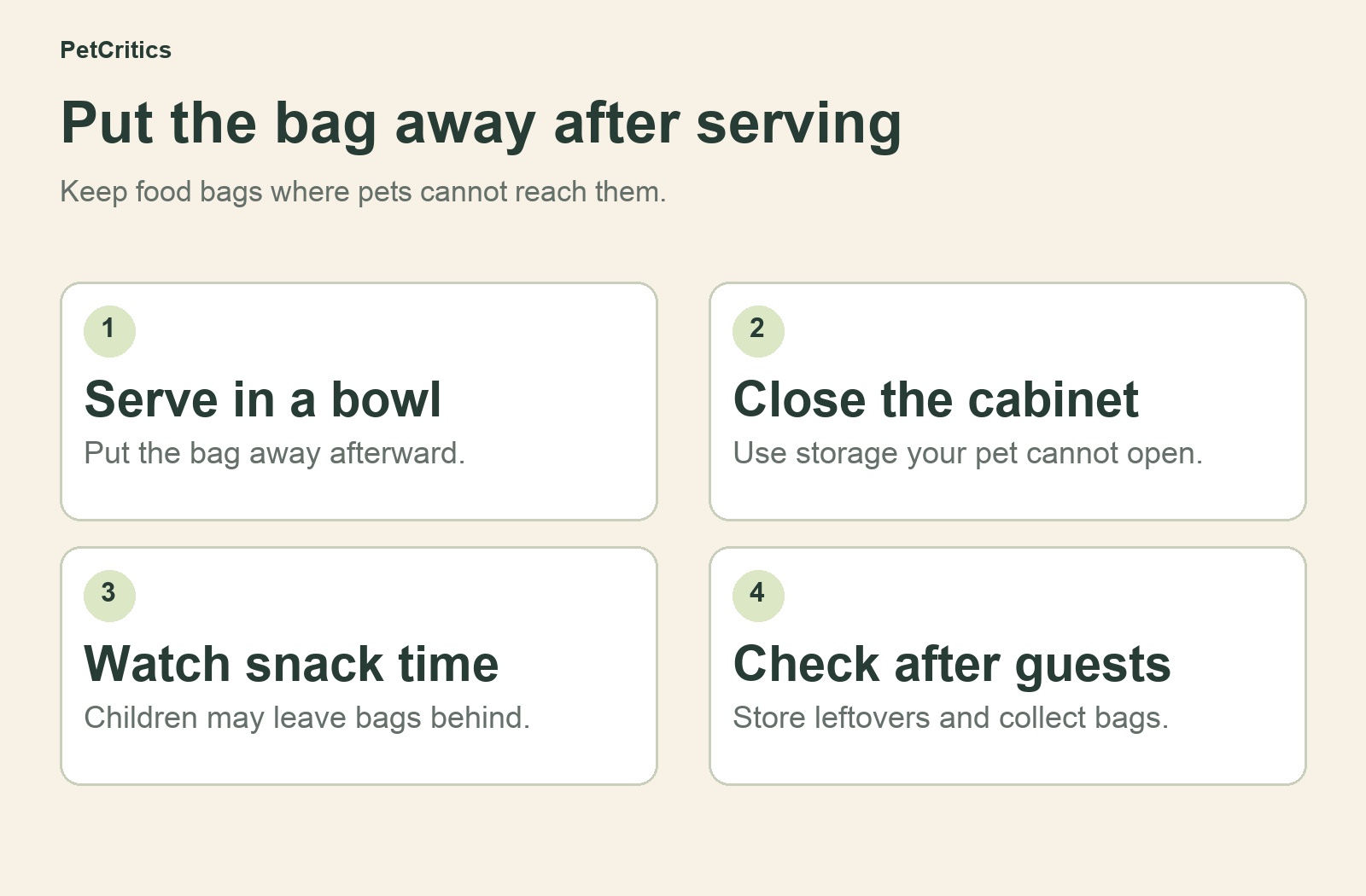
For an empty bag, cut the sides open or cut it into pieces, then throw it away immediately. Those are FDA's disposal instructions. The agency compares cutting it into pieces with cutting up an old credit card. Opening the sides stops the bag sealing around a pet's nose and mouth. Do the cutting before the package goes into the trash.
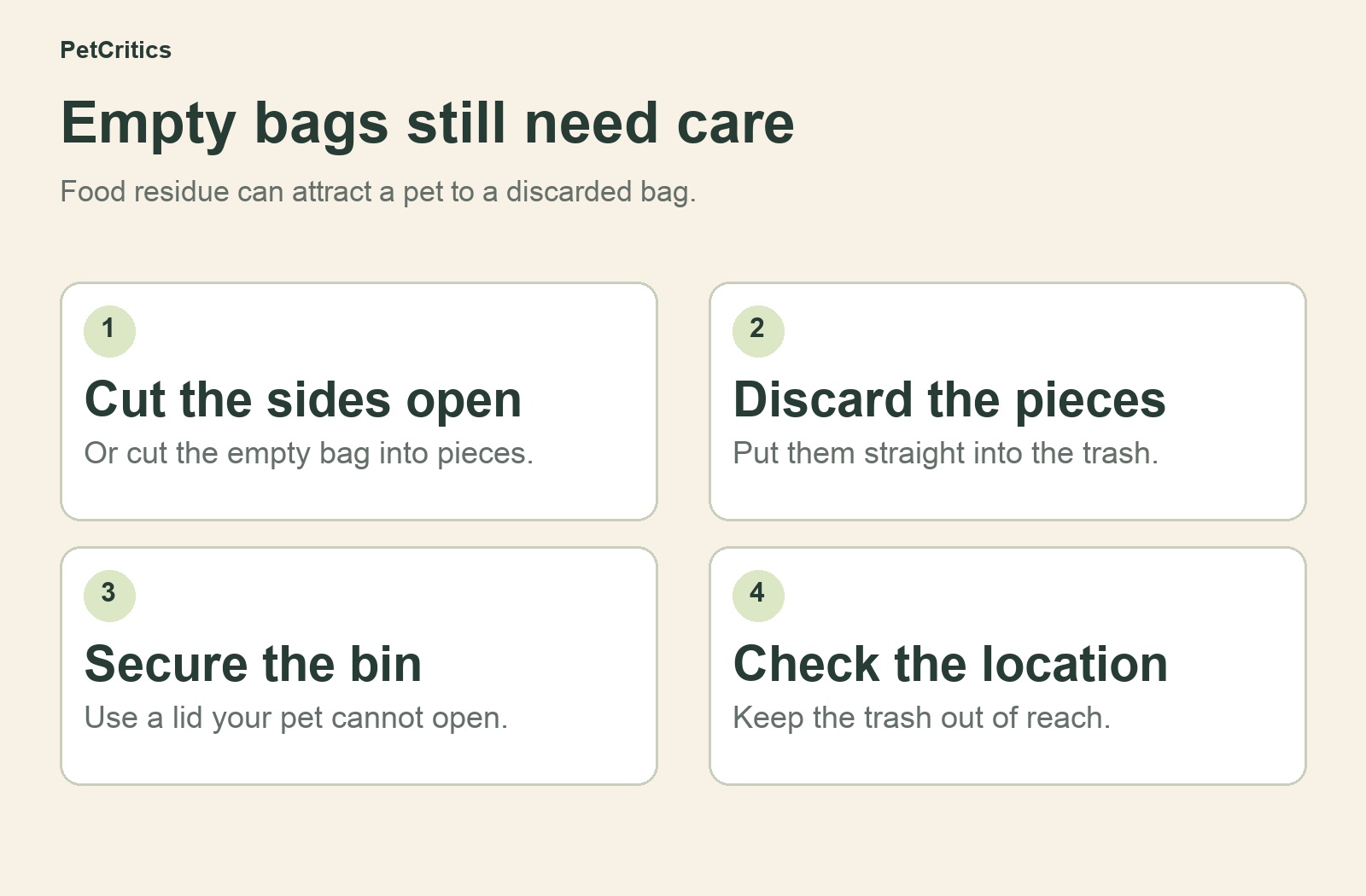
Now look at the trash can. FDA calls for a secure lid the pet cannot open and a cabinet or other secure location the pet cannot get into. Try closing the lid and putting the can back where it belongs. Ask whether your pet can reach that location or open the lid, rather than relying on the fact that the lid appears shut.
Cutting the bag and securing the trash are separate jobs. Leave time for both when clearing up. The can is also part of the routine for anyone who uses the kitchen after you, so show people where to return it after emptying it.
Give guests the same disposal plan
Before handing snacks to guests, point out the bowls and the place for partly used bags. Tell them about the suffocation risk. FDA recommends teaching family members, friends and neighbors how to prevent it. A guest needs the household instructions as well as the warning: which cabinet to use, and where an empty package goes.
Keep an eye on young children while they eat from snack bags. FDA warns that children may leave a bag behind or drop it onto the floor or ground. Pouring the snack into a bowl lets an adult keep hold of the packaging and take care of disposal. Put the adult in charge of that step instead of relying on a child to remember it.
Give the same explanation to people who arrive later. They will not know which cabinet you chose just because the first guests do. Before opening another bag, show the newcomer where it goes afterward. If several people are sharing the snack, serve it in bowls and put the package away rather than passing the open bag around the room.
Include this in the handoff to a pet sitter or another caregiver. Walk them to the cabinet and the secured trash can. Explain the cutting step for empty bags. Show the arrangement you actually use so they can carry on with it while you are out, without guessing where to leave a partly finished package.
Check bags at picnics, parties and car stops
At a picnic or party, decide where to store the bags before serving food. FDA singles out picnics, parties and car travel because bags are often left within a pet's reach. The closed pantry at home is of no use beside a picnic blanket. Choose a place the pet cannot access and keep the food packaging there.
Keep checking during the gathering. People may move from the food table to a coffee table or sit down with snacks elsewhere. FDA names coffee tables and floors as places pets encounter bags. Look where the food went, pour portions into bowls, and return the remaining packages to the storage place instead of leaving them beside people's seats.
On a car trip, collect bags during snack stops. Store the leftovers where the pet cannot reach them. At the end of the picnic, party or break, dispose of the empty bags safely and put the remaining food away, as FDA recommends. Finish with the packaging as well as the plates.
Related stories
Lena Ortiz
Lena covers the gear dogs use every day: harnesses, leashes, beds, bowls, and the supplies that collect by the front door. Her comparisons focus on fit, adjustment, cleaning, and value across different dog sizes. She looks closely at which features make a busy routine easier and which simply add bulk or expense.